
Flourless Cottage Cheese Bread
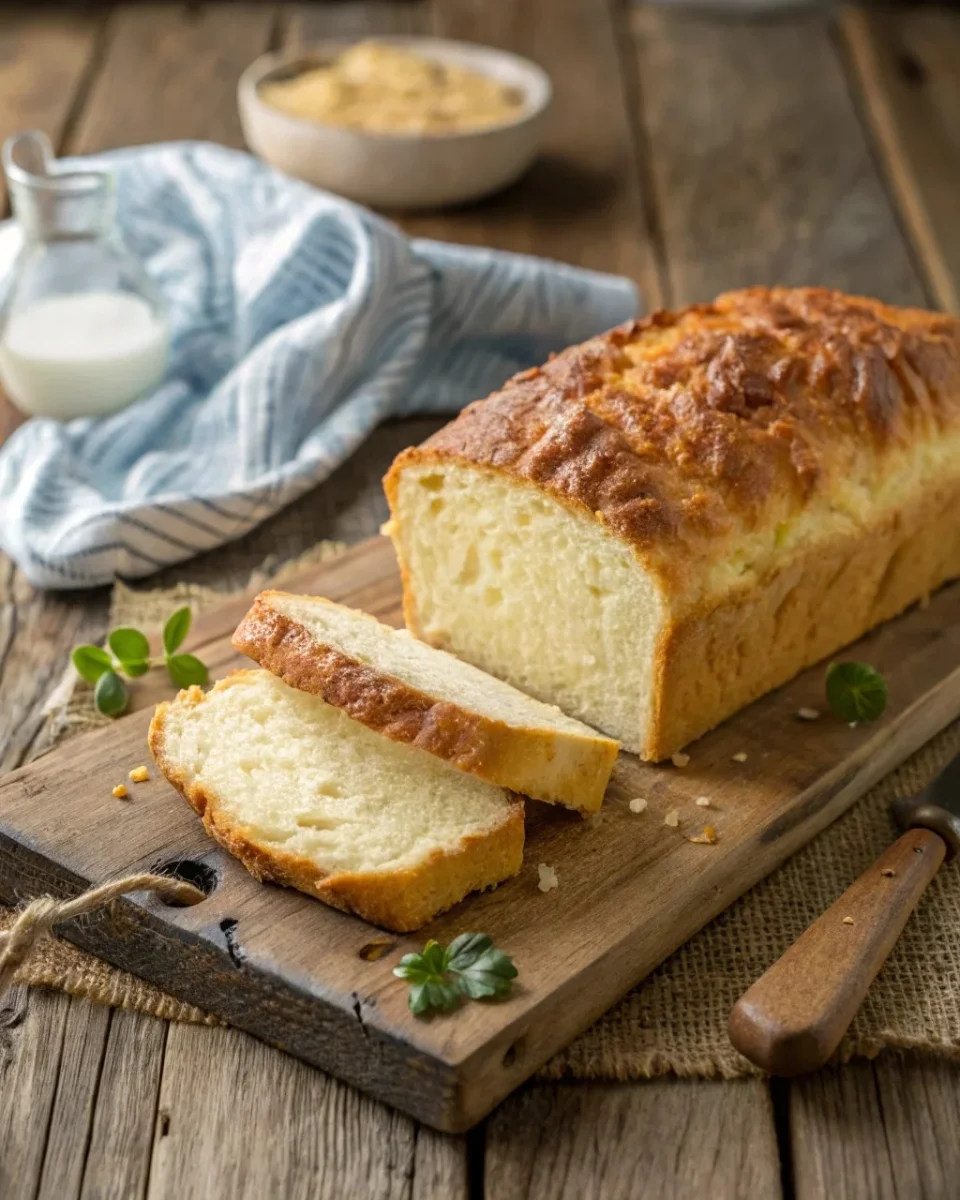
A soft, gently tangy loaf made with cottage cheese and eggs instead of flour. It is quick to blend together and can be flavoured with herbs or honey for breakfast, snacks or a side dish.
Ingredients
- 225 g (1 cup)cottage cheese (full-fat recommended)
- 4 largeeggs
- 1 1/2 teaspoonsbaking powder
- 1/2 teaspoonsalt
- Optional: 1 tablespoonchopped fresh herbs, such as rosemary or chives, or honey for a sweet version
Instructions
- 1
Preheat the oven
Heat the oven to 175°C (350°F). Line a loaf tin with baking parchment or grease it lightly.
- 2
Blend wet ingredients
Put the cottage cheese and eggs in a blender or food processor and blend until completely smooth.
- 3
Add dry ingredients
Add the baking powder and salt. Blend again or stir gently until evenly combined.
- 4
Choose a flavour
If you like, fold in chopped herbs for a savoury loaf or honey for a sweet version.
- 5
Fill the tin
Pour the batter into the prepared loaf tin and level the surface with a spatula.
- 6
Bake the loaf
Bake for 35–40 minutes, until golden and a toothpick inserted in the centre comes out clean.
- 7
Cool and slice
Leave the loaf to cool completely in the tin before slicing, so it can set to its best texture.
What is cottage cheese bread?
This American-style loaf uses cottage cheese and eggs as its base rather than flour. It has a mild tang and a tender, egg-rich crumb, making it a different sort of bread from a traditional yeast loaf.
Smooth blending helps this version bake into a more even texture. Herbs make it savoury, while honey gives it a sweeter finish.
Nutrition and macros by portion
The nutrition label shows one serving as written: 60 calories, 8g protein, 2g carbs, 3g fat.
| Portion | Adjustment | kcal | Protein | Carbs | Fat |
|---|---|---|---|---|---|
| Lighter | Choose low-fat cottage cheese | 42 kcal | 6g | 1g | 2g |
| This serving | As written | 60 kcal | 8g | 2g | 3g |
| Hungry | Serve a larger slice | 90 kcal | 12g | 3g | 5g |
The eggs and cottage cheese provide most of the protein and fat, while the small amount of carbohydrate comes mainly from the dairy and any optional honey. Pair a slice with fruit or vegetables for a more rounded plate.
Why blend the cottage cheese?
Smooth curds: blend the cottage cheese with the eggs until no visible lumps remain. This distributes the cheese evenly through the batter.
Full-fat cheese: the recipe recommends full-fat cottage cheese for a moist loaf. If the cheese is very watery, its extra liquid may affect how the centre sets.
Getting the batter right
Baking powder: mix it thoroughly with the salt so the loaf rises evenly. Avoid prolonged blending after adding the dry ingredients; combine just until uniform.
Flavour additions: fold in the herbs or honey gently after blending. The recipe gives either option as an addition, rather than calling for both.
How to tell when it is baked
Colour: look for a golden top after 35 minutes, but use the centre test as well. Insert a toothpick into the middle; it should come out clean.
Set centre: if the toothpick has wet batter on it, continue baking and check again. The loaf should be cooked through before it is removed from the oven.
Why cooling matters
The loaf is delicate while hot, so leave it in the tin until completely cool. Cutting too soon can make the slices fragile and the inside seem less set.
Once cool, use a sharp knife and wipe it between cuts for neater slices. This flourless loaf is softer than a conventional bread loaf.
Serving ideas
Savoury slices: serve the herb version with soup, salad or eggs. Rosemary gives it a more aromatic flavour, while chives keep it mild.
Sweet slices: the honey variation suits breakfast or a snack. Serve plain or with a topping of your choice.
Recipe notes & tips
- Blend the cottage cheese and eggs until completely smooth for an even crumb.
- Use baking parchment or grease the loaf tin well to help release the loaf.
- Fold in optional herbs or honey gently after the dry ingredients are combined.
- Start checking the loaf at 35 minutes, using a toothpick to test the centre.
- Let the loaf cool completely in its tin before slicing.
Variations
- Rosemary loaf: fold in 1 tablespoon of chopped fresh rosemary for a savoury, aromatic flavour.
- Chive loaf: add 1 tablespoon of chopped fresh chives for a mild savoury note.
- Honey version: fold in 1 tablespoon of honey for a sweeter loaf.
- Herb blend: use a mixture of fresh rosemary and chives, keeping the total to 1 tablespoon.
Common mistakes to avoid
- Lumpy batter: blend the cottage cheese and eggs until completely smooth before adding the dry ingredients.
- Uneven seasoning: blend or mix the baking powder and salt through the batter evenly.
- Overmixing after adding baking powder: combine only until uniform to avoid working the batter longer than needed.
- Underbaked centre: bake until golden and a toothpick inserted in the middle comes out clean.
- Slicing while warm: cool the loaf completely in the tin first so the slices hold together better.
How to store
Once completely cool, store the loaf in an airtight container in the fridge and use within 3 days. Reheat slices gently in a toaster oven or microwave until warmed through.
Frequently asked questions
Is this bread gluten-free?
The listed ingredients contain no flour or other gluten-containing ingredient. Check the labels on your cottage cheese and baking powder if you need to avoid gluten.
Can I use low-fat cottage cheese?
Yes. The recipe recommends full-fat cottage cheese, but low-fat cottage cheese can be used; the loaf may be less rich.
Do I have to blend the cottage cheese?
Blending it with the eggs makes the batter smooth and gives the loaf a more even texture. A food processor can be used instead of a blender.
How do I know when the loaf is done?
The top should be golden, and a toothpick inserted into the centre should come out clean. Bake for 35–40 minutes, checking from 35 minutes.
Can I make it savoury or sweet?
Yes. Fold in 1 tablespoon of chopped fresh herbs for a savoury loaf, or 1 tablespoon of honey for a sweet version.
Why should I cool it before slicing?
Cooling completely in the tin helps the loaf set and makes it easier to slice without crumbling.
Cook it from the original
This recipe comes from blerecipes.com. Their page has the author’s own photos, notes and tips — the best place to cook it from.
Open the recipe on blerecipes.com