
Fluffy American Pancakes
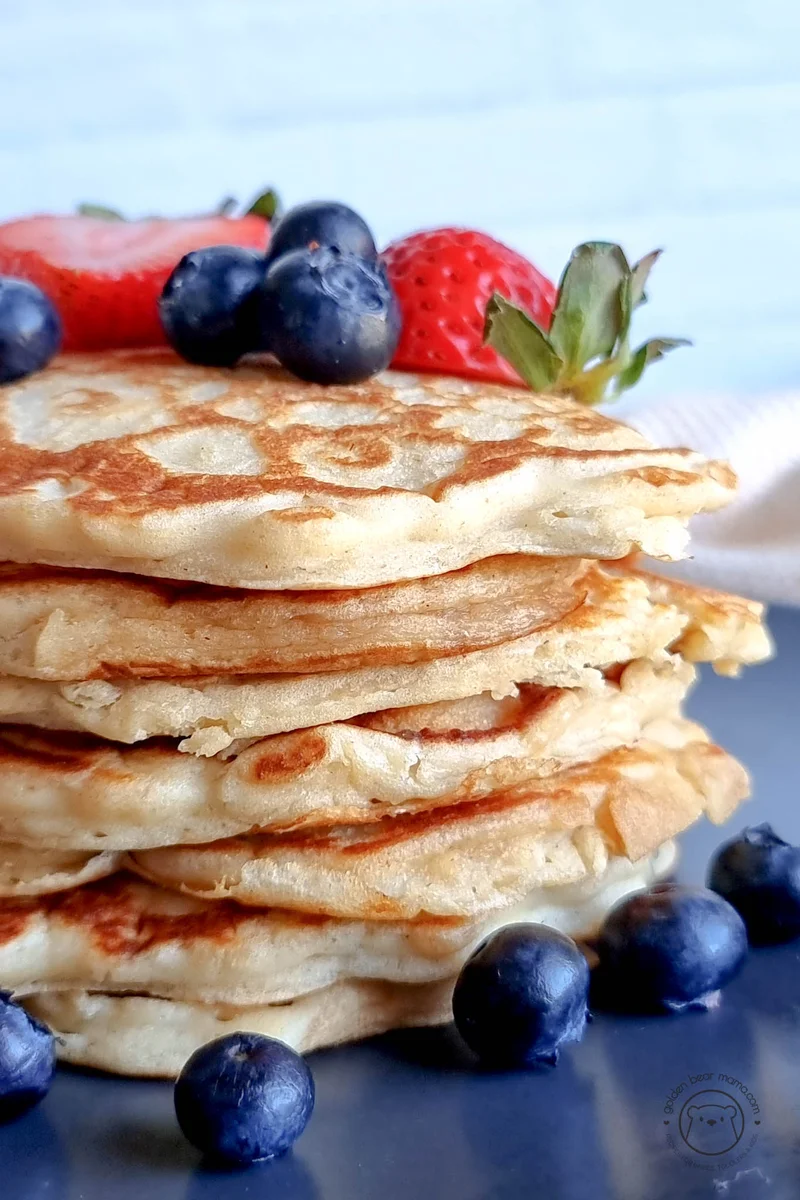
These American-style pancakes combine plain and oat flour for a soft, fluffy breakfast with a lightly sweet flavour. They come together quickly and make a family-friendly batch for a weekend morning or an easy breakfast.
Ingredients
- 180 ml (¾ cup)milk
- 1 largeegg
- 28 g (2 tbsp) melted, or 21 g (1½ tbsp) at room temperaturebutter
- 60 g (½ cup)plain flour
- 50 g (½ cup)oat flour
- 2 tspbaking powder
- 12 g (1 tbsp)brown sugar
Instructions
- 1
Mix dry ingredients
In a bowl, stir together the plain flour, oat flour, baking powder and brown sugar.
- 2
Whisk wet ingredients
In a separate bowl, whisk the melted butter, milk and egg until combined.
- 3
Combine the batter
Tip the dry mixture into the bowl of wet ingredients and mix just until combined. Avoid overmixing.
- 4
Rest the batter
Leave the batter to rest for 3–5 minutes so the baking powder can start to work.
- 5
Heat the pan
Set a skillet or pancake pan over medium heat and add a little butter or coconut oil.
- 6
Cook the first side
For regular pancakes, spoon 60 ml (¼ cup) of batter into the pan; for smaller child-sized pancakes, use 30 ml (⅛ cup). Keep the batter from spreading too much, then cook until bubbles appear on top and the pancake is ready to flip.
- 7
Flip and finish
Turn the pancakes over and cook for another minute. Serve.
What are American pancakes?
American pancakes are small, thick griddle cakes, usually served in a stack for breakfast. This style is popular in the United States, where pancakes are often paired with butter and sweet toppings.
Plain flour gives this version its familiar structure, while oat flour adds a gentle, hearty flavour. Baking powder helps the batter rise as it cooks.
Nutrition and macros by portion
The nutrition label shows one serving as written: 128 calories, 4g protein, 16g carbs, 6g fat.
| Portion | Adjustment | kcal | Protein | Carbs | Fat |
|---|---|---|---|---|---|
| Lighter | Smaller pancakes, less topping | 90 kcal | 3g | 11g | 4g |
| This serving | As written | 128 kcal | 4g | 16g | 6g |
| Hungry | Larger pancake stack | 192 kcal | 6g | 24g | 9g |
The flour and brown sugar provide most of the carbohydrates, while butter contributes much of the fat; the egg, milk and flours contribute protein. For a more balanced plate, serve a portion with fruit and a protein-rich side such as yoghurt or eggs.
Why use two flours?
Plain flour: it provides the structure that holds the pancakes together as they cook.
Oat flour: it brings a mild, grainy flavour and gives the batter a slightly different texture from an all-wheat version.
Mixing without overworking
Combine the dry ingredients before adding them to the wet mixture so the baking powder and sugar are distributed through the flour. Stir only until there are no large pockets of dry flour; a few small lumps are fine.
Overmixing can make pancakes tougher and less tender. The short rest gives the flour time to absorb liquid and the raising agent time to begin activating.
Getting the pan heat right
Medium heat gives the centre time to cook while the outside colours. Add a little butter or coconut oil to the pan, as directed, and let excess fat drain or spread thinly so the pancakes do not fry unevenly.
If a test pancake browns before bubbles form, lower the heat slightly. If it stays pale and takes a long time to set, raise the heat a little.
When to flip
Watch for bubbles appearing across the top and edges that look more set than the wet centre. These are useful signs that the first side is ready to turn.
Cook the second side for about one minute. The pancake should feel set through the middle rather than doughy.
Serving ideas
Serve the pancakes warm, in a stack, with fruit, yoghurt, or a little syrup. These toppings add sweetness and freshness without changing the simple base recipe.
For a more substantial breakfast, serve them alongside eggs or yoghurt. Make smaller pancakes with 30 ml (⅛ cup) of batter per pancake if that size is easier to serve.
Recipe notes & tips
- Measure the batter into the pan rather than pouring freely to keep the pancakes a similar size.
- Let the pan return to medium heat between batches if it becomes too hot.
- Use a thin, even coating of butter or coconut oil so the pancakes brown consistently.
- Rest the batter for the full 3–5 minutes before cooking.
- Turn each pancake only once, when bubbles appear on its top.
Variations
- Add cinnamon: stir a little into the dry ingredients for a warm spice note.
- Use berries: scatter a few berries over each pancake after spooning the batter into the pan.
- Add banana: serve with sliced banana for a naturally sweet topping.
- Make them smaller: use 30 ml (⅛ cup) of batter per pancake for child-sized portions.
- Choose a topping: serve with yoghurt, fruit or syrup to suit the meal.
Common mistakes to avoid
- Overmixing the batter: stir only until combined to help keep the pancakes tender.
- Skipping the rest: leave the batter for 3–5 minutes so the flour can absorb liquid and the baking powder can begin working.
- Pan too hot: reduce the heat if the outside browns before bubbles form on top.
- Flipping too soon: wait until bubbles appear and the edges begin to look set.
- Adding too much pan fat: use only a little butter or coconut oil for more even browning.
How to store
Keep leftover pancakes in a covered container in the fridge for up to 3 days. Reheat in a pan over low heat or in a toaster until warmed through.
Frequently asked questions
Can I make the batter ahead?
The method relies on freshly mixed baking powder, so it is best to mix and cook the batter straight away after its 3–5 minute rest.
How do I know when to flip a pancake?
Flip when bubbles appear on top and the edges look more set. If the underside is colouring too quickly, lower the heat.
Can I make smaller pancakes?
Yes. Use 30 ml (⅛ cup) of batter for each smaller pancake, as the method suggests.
Why are my pancakes dense?
The batter may have been mixed too much, or the baking powder may not be working well. Mix just until combined and check that your baking powder is fresh.
Can I use room-temperature butter?
Yes. The ingredient list gives 21 g (1½ tbsp) at room temperature as an alternative to 28 g (2 tbsp) melted butter.
Cook it from the original
This recipe comes from goldenbearmama.com. Their page has the author’s own photos, notes and tips — the best place to cook it from.
Open the recipe on goldenbearmama.com