
Gluten Free Tempura Kumara and Avocado Sushi
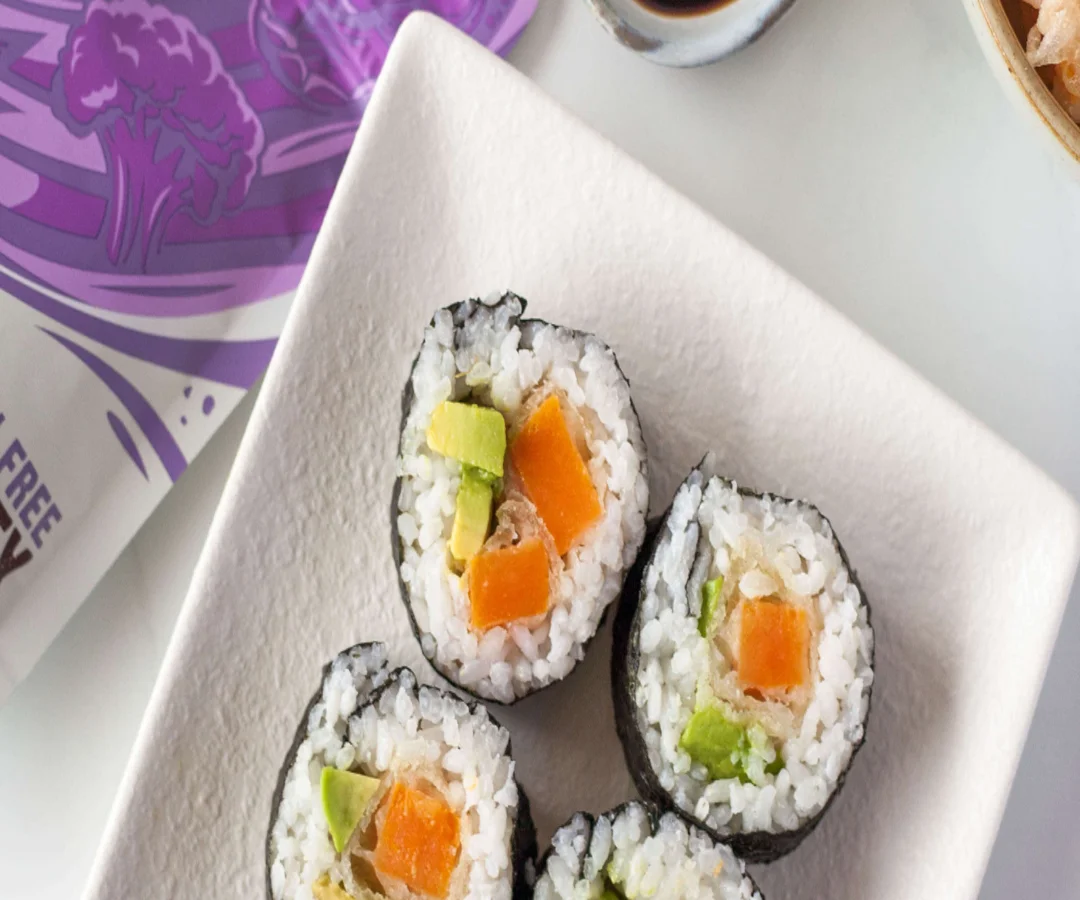
Crisp tempura kumara and creamy avocado are rolled with seasoned sushi rice and nori, then served with tamari and Kewpie mayo. It is a satisfying homemade sushi option when you want contrasting textures and a cooked filling.
Ingredients
- 250 ml (1 cup)gluten-free tasty tempura batter
- 190 ml (3/4 cup)ice water
- 1 litre (4 cups)rice bran oil, for deep-frying
- 1 smallkumara
- 2seaweed sushi sheets
- 1avocado
- 250 ml (1 cup)sushi rice
- 125 ml (1/2 cup)rice vinegar
- 30 ml (2 Tbsp)caster sugar
- 2.5 ml (1/2 tsp)salt
- to tastetamari soy sauce, for dipping
- to tasteKewpie mayo, for drizzling
Instructions
- 1
Cook the rice
Rinse the sushi rice and cook it according to the packet instructions.
- 2
Prepare the kumara
While the rice cooks, wash and peel the kumara.
- 3
Cut the kumara
Trim off the ends, slice the kumara, then cut it into strips about 2 cm thick. Pat the strips dry with a paper towel.
- 4
Heat the oil
Pour enough rice bran oil into a large pan or stock pot for deep-frying, then turn the heat to high.
- 5
Chill the water
While the oil heats, add a few ice cubes to 190 ml of water and leave it for about a minute.
- 6
Mix the batter
Gradually add the ice water to 250 ml of tempura batter, stopping when it reaches the consistency of runny cream.
- 7
Coat the kumara
Dip each kumara strip in batter and carefully lower it into the oil. To check whether the oil is ready, drop in a little batter; it should bubble steadily.
- 8
Fry the strips
Cook the kumara for about 2 minutes on each side.
- 9
Drain the kumara
Lift out the cooked strips with steel tongs or a spider strainer and place them on a cooling rack set over paper towels.
- 10
Season the rice
When the rice is cooked, transfer it to a bowl and add the rice vinegar, sugar and salt. Mix well with a wooden spoon, then leave it to cool.
- 11
Slice the avocado
Halve the avocado and remove the stone. Use your thumbs to remove the skin, then slice the flesh and set it aside.
- 12
Set up the mat
Place a seaweed sheet shiny side down on a sushi mat.
- 13
Spread the rice
With wet hands, spread the cooled sushi rice evenly over the seaweed.
- 14
Arrange the filling
Lay the tempura kumara and avocado in a horizontal line across the rice.
- 15
Roll the sushi
Use the sushi mat to roll everything up.
- 16
Rest and slice
Leave the roll to sit for 5 minutes before slicing with a sharp knife. A serrated knife may be easier if your knife is not very sharp.
- 17
Serve the rolls
Serve with tamari soy sauce and Kewpie mayo.
What is kumara sushi?
Sushi is a Japanese dish built around vinegared rice, often wrapped in nori with a filling. Kumara is the New Zealand name for sweet potato, and this version pairs it with avocado in a rolled sushi format.
The combination works because crisp battered kumara contrasts with soft rice and creamy avocado. Tamari and Kewpie mayo provide savoury, rich accompaniments.
Nutrition and macros by portion
The nutrition label shows one serving as written: 475 calories, 7g protein, 68g carbs, 19g fat.
| Portion | Adjustment | kcal | Protein | Carbs | Fat |
|---|---|---|---|---|---|
| Lighter | Less mayo, smaller rice portions | 333 kcal | 5g | 48g | 13g |
| This serving | As written | 475 kcal | 7g | 68g | 19g |
| Hungry | Add another sushi roll | 713 kcal | 11g | 102g | 29g |
The rice and kumara provide most of the carbohydrates, while the frying oil and avocado contribute much of the fat. The rice, batter and avocado offer some protein, but tamari can add a substantial amount of sodium depending on how much is used. For a balanced plate, serve a moderate amount of sushi with fresh vegetables and use the dipping sauce sparingly.
The key ingredient choices
Tempura batter: The recipe specifies a gluten-free batter, mixed with ice water until it flows like runny cream. Cold water helps keep the coating light as it fries.
Kumara and avocado: Cut the kumara into even strips so it cooks at a similar rate, and slice the avocado just before assembling so it is ready to roll.
Getting the tempura right
Dry strips: Pat the kumara dry before dipping it in batter so excess surface moisture does not loosen the coating.
Hot oil: The batter test should bubble steadily when the oil is ready. Fry in manageable batches so the strips have room in the pan, and lift them out once cooked on both sides.
Rice texture and seasoning
Rinse and cook: Follow the rice packet instructions, since water amounts and cooking times can vary between products.
Cool before rolling: Stir in the vinegar, sugar and salt while the rice is cooked, then let it cool before spreading. Wet hands make it easier to distribute the rice without it sticking as much.
Rolling and slicing
Even filling: Keep the kumara and avocado in a horizontal line across the rice so the filling is easier to roll into a neat centre.
Set the roll: Leave it for 5 minutes before cutting, then use a sharp knife. Wiping or wetting the blade between cuts can help keep the slices tidy.
Serving the sushi
Serve the rolls with tamari for dipping and drizzle Kewpie mayo over the top. A simple side of cucumber or other fresh vegetables can add a crisp contrast to the fried filling.
Recipe notes & tips
- Keep the kumara strips similar in thickness so they cook evenly.
- Use a thermometer if you have one, while checking that the oil remains hot as you fry.
- Avoid crowding the pan; fry the strips in batches if needed.
- Keep a bowl of water nearby for wetting your hands while spreading the rice.
- Use a sushi mat to help roll the filling firmly and evenly.
- Let the cooked kumara drain on a rack rather than leaving it directly on paper towels.
Variations
- Add cucumber: Include thin cucumber strips alongside the avocado for extra crunch.
- Use pumpkin: Swap the kumara for pumpkin cut into similarly sized strips.
- Skip the mayo: Serve the rolls with tamari alone for a simpler finish.
- Add sesame: Sprinkle sesame seeds over the rice before adding the filling.
- Make it vegetarian: Check that the tempura batter and condiments suit your dietary requirements.
Common mistakes to avoid
- Wet kumara: The batter may cling poorly; pat the strips dry before coating.
- Thick batter: A heavy coating can mask the filling; add the ice water gradually until it resembles runny cream.
- Cool oil: The coating may absorb oil rather than crisp; check for steady bubbling with a small drop of batter.
- Crowded pan: The oil temperature can fall; fry the strips in batches with space around them.
- Warm rice: It can make rolling awkward; leave the seasoned rice to cool before assembly.
- Dull knife: The roll may compress instead of slice cleanly; use a sharp knife or the suggested serrated knife.
How to store
Store leftover sushi in an airtight container in the fridge and eat within 1 day for the best texture. The fried kumara softens after chilling, so reheating the assembled rolls is not ideal; warm any leftover kumara separately in an oven or air fryer if desired.
Frequently asked questions
Can I make the sushi rice ahead?
You can cook and season it ahead, then let it cool before assembling. Keep it covered while it cools so the surface does not dry out.
How do I know when the oil is ready?
Drop a little batter into the oil; it should start bubbling steadily. Take care when testing, as hot oil can splatter.
Can I use a different oil?
Use an oil suitable for deep-frying if rice bran oil is unavailable. Choose one with a neutral flavour so it does not overpower the filling.
Do I need a sushi mat?
A mat makes it easier to roll the nori evenly, but you can carefully roll it by hand if you do not have one.
Why is the tempura batter made with ice water?
The recipe uses ice water to keep the batter cold before frying. Add it gradually and stop when the batter reaches the stated runny-cream consistency.
Can I make this recipe gluten-free?
The batter is specified as gluten-free, but check the labels on the batter and tamari to confirm they meet your needs. Kewpie mayo and other condiments should also be checked.
Cook it from the original
This recipe comes from glutenfreeshop.co.nz. Their page has the author’s own photos, notes and tips — the best place to cook it from.
Open the recipe on glutenfreeshop.co.nz