
Oat cookies
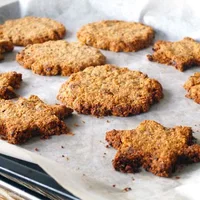
These oat cookies combine gluten-free oats, rice flour, coconut blossom sugar and coconut oil for a simple, crisp treat. They are easy to shape by hand and work well with a cup of tea or coffee; let them cool completely for their crisp texture.
Ingredients
- 200 ggluten-free oats or gluten-free oat flakes
- 30 grice flour
- 35 gcoconut blossom sugar
- 1 teaspoonbaking powder
- 1/2 teaspoonbaking soda
- a pinchsalt
- 40 g (weigh before melting)coconut oil
- 140 glactose-free semi-skimmed yoghurt
Instructions
- 1
Prepare the oats
Preheat the oven to 170°C. If using oat flakes, grind them in a food processor; otherwise, place the oats in a bowl.
- 2
Mix dry ingredients
Add the rice flour, coconut blossom sugar, baking powder, baking soda and salt to the oats.
- 3
Add wet ingredients
Melt the coconut oil in a saucepan. Add it to the oat mixture along with the lactose-free yoghurt.
- 4
Shape the cookies
Mix first with a spoon, then with your hands. Shape the dough as you like; the recipe makes about 15 cookies, shaped as hearts about 2 cm thick.
- 5
Bake and cool
Bake for 20–30 minutes, until nicely browned. Leave the cookies to cool completely, as they become crisp only once cooled.
What are oat cookies?
Oat cookies are baked biscuits made with oats, here combined with rice flour, coconut blossom sugar and coconut oil. This recipe is listed as Dutch, though its straightforward ingredients and hand-shaped dough make it an easy home bake rather than a complicated regional speciality.
Ground oat flakes help bind the dough, while lactose-free yoghurt brings moisture. The cookies may feel soft after baking, but cooling is part of how they develop their crisp finish.
Nutrition and macros by portion
The nutrition label shows one serving as written: 96 calories, 3g protein, 13g carbs, 4g fat.
| Portion | Adjustment | kcal | Protein | Carbs | Fat |
|---|---|---|---|---|---|
| Lighter | Make smaller cookies | 67 kcal | 2g | 9g | 3g |
| This serving | As written | 96 kcal | 3g | 13g | 4g |
| Hungry | Serve two cookies | 144 kcal | 4g | 20g | 6g |
The oats and rice flour provide most of the carbohydrates, while coconut oil contributes most of the fat; the yoghurt and oats supply some protein. Pair a cookie with fruit or yoghurt for a more filling snack.
Choosing and preparing the oats
Oats: Use gluten-free oats or gluten-free oat flakes as specified. If you start with flakes, grind them in a food processor before mixing; the recipe does not specify a particular grind size.
Rice flour: This provides a dry, fine element alongside the oats. Combine it with the other dry ingredients before adding the melted oil and yoghurt.
Getting the dough together
Coconut oil: Weigh 40 g before melting, then stir it into the dry mixture with the yoghurt. Mixing with a spoon first and your hands afterwards helps bring the dough together for shaping.
Texture: The method does not give a precise dough consistency, so use the stated sequence and shape the mixture once it is combined. Avoid adding extra ingredients unless needed to handle your particular mixture.
Shaping and baking
Thickness: The example shape is a heart about 2 cm thick, and the dough makes roughly 15 cookies. Keeping the pieces similar in size helps them bake at a similar rate.
Colour: Bake at 170°C for 20–30 minutes, until the cookies are nicely browned. The recipe gives a visual cue rather than a precise baking time, so check them during the stated range.
Why cooling matters
Straight from the oven: The cookies are not yet at their crispest when hot. Let them cool completely before judging their texture or serving them.
Serving: Enjoy them with tea or coffee, as suggested, or offer them as a simple biscuit alongside fruit. Their toasted oat flavour also works well without extra toppings.
Keeping the ingredients suitable
Gluten-free oats: Choose oats labelled gluten-free if that matters for your needs, and check the packaging of the other ingredients too. Oats and oat flakes are not automatically free from cross-contact during processing.
Lactose-free yoghurt: The recipe specifies lactose-free semi-skimmed yoghurt. Use that type for the intended version rather than assuming any yoghurt will give exactly the same result.
Recipe notes & tips
- Weigh the coconut oil before melting it, as the recipe specifies.
- Grind the oat flakes before combining them with the other dry ingredients.
- Mix with a spoon first, then use your hands to bring the dough together.
- Shape the cookies to a similar thickness so they bake more evenly.
- Check for a browned surface within the 20–30 minute baking window.
- Wait until the cookies are completely cool before expecting them to be crisp.
Variations
- Heart shapes: Shape the dough into hearts about 2 cm thick, as in the recipe.
- Oat flakes: Grind gluten-free oat flakes in a food processor before mixing.
- Different shapes: Form the dough into another shape while keeping the pieces similar in size.
- Coffee pairing: Serve the cooled cookies with a cup of coffee for a simple snack.
- Tea pairing: Offer the cookies alongside tea once they have cooled completely.
Common mistakes to avoid
- Skipping the grinding: Whole oat flakes may not match the method; grind them in a food processor first.
- Weighing oil after melting: Measure the coconut oil as a solid before melting, for the stated 40 g amount.
- Mixing only with a spoon: Finish bringing the dough together by mixing with your hands.
- Making uneven cookies: Keep the shapes a similar thickness so they cook at a similar pace.
- Removing them too soon: Bake until nicely browned, within the stated 20–30 minutes.
- Tasting while hot: The cookies become crisp only when fully cooled, so give them time before serving.
How to store
Once completely cool, store the cookies in an airtight container at room temperature and eat within about 4–5 days. They can be warmed briefly in a low oven, though they are best allowed to cool again before serving for a crisp texture.
Frequently asked questions
Can I use oat flakes instead of oats?
Yes. The recipe allows gluten-free oat flakes; grind them in a food processor before adding the other ingredients.
How many cookies does the dough make?
It makes roughly 15 cookies, depending on how you shape and size them.
How thick should I shape the cookies?
The example cookies are hearts about 2 cm thick. Similar thickness across the batch helps them bake more evenly.
How do I know when they are done?
Bake at 170°C for 20–30 minutes, until nicely browned. They will not be fully crisp while hot.
Why are my cookies still soft after baking?
They become crisp once completely cooled. Let them cool fully before assessing the texture.
Can I make these gluten-free?
The recipe uses gluten-free oats or oat flakes and rice flour. Check that the oats and other packaged ingredients are labelled suitable for your requirements.
Cook it from the original
This recipe comes from cookinglife.eu. Their page has the author’s own photos, notes and tips — the best place to cook it from.
Open the recipe on cookinglife.eu