
Make your own falafel
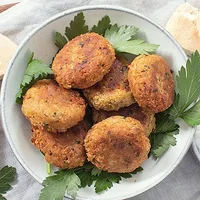
These chickpea falafel are seasoned with garlic, parsley, cumin and paprika, then pan-fried and served with a sharp, spicy soy-yoghurt dip. They make a flavourful meal with a crisp finish when served on warm pappadums.
Ingredients
- 1 can (410 g net weight)chickpeas
- 2 clovesgarlic
- 4 sprigsparsley
- 1 tablespoonarrowroot or cornflour
- 1 teaspoonground cumin
- 1 teaspoonpaprika
- 1/2red chilli
- A pinchsalt and pepper
- A splasholive oil or coconut oil
- 250 mllow-fat soy yoghurt or regular yoghurt
- 3 tablespoons, or to tastesambal
- 1 1/2 teaspoons, or to tasteground cumin
- 1/2lemon
Instructions
- 1
Prepare the chickpeas
Drain the chickpeas well and finely chop the parsley.
- 2
Make the mixture
Pulse the chickpeas, parsley, garlic, 1 teaspoon of cumin, paprika and half a red chilli in a food processor or chopper until finely combined but still coarse. Add the arrowroot, a pinch of salt and pepper, then mix thoroughly.
- 3
Shape the falafel
Shape the mixture into about 8 firm ovals, each a few centimetres thick.
- 4
Fry the falafel
Heat a splash of olive oil or coconut oil in a pan and fry the falafel for a few minutes on each side.
- 5
Warm the pappadums
Warm the pappadums according to the instructions on the packet.
- 6
Mix the dip
Cut the lemon in half and squeeze the juice from one half. Mix the juice with the soy yoghurt, sambal and remaining 1 1/2 teaspoons of cumin.
- 7
Serve the dish
Serve the falafel on the warm pappadums with the fresh, spicy dip.
What are falafel?
Falafel are spiced chickpea patties associated with Middle Eastern cooking, and this version brings them together with pappadums and a cumin yoghurt dip for an Indian-Arab-inspired meal.
The chickpeas provide a hearty base, while garlic, parsley, cumin, paprika and chilli build flavour. A little arrowroot helps the mixture hold its shape as it fries.
Nutrition and macros by portion
The nutrition label shows one serving as written: 235 calories, 11g protein, 34g carbs, 6g fat.
| Portion | Adjustment | kcal | Protein | Carbs | Fat |
|---|---|---|---|---|---|
| Lighter | Use less frying oil | 165 kcal | 8g | 24g | 4g |
| This serving | As written | 235 kcal | 11g | 34g | 6g |
| Hungry | Add more pappadums | 353 kcal | 17g | 51g | 9g |
Chickpeas provide most of the carbohydrates and some of the protein, while the yoghurt contributes protein and, depending on the type, some fat. The amount of fat varies with the oil absorbed during frying and the choice of yoghurt; serve with extra vegetables alongside to round out the plate.
Getting the chickpea texture right
Drain well: excess liquid can make the mixture difficult to shape and more likely to break in the pan.
Pulse, don't purée: aim for a coarse, cohesive mixture rather than a smooth paste. The texture helps the falafel keep some bite.
Shaping and frying
Firm ovals: press the mixture together as you shape about 8 pieces, keeping them a few centimetres thick as directed.
Turn gently: fry each side for a few minutes, allowing the outside to develop colour before turning. If a falafel feels fragile, handle it carefully with a thin spatula.
Balancing the spices
Warm spices: cumin and paprika season the chickpeas without requiring a long cooking time. The half chilli adds a little heat to the mixture.
Adjust the dip: sambal and cumin are listed to taste, so start with the stated amounts and alter them to suit your preference.
The yoghurt dip
Lemon juice: squeeze the juice from half a lemon into the yoghurt to give the dip a bright, tangy edge.
Soy or dairy: low-fat soy yoghurt keeps the dip plant-based; regular yoghurt works as an alternative. Stir the dip together while the falafel cook.
Serving with pappadums
Warm the pappadums using the packet directions, then serve the falafel on top while they are still crisp. Add the dip just before eating or serve it alongside to preserve the crunch.
Recipe notes & tips
- Drain the chickpeas thoroughly before blending.
- Pulse in short bursts so the mixture stays coarse.
- Chop the parsley finely to distribute it evenly through the falafel.
- Shape the ovals firmly so they are easier to turn.
- Mix the dip while the falafel are frying to make serving easier.
- Follow the packet directions when warming the pappadums.
Variations
- Use cornflour: replace the arrowroot with the listed alternative.
- Choose coconut oil: use it instead of olive oil for frying.
- Make it milder: use less sambal in the dip.
- Use regular yoghurt: swap it for soy yoghurt in the dip.
- Adjust the chilli: reduce or omit it for less heat in the falafel.
Common mistakes to avoid
- Wet chickpeas: drain them well so the mixture is easier to shape.
- Over-blending: stop when the chickpeas are finely combined but still coarse.
- Loose shaping: press each oval firmly together before frying.
- Turning too soon: give each side a few minutes in the pan before flipping.
- Over-seasoning the dip: add sambal and cumin to taste rather than exceeding your preference.
How to store
Refrigerate leftover cooked falafel and dip separately in covered containers and use within 3 days. Reheat the falafel in a pan or oven until hot; warm the pappadums fresh for the best crunch.
Frequently asked questions
How many falafel does this make?
The method makes about 8 ovals, serving 4.
Can I use regular yoghurt?
Yes. The recipe gives regular yoghurt as an alternative to low-fat soy yoghurt.
Can I use cornflour instead of arrowroot?
Yes. The recipe lists cornflour as an alternative binder.
How spicy is the dip?
The heat depends on the sambal you use and how much you add. Start with less, taste, then add more if you like.
Can I prepare the dip ahead?
Yes. Mix it in advance and keep it covered in the fridge until serving.
Cook it from the original
This recipe comes from cookinglife.eu. Their page has the author’s own photos, notes and tips — the best place to cook it from.
Open the recipe on cookinglife.eu