
Irish soda bread
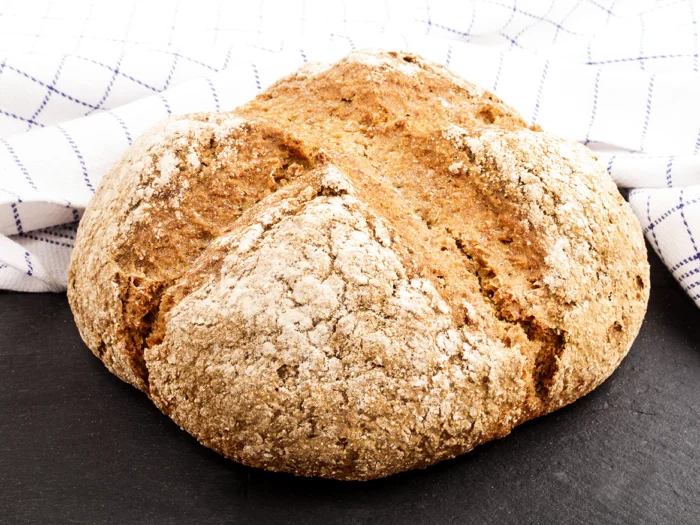
Irish soda bread is a quick, rustic loaf leavened with bicarbonate of soda rather than yeast. This simple wholemeal-and-white-flour version is ready in about 50 minutes and is especially good with salted butter.
Ingredients
- 250 gplain flour
- 250 gwholemeal flour
- 2 tspbicarbonate of soda
- 1 tspsalt
- 500 mlbuttermilk
Instructions
- 1
Preheat and mix
Heat the oven to 200°C. Put both flours in a bowl and stir in the bicarbonate of soda and salt. Add the buttermilk gradually, mixing to make a dough; you may not need all of it.
- 2
Knead briefly
Turn the dough out onto a floured work surface and knead it briefly by hand, just until it forms a smooth, soft ball. If it is too wet and sticky, work in a little more flour.
- 3
Shape the loaf
Shape the dough into a round loaf and place it on a baking tray lined with baking paper. Use a sharp knife to cut a cross into the top.
- 4
Bake until golden
Bake in the preheated oven for about 30–35 minutes. The loaf is ready when the crust is golden and the underside sounds hollow when tapped.
What is Irish soda bread?
Soda bread is a traditional Irish loaf made with bicarbonate of soda as its raising agent, rather than yeast. Its quick preparation makes it a practical home-baked bread when there is no time to wait for dough to rise.
This version combines white and wholemeal flour for a balance of softness and a fuller, nuttier flavour. Buttermilk brings the moisture and acidity that work with the bicarbonate of soda.
Nutrition and macros by portion
The nutrition label shows one serving as written: 490 calories, 19g protein, 100g carbs, 3g fat.
| Portion | Adjustment | kcal | Protein | Carbs | Fat |
|---|---|---|---|---|---|
| Lighter | Smaller bread portion | 343 kcal | 13g | 70g | 2g |
| This serving | As written | 490 kcal | 19g | 100g | 3g |
| Hungry | Larger bread portion | 735 kcal | 29g | 150g | 5g |
The flour supplies most of the carbohydrates, with the wholemeal flour also contributing fibre; buttermilk provides much of the protein and a little fat. Bicarbonate of soda and added salt account for much of the sodium, so pair a slice with vegetables or a less salty topping for a more balanced plate.
Choosing the ingredients
Flour blend: plain flour gives the loaf a lighter crumb, while wholemeal flour adds a more robust flavour and texture. Measure both carefully so the dough does not become too dry.
Buttermilk: pour it in gradually, as the exact amount needed can vary with the flour. Stop adding it when the mixture comes together into a soft dough.
Mixing and kneading
Gentle mixing: stir until the dry ingredients are moistened and the dough begins to hold together. Avoid working it for longer than needed.
Brief kneading: a short knead is enough to form a soft ball. Too much handling can make the loaf dense, so add only a little extra flour if the dough is genuinely sticky.
Shaping and scoring
Round loaf: shape the dough without pressing it tightly together, then transfer it to the lined tray. A free-standing loaf gives the crust room to form around the sides.
Cross on top: cut a cross into the surface with a sharp knife before baking. Make the cut clearly, but keep the loaf intact at its base.
How to tell it is baked
Colour: look for a golden-brown crust after 30–35 minutes in the 200°C oven. If it is still pale, give it a little more time and check again.
Sound: tap the underside carefully; a hollow sound is the recipe's cue that the centre has baked through. Let the loaf rest before slicing so the crumb can settle.
Serving the loaf
Soda bread is particularly satisfying served warm with salted butter, as suggested in the recipe description. It also works alongside soup or a savoury meal, where its hearty crumb can be used to mop up the last spoonfuls.
Recipe notes & tips
- Add the buttermilk gradually because the dough may not need the full 500 ml.
- Keep the kneading brief to help the loaf stay tender.
- Dust the work surface lightly so the dough is easier to handle without making it dry.
- Use a sharp knife to make the cross before the loaf goes into the oven.
- Check for both a golden crust and a hollow sound underneath before taking the bread out.
Variations
- More wholemeal: replace some of the plain flour with wholemeal flour for a heartier loaf, adjusting the buttermilk gradually.
- Seeded loaf: fold a handful of seeds into the dough for added crunch.
- Oat topping: sprinkle oats over the loaf before baking for a rustic finish.
- Herb version: mix chopped fresh herbs into the flour for a savoury twist.
- Serve with butter: spread slices with salted butter while still warm.
Common mistakes to avoid
- Adding all the buttermilk at once: the dough can become too wet, so pour it in gradually.
- Over-kneading: too much handling can make the loaf dense; stop once a soft ball forms.
- Adding too much extra flour: this can dry the dough, so work in only a small amount if it is sticky.
- Skipping the cross: cut the top before baking as directed so the loaf has its characteristic scored surface.
- Removing it too soon: check for a golden crust and a hollow sound when tapping the underside.
How to store
Once completely cool, store the loaf wrapped or in an airtight container at room temperature and eat within 2 days. Refresh slices briefly in a toaster or warm oven; freezing sliced bread is also a convenient option.
Frequently asked questions
Can I use all wholemeal flour?
The recipe uses equal amounts of plain and wholemeal flour. Using all wholemeal flour will make the loaf denser, so add the buttermilk gradually and judge the dough by its soft consistency.
Do I need to use all the buttermilk?
No. Add it slowly and stop when the flour comes together into a soft dough; the recipe notes that you may not need the full amount.
Can I make this without buttermilk?
Buttermilk is the specified ingredient and provides the acidity that works with the bicarbonate of soda. A substitute may change the flavour and texture.
How do I know the bread is done?
The crust should be golden brown, and the underside should sound hollow when tapped. The stated baking time is about 30–35 minutes at 200°C.
Why should I avoid kneading it for long?
The method calls for just enough kneading to make a smooth, soft ball. Longer kneading can make this quick bread less tender.
Can I freeze Irish soda bread?
Yes. Cool it fully, slice it and freeze the slices in a sealed bag or container so you can thaw or toast portions as needed.
Cook it from the original
This recipe comes from fuku.ch. Their page has the author’s own photos, notes and tips — the best place to cook it from.
Open the recipe on fuku.ch