
Vegetarian pizza with bell pepper
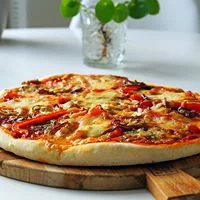
This vegetarian pizza pairs homemade dough with passata, pesto, red peppers, sautéed mushrooms and grated cheese. It is a colourful, vegetable-topped pizza with a crisp base and a straightforward Italian-inspired flavour.
Ingredients
- 250 gflour
- 7 gdried yeast
- 150 mlwater
- a drizzleolive oil
- a pinchsalt
- 2red bell peppers
- 400 gcremini mushrooms
- 400 gpassata
- 4 teaspoonspesto
- 100 ggrated cheese
Instructions
- 1
Mix the dough
Combine the flour, dried yeast and salt. Add the water and a drizzle of olive oil, then knead until a smooth pizza dough forms.
- 2
Let it rise
Leave the dough in its bowl, covered with a damp tea towel, in a warm place for 1.5 hours to rise.
- 3
Heat the oven
Preheat the oven to 220°C.
- 4
Cook the mushrooms
Slice the mushrooms and sauté them in a little olive oil in a pan for about 8–10 minutes. Meanwhile, cut the peppers into strips.
- 5
Shape the bases
Divide the dough into 2 portions. Roll each portion into a thin pizza base and prick the base a few times with a fork.
- 6
Add the toppings
Spread passata over the base, then spread 2 teaspoons of pesto over it. Arrange the pepper strips and mushrooms on top, then finish with grated cheese.
- 7
Bake the pizza
Bake at 220°C for about 10–15 minutes, until golden brown.
- 8
Slice and serve
Cut the veggie pizza into 8–10 slices and serve.
What is vegetarian pizza with bell pepper?
Pizza is an Italian dish built around a dough base topped and baked until the crust is cooked and the toppings are hot. This version uses passata and pesto as its base, with peppers, mushrooms and cheese for a mix of sweet, savoury and rich flavours.
The homemade dough gives you control over the thickness, while sautéing the mushrooms first helps them release moisture before they go on the pizza.
Nutrition and macros by portion
The nutrition label shows one serving as written: 1700 calories, 65g protein, 260g carbs, 48g fat.
| Portion | Adjustment | kcal | Protein | Carbs | Fat |
|---|---|---|---|---|---|
| Lighter | Less cheese, more peppers | 1190 kcal | 46g | 182g | 34g |
| This serving | As written | 1700 kcal | 65g | 260g | 48g |
| Hungry | Serve a larger portion | 2550 kcal | 98g | 390g | 72g |
Most of the carbohydrates come from the flour, while the cheese and pesto contribute much of the fat and some of the protein. Mushrooms and peppers add fibre and vegetables, and the cheese also contributes protein. Pair a slice with a green salad or extra vegetables to add freshness to the plate.
The dough and its rise
Yeast: mixing it with the flour and water starts the dough-making process. Knead until the dough is cohesive and smooth rather than leaving dry patches of flour.
Rising: give the covered dough the full 1.5 hours in a warm place. It should look puffier after resting, though the recipe does not specify a particular rise in size.
Prepare the toppings
Mushrooms: slice them evenly and sauté for 8–10 minutes, until softened. Cooking them before topping the pizza helps avoid adding their uncooked moisture to the base.
Peppers: cut the red peppers into strips so they can be spread across the dough. Keep the strips reasonably even for consistent cooking.
Shape and top the bases
Thin dough: divide the dough into 2 portions and roll each one thinly. Pricking the base with a fork follows the method and helps limit large air pockets as it bakes.
Layering: spread on the passata, then the pesto, followed by the vegetables and cheese. Distribute the toppings rather than piling them in the centre.
Bake until golden
Oven: bake at 220°C for about 10–15 minutes. The recipe uses colour as the doneness cue, so look for a golden-brown finish.
Check the base and cheese towards the end of the baking time, since the thickness of the rolled dough can affect how quickly the pizza cooks.
Serving ideas
Cut the pizza into 8–10 slices as directed and serve while the cheese is warm. A simple green salad or extra vegetables make an easy accompaniment.
The dough is divided into 2 portions in the method, so shape and top the portions as described; the recipe does not give separate baking instructions for a second base.
Recipe notes & tips
- Use a damp tea towel to cover the dough while it rises so the surface is less likely to dry out.
- Slice the mushrooms to a similar thickness so they cook evenly in the pan.
- Roll the dough thinly as the method directs for a crispier-style base.
- Spread the passata and pesto evenly, leaving the toppings distributed across the base.
- Start checking the pizza at 10 minutes and bake for up to 15 minutes, until golden brown.
Variations
- Add fresh herbs: scatter basil leaves over the pizza after baking.
- Use another cheese: replace the grated cheese with a different melting cheese.
- Add olives: scatter sliced olives among the pepper and mushroom toppings.
- Make it spicier: add chilli flakes to the passata before spreading it on the base.
- Change the vegetables: swap some of the pepper for sliced courgette.
Common mistakes to avoid
- Skipping the rise: the dough needs 1.5 hours in a warm place, so allow time before shaping.
- Leaving mushrooms raw: sauté them for 8–10 minutes first to cook off some of their moisture.
- Rolling the base too thick: roll each portion thinly as directed for a less doughy result.
- Overloading the centre: spread the toppings evenly so the base can bake consistently.
- Baking by time alone: use the golden-brown colour as the cue, within the 10–15-minute baking window.
How to store
Refrigerate leftover pizza in a covered container and eat within 3–4 days. Reheat in an oven until hot throughout; a pan can also help crisp the base again.
Frequently asked questions
How long does the dough need to rise?
Leave it covered in a warm place for 1.5 hours, as directed. The recipe does not give a shorter alternative.
Can I prepare the mushrooms ahead?
Yes. Sauté them for 8–10 minutes, cool them, and refrigerate until you are ready to top the pizza.
How do I know when the pizza is done?
Bake at 220°C for about 10–15 minutes and look for a golden-brown finish. Check near the end of the range because base thickness can affect the timing.
Why prick the base with a fork?
The method calls for a few fork holes before adding the toppings. This helps reduce large air pockets forming in the dough as it bakes.
Can I use a different cheese?
Yes, another grated cheese that melts well can stand in for the grated cheese listed. The flavour and browning may vary.
How many pizza bases does the dough make?
The method says to divide the dough into 2 portions and roll each into a thin base. It does not specify separate topping or baking quantities for the second portion.
Cook it from the original
This recipe comes from cookinglife.eu. Their page has the author’s own photos, notes and tips — the best place to cook it from.
Open the recipe on cookinglife.eu