
Braised chops
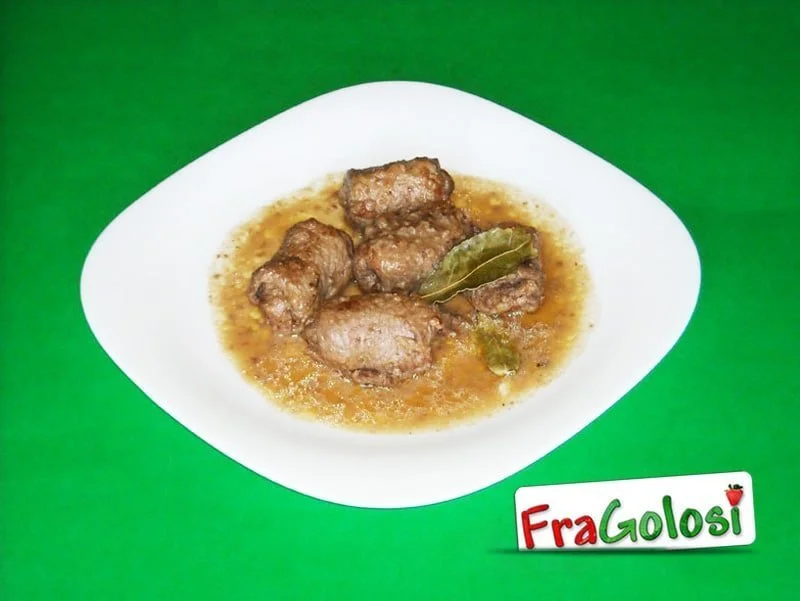
These Italian-style braised chops are thin slices of meat rolled around a savoury filling of breadcrumbs, cheese and mortadella, then gently cooked in a simple, herby sauce. They make a hearty main course for a family meal, with the slow, covered cooking helping the rolls stay tender.
Ingredients
- 1 kgthin slices of meat for braciole
- 2eggs
- to tastebreadcrumbs
- 1 bunchparsley
- 2 clovesgarlic
- 60 ggrated Parmesan and/or sharp pecorino
- 150 gmortadella
- 150 gdiced pasta-filata cheese
- 1 leafbay leaf
- to tasteextra-virgin olive oil
- to tastesalt
- to tastechilli
Instructions
- 1
Flatten the meat
Place the meat slices between two sheets of baking paper and gently flatten them with a meat mallet.
- 2
Mix the filling
Put the breadcrumbs in a bowl and add the eggs, grated Parmesan and/or sharp pecorino, finely chopped garlic if using, and chopped parsley.
- 3
Season the mixture
Add salt, moisten the mixture with a little oil and work everything together thoroughly.
- 4
Fill the slices
Put a little seasoned breadcrumb mixture on each slice, then add diced cheese and pieces of mortadella.
- 5
Roll and secure
Roll up the meat to make braciole and secure each one with a wooden skewer.
- 6
Prepare the pan
Add 5 tablespoons of oil, 2 glasses of water, chopped parsley, one peeled clove of garlic and a bay leaf to a pan.
- 7
Bring to the boil
When the liquid comes to the boil, add the braciole.
- 8
Braise gently
Adjust the salt and chilli, then cook over a low heat with the pan covered. Check the cooking liquid from time to time.
- 9
Serve the chops
When cooked, transfer the braised braciole to a serving dish and serve straight away.
What are braised chops?
Braciole are rolled meat dishes found in Italian home cooking, with fillings and cooking styles that vary from place to place. This version wraps breadcrumbs, cheese and mortadella inside thin slices of meat, then braises the rolls in a lightly seasoned liquid.
The filling makes the chops substantial, while gentle covered cooking gives the meat time to soften and lets the flavours mingle.
Nutrition and macros by portion
The nutrition label shows one serving as written: 650 calories, 54g protein, 17g carbs, 40g fat.
| Portion | Adjustment | kcal | Protein | Carbs | Fat |
|---|---|---|---|---|---|
| Lighter | Use less cheese and oil | 455 kcal | 38g | 12g | 28g |
| This serving | As written | 650 kcal | 54g | 17g | 40g |
| Hungry | Serve with extra potatoes | 975 kcal | 81g | 26g | 60g |
The meat, eggs, mortadella and cheese provide most of the protein, while the breadcrumbs contribute carbohydrates. The cheese, mortadella and olive oil are the main sources of fat; serve a moderate portion with vegetables or salad to balance the plate.
Choosing the filling ingredients
Breadcrumbs: add them a little at a time, since the recipe gives no fixed amount. The eggs and a little oil should bind them into a moist mixture that can be spread without running.
Cheese and mortadella: dice the pasta-filata cheese and cut the mortadella into small pieces so they fit neatly inside the meat. Parmesan or sharp pecorino brings a salty, savoury note to the breadcrumb mixture.
Rolling the chops neatly
Thin slices: flatten the meat between baking paper to make the slices easier to fill and roll. Keep the filling away from the edges to reduce the chance of it spilling out.
Secure rolls: roll each slice firmly but without squeezing out the filling, then fasten it with a wooden skewer. Check that the skewer holds the seam closed before adding the rolls to the pan.
Braising gently
Low heat: once the liquid boils and the braciole are added, reduce the heat and keep the pan covered. A gentle simmer cooks the rolls without rapidly reducing all the liquid.
Liquid level: check the pan from time to time as directed, and make sure some cooking liquid remains while the meat braises. The recipe does not specify an exact cooking duration, so use the tenderness of the meat as your cue.
Checking doneness
Meat: the braciole should be cooked through and tender when pierced. If they still feel firm, continue cooking gently with the lid on.
Filling: the cheese should be melted and the rolls should hold their shape when lifted. Remove the wooden skewers carefully before serving, or warn diners to watch for them.
Serving ideas
Sauce: spoon some of the cooking liquid over the braciole to keep them moist and carry the parsley, garlic and bay flavours to the plate.
Sides: serve with bread, potatoes or a simple green vegetable. A crisp salad can also provide a fresh contrast to the rich meat and cheese filling.
Recipe notes & tips
- Use baking paper above and below the meat to keep it from sticking to the mallet.
- Chop the parsley finely so it distributes evenly through the filling and cooking liquid.
- Keep the filling modest so each slice can be rolled without tearing.
- Use wooden skewers long enough to hold the seams closed securely.
- Check the pan regularly during braising to make sure the liquid has not reduced too far.
- Let the braciole rest briefly before serving so the filling settles inside the rolls.
Variations
- Choose the cheese: use Parmesan, sharp pecorino or a mixture in the breadcrumb filling.
- Adjust the chilli: add only a little for mild warmth, or more to taste.
- Make the filling garlicky: include the optional chopped garlic in the breadcrumbs.
- Add herbs: use extra parsley in the filling or the braising liquid.
- Change the meat: choose thin slices suitable for rolling and braising.
Common mistakes to avoid
- Too much filling: the rolls can split; leave a clear border around each slice.
- Loose rolls: the filling may escape; roll firmly and secure the seam with a skewer.
- High heat: the liquid can evaporate quickly; keep the pan covered and cook over a low heat.
- Skipping liquid checks: the pan may dry out; check the cooking liquid from time to time.
- Roughly flattening the meat: slices can tear; use an even, gentle motion between sheets of baking paper.
How to store
Refrigerate leftovers in a covered container within 2 hours and use within 3 days. Reheat gently in a covered pan with a splash of water or cooking liquid until piping hot throughout.
Frequently asked questions
What meat should I use for braciole?
Use thin slices of meat intended for rolling, as specified in the recipe. They should be easy to flatten and wide enough to hold the filling.
How much breadcrumb should I add?
The recipe gives no exact quantity, so add breadcrumbs gradually until the eggs, cheese and parsley form a moist, workable mixture.
Can I leave out the garlic?
Yes. The chopped garlic in the filling is marked as optional; the method also includes a peeled clove in the braising liquid.
How do I know when the braciole are cooked?
Check that the meat is cooked through and tender when pierced. The method does not provide a precise cooking time, so continue gently braising if the meat remains firm.
Can I prepare the braciole ahead?
You can roll and secure them ahead, then keep them covered in the fridge until ready to cook. Braise them before serving and reheat leftovers gently.
What should I serve with braised chops?
Bread, potatoes or a green vegetable all work well. A simple salad is another good accompaniment to the rich filling.
Cook it from the original
This recipe comes from fragolosi.it. Their page has the author’s own photos, notes and tips — the best place to cook it from.
Open the recipe on fragolosi.it