
Vegetarian pizza
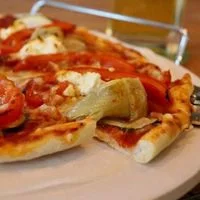
This vegetarian pizza pairs a crisp, thin base with tomato sauce, colourful vegetables, feta and grated cheese. It makes two pizzas and is a good way to build a meat-free meal around familiar pizza flavours.
Ingredients
- 250 gplain flour
- 150 mlwater
- 1 pinchsalt
- 1 teaspoonolive oil
- 1/2 sachetyeast
- 1bell pepper
- 1onion
- 4artichoke hearts
- 1/2courgette
- 200 mltomato sauce
- 50 gfeta cheese
- 25 ggrated cheese
Instructions
- 1
Mix the yeast
Stir the yeast into 50–75 ml of lukewarm water. In a bowl, mix the flour and salt, then add the yeast water and stir it through.
- 2
Knead the dough
Add the remaining flour, some water and the olive oil, then knead until the dough no longer sticks to your hands. If it remains sticky, add a little more flour.
- 3
Let it rise
Return the dough to the bowl and cover it with a damp tea towel. Leave it in a warm place for about an hour to rise.
- 4
Shape the bases
Preheat the oven to 250°C with a pizza stone inside. Divide the dough into 2 portions, flour the work surface and roll each portion to about 0.5 cm thick. Transfer each base to a piece of baking parchment.
- 5
Add the toppings
Spread tomato sauce over each base. Cut the bell pepper and onion into strips and slice the courgette thinly, then scatter them and the artichoke hearts over the pizzas. Finish with pieces of feta and the grated cheese.
- 6
Bake until crisp
Bake the pizzas for about 10 minutes, until crisp.
What is vegetarian pizza?
Pizza is an Italian dish built around a dough base with sauce and toppings, and it can be made without meat. This version uses bell pepper, onion, courgette and artichoke hearts, topped with feta and grated cheese.
The thinly rolled base and hot pizza stone help the crust turn crisp, while tomato sauce gives the vegetables a moist, savoury layer beneath the cheese.
Nutrition and macros by portion
The nutrition label shows one serving as written: 680 calories, 24g protein, 104g carbs, 18g fat.
| Portion | Adjustment | kcal | Protein | Carbs | Fat |
|---|---|---|---|---|---|
| Lighter | Use less cheese | 476 kcal | 17g | 73g | 13g |
| This serving | As written | 680 kcal | 24g | 104g | 18g |
| Hungry | Add a larger portion | 1020 kcal | 36g | 156g | 27g |
Most of the carbohydrates come from the flour and tomato sauce; the olive oil and cheeses contribute fat, while the feta and grated cheese provide most of the protein. Serve a slice with a generous salad or extra vegetables to add freshness and balance the plate.
Getting the dough right
Yeast: mix it with lukewarm water before adding it to the flour and salt. The water should feel warm rather than hot.
Kneading: work the dough until it stops sticking to your hands, adding a little flour if needed. Leave it covered in a warm place for about an hour so it can rise.
Roll and transfer carefully
Thin bases: roll each portion to about 0.5 cm thick for the crisp style described in the method. Try to keep the thickness even so the base bakes consistently.
Baking parchment: shape the dough on a floured surface, then move it onto parchment before adding the toppings. This makes it easier to handle when loading it onto the hot pizza stone.
Balance the toppings
Vegetables: cut the pepper and onion into strips and slice the courgette thinly so the toppings are easy to spread over the bases. Scatter the artichoke hearts across both pizzas.
Cheese: finish with feta pieces and grated cheese. Distribute the toppings evenly rather than piling them in the centre, which helps the thin bases bake through.
Watch the bake
Hot oven: preheat to 250°C with the pizza stone inside, as directed. Allow the oven and stone to heat before baking the pizzas.
Doneness: the stated baking time is about 10 minutes; look for a crisp base. Ovens can vary, so check the pizza as it approaches that time.
What to serve with it
Serve the pizzas hot, while the bases are crisp and the cheese is freshly melted. A simple green salad or extra vegetables alongside can make the meal more substantial without crowding the pizza.
Recipe notes & tips
- Measure out 50–75 ml of the water for mixing with the yeast before adding the rest.
- Keep the work surface lightly floured so the dough is easier to knead and roll.
- Roll both bases to a similar thickness so they bake at a similar rate.
- Slice the courgette thinly so it cooks during the short bake.
- Spread the sauce and toppings close to the edges, leaving the bases easy to pick up.
- Check the pizzas near the 10-minute mark for a crisp base.
Variations
- Add mushrooms: slice them thinly and scatter them with the other vegetables.
- Use mozzarella: swap it for the grated cheese for a milder, stretchy topping.
- Add olives: scatter a few sliced olives over the sauce for a briny note.
- Make it spicier: add a pinch of chilli flakes over the tomato sauce.
- Use fresh herbs: finish the baked pizzas with a little chopped basil or oregano.
Common mistakes to avoid
- Water that is too hot: it can affect the yeast; use lukewarm water.
- Sticky dough: knead it further and add a little flour if it still clings to your hands.
- Uneven bases: roll each portion to an even thickness so it bakes consistently.
- Thick courgette slices: they may not soften in the short bake; slice them thinly.
- Overloaded centre: too much topping in one place can make the thin base harder to bake crisp; spread it evenly.
- Cold pizza stone: preheat it inside the oven at 250°C before baking.
How to store
Store leftover pizza covered in the fridge and eat within 2 days. Reheat in a hot oven until warmed through and crisp again; the microwave will soften the base.
Frequently asked questions
Can I make the dough ahead?
The recipe specifies a rise of about an hour in a warm place. For a make-ahead plan, refrigerate the covered dough and allow it to come back towards room temperature before shaping.
Do I need a pizza stone?
The method calls for preheating the oven with a pizza stone. If you do not have one, a sturdy baking tray can be heated in the oven, though the result may differ.
How do I know when the pizza is done?
Bake for about 10 minutes and check that the base is crisp. Keep an eye on it as the exact time can vary by oven.
Can I use a different cheese?
Yes. You can replace the feta or grated cheese with another cheese that melts well, bearing in mind that the flavour and saltiness will change.
Can I add other vegetables?
Yes, thinly sliced vegetables can be added alongside the listed toppings. Avoid piling too much onto the bases so they can bake crisp.
Cook it from the original
This recipe comes from cookinglife.eu. Their page has the author’s own photos, notes and tips — the best place to cook it from.
Open the recipe on cookinglife.eu