
The one and only spaghetti carbonara
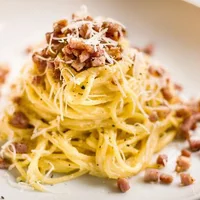
Spaghetti carbonara is a quick Italian pasta dish coated in a rich sauce of eggs and grated Parmesan, with crisp guanciale for savoury flavour. It comes together just after the pasta cooks, making it a good choice when you want a comforting meal without a long cooking time.
Ingredients
- 350 gspaghetti
- 150 gguanciale (or pancetta)
- 3eggs
- to tastegrated Parmesan cheese
- to tastegood olive oil
- to tastesalt and freshly ground pepper
Instructions
- 1
Cook the spaghetti
Bring a large pot of plenty of salted water to the boil. Cook the spaghetti until al dente.
- 2
Fry the guanciale
Heat olive oil in a pan and fry the guanciale until crisp.
- 3
Mix eggs and cheese
Beat the eggs and stir in grated Parmesan.
- 4
Combine off heat
Add the spaghetti and egg-and-cheese mixture to the guanciale, then stir well with the pan off the heat so the eggs do not start to set.
- 5
Serve straight away
Serve immediately while the pasta is still warm.
What is spaghetti carbonara?
Carbonara is an Italian pasta dish known for its savoury cured pork and a coating made with eggs and cheese. This version keeps the ingredient list short and brings everything together in the pan after the pasta has cooked.
The key is to take the pan off the heat before adding the egg mixture. The residual warmth helps coat the spaghetti while reducing the chance of scrambling the eggs.
Nutrition and macros by portion
The nutrition label shows one serving as written: 620 calories, 27g protein, 67g carbs, 27g fat.
| Portion | Adjustment | kcal | Protein | Carbs | Fat |
|---|---|---|---|---|---|
| Lighter | Use less guanciale | 434 kcal | 19g | 47g | 19g |
| This serving | As written | 620 kcal | 27g | 67g | 27g |
| Hungry | Add extra spaghetti | 930 kcal | 41g | 101g | 41g |
Most of the carbohydrates come from the spaghetti, while guanciale and olive oil contribute much of the fat. Eggs, Parmesan and guanciale provide protein; serve a modest portion with vegetables or salad to balance the plate.
The key ingredients
Guanciale: This cured pork cheek brings rich, savoury flavour and turns crisp as it fries. Pancetta is offered as an alternative if guanciale is not available.
Eggs and Parmesan: Together they form the coating for the pasta. The recipe gives no set quantity for the cheese, so add it to taste.
Getting the pasta right
Al dente: Cook the spaghetti until it is tender but still has a slight firmness at the centre. Check it towards the end of cooking, as the exact time depends on the pasta.
Salted water: The recipe calls for plenty of boiling, salted water. Season it before adding the spaghetti, bearing in mind that the cured pork and Parmesan are also savoury.
Keep the eggs from scrambling
Off the heat: Turn off the hob and move the pan away from the heat before adding the egg-and-cheese mixture. Stir promptly so the warm pasta and pan coat the strands without setting the eggs into pieces.
Work promptly: Have the beaten eggs and Parmesan ready before the spaghetti finishes cooking. The dish is served straight away, while warm.
Crisp the guanciale
Cook the guanciale in the pan until crisp, as directed, so it adds texture alongside the smooth egg-and-cheese coating. Keep an eye on it as it fries and avoid letting it burn.
The recipe also uses good olive oil in the pan. Add enough to fry the guanciale, without letting the oil dominate the finished pasta.
When to serve it
Carbonara is at its best just after it is mixed, while the pasta is warm and the coating is still loose. Set out bowls before combining everything so you can serve promptly.
A simple green salad or cooked vegetables make a fresh side and help balance the richness of the pasta.
Recipe notes & tips
- Have the beaten eggs and Parmesan ready before draining the spaghetti.
- Cook the spaghetti until al dente rather than letting it turn soft.
- Fry the guanciale until crisp, keeping a close eye on it.
- Take the pan off the heat before stirring in the egg mixture.
- Serve immediately so the pasta stays warm and the coating remains smooth.
Variations
- Use pancetta: Swap it for the guanciale as the recipe suggests.
- Add more Parmesan: Stir in extra grated cheese to taste.
- Season with pepper: Add freshly ground pepper at the table for a more pronounced peppery finish.
- Serve with greens: Pair the pasta with a simple green salad for a fresh contrast.
Common mistakes to avoid
- Adding eggs over heat: The mixture may scramble; take the pan off the heat first.
- Overcooking the spaghetti: It can become soft; check it for an al dente centre.
- Letting guanciale burn: It can turn bitter; watch it as it fries until crisp.
- Waiting to serve: The coating is best warm; serve as soon as everything is combined.
How to store
Carbonara is best eaten immediately. If needed, refrigerate leftovers in a covered container and use within 2 days; reheat gently in a pan, stirring carefully, as the egg coating may firm up.
Frequently asked questions
Can I use pancetta instead of guanciale?
Yes. Pancetta is given as an alternative in the ingredient list; fry it until crisp.
How do I stop the eggs from scrambling?
Take the pan off the heat before adding the egg-and-Parmesan mixture. Stir it through promptly with the warm spaghetti.
How do I know when the spaghetti is al dente?
It should be tender but retain a slight firmness at the centre. Check the pasta as it cooks, since timing can vary.
How much Parmesan should I use?
The recipe does not specify a quantity, so add grated Parmesan to taste and mix it with the beaten eggs.
Can I make carbonara ahead?
It is best made just before serving, because the warm pasta helps form the coating and the dish is intended to be served immediately.
Cook it from the original
This recipe comes from cookinglife.eu. Their page has the author’s own photos, notes and tips — the best place to cook it from.
Open the recipe on cookinglife.eu