
Kimchi
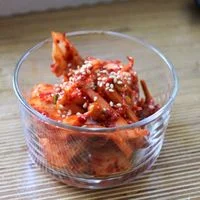
Kimchi is a traditional Korean side dish of fermented Chinese cabbage with a spicy, fresh flavor. The cabbage is salted, rinsed and then mixed with a spicy paste of ginger, garlic, onion, Korean radish, carrot and gochugaru (Korean chili flakes). After mixing well, the kimchi is stored in jars and can be eaten immediately or fermented for a more intense taste. Sprinkle with sesame seeds for an extra flavorful finish.
Ingredients
- 3 kg Chinese cabbage (napa cabbage)
- 1 Korean radish or Japanese daikon (available at Asian stores), white/green in color and larger than a regular radish
- 1 carrot
- 7 spring onions
- 1 onion
- 24 cloves garlic
- 5 g finely chopped fresh ginger
- 250 g Korean hot pepper flakes Gochugaru, or to taste (available at Asian stores)
- 70 g salt
- 2 tablespoons brown or white granulated sugar
- 2 tablespoons flour
- 500 ml water
- 1 handful sesame seeds for topping
Instructions
- 1
Wash the Chinese cabbage thoroughly and cut it into four quarters by slicing lengthwise four times. You can also cut the cabbage into small pieces. This makes salting and applying the spices easier. I personally like this method because it also makes for a quick snack.The next step is salting the Chinese cabbage so the vegetable will lose moisture and shrink. Take a large pot or bucket that fits all the cabbage. Take the cabbage quarters and sprinkle salt between each leaf and place them in the pot or bucket. If you have cut the cabbage into small pieces, put all the pieces in the pot or bucket and sprinkle the salt over them, then mix well. After that follow the same steps as the regular method of preparation.During the salting process swap the top and bottom pieces of cabbage with each other. Because of the water that is released, the bottom pieces will be saltier. Turn the cabbage every half hour at least 4 times; this takes 2 hours in total.In the meantime you can cut the Korean radish and carrot into strips and slice the spring onions into small rings. Then bring the (rice) flour, water and sugar to a boil in a small saucepan while stirring until it slowly becomes a thick paste. Once the mixture thickens, remove it from the heat and let it cool.Grind the ginger, garlic and onion finely in a food processor or chop the spices finely with a knife. Once the paste has cooled, you can add the spices to it together with the Gochugaru (Korean hot pepper flakes). Mix it well and then add the chopped vegetables to the mixture.Have you turned the cabbage at least 4 times, every half hour? Then the Chinese cabbage will have become a bit softer and more flexible. Rinse the cabbage at least twice so it is no longer so salty, and let it drain in a colander.If you have cut the cabbage into quarters, spread a layer of the mixture between each leaf. Use gloves for this, because the kimchi mixture stains a lot! Fold the cabbage slightly and place it in an airtight storage container or jar, such as a weckpot. If you cut the cabbage into small pieces beforehand, you can simply mix the pieces with the spice mixture. Now you can store it or start enjoying the kimchi right away! Serving tip: sprinkle some sesame seeds on the kimchi for extra flavor.
Cook it from the original
This recipe comes from cookinglife.eu. Their page has the author’s own photos, notes and tips — the best place to cook it from.
Open the recipe on cookinglife.eu