
Vegan burger
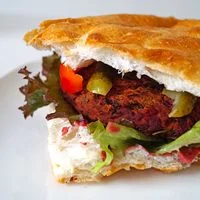
This vegan burger combines chickpeas and black beans in a gently spiced patty, served in Turkish bread with crisp vegetables. It is a satisfying plant-based option when you want a burger-style meal without meat.
Ingredients
- 400 gcooked chickpeas
- 200 gblack beans
- 2 tablespoonsgluten-free flour
- ½ teaspoonpaprika
- ½ teaspoonground cumin
- juice of 1lemon
- 1 handfullettuce
- 1 largetomato
- ½bell pepper
- 4gherkins
- to tasteTurkish bread (or 4 gluten-free rolls)
- to tastesalt and pepper
- to tasteolive oil
- optionalbeetroot hummus
Instructions
- 1
Blend the pulses
Blend the chickpeas and black beans in a food processor. Add the paprika, cumin, lemon juice, salt, pepper and flour, then blend to combine. If the mixture is still too wet to shape into burgers, mix in a little extra flour.
- 2
Fry the burgers
Heat olive oil in a frying pan and fry the burgers over a low-medium heat for about 6 minutes on each side.
- 3
Prepare the vegetables
Meanwhile, slice the tomato and cut the gherkins and bell pepper into strips.
- 4
Build the sandwiches
Cut the Turkish bread into portions and, if you like, spread it with beetroot hummus. Add lettuce, then place a burger on top and finish with tomato slices, gherkin and bell pepper.
- 5
Serve the burgers
Serve the vegetable burgers in the Turkish bread and enjoy.
What is a vegan burger?
A vegan burger is a meat-free patty served in the familiar burger format, often with bread and fresh toppings. This version uses chickpeas and black beans as its base, with lemon and warm spices for flavour.
The American-style burger format is widely adapted with different ingredients around the world. Here, Turkish bread gives the sandwich a soft, substantial base, while the vegetables add freshness and crunch.
Nutrition and macros by portion
The nutrition label shows one serving as written: 650 calories, 24g protein, 106g carbs, 11g fat.
| Portion | Adjustment | kcal | Protein | Carbs | Fat |
|---|---|---|---|---|---|
| Lighter | Use less bread | 455 kcal | 17g | 74g | 8g |
| This serving | As written | 650 kcal | 24g | 106g | 11g |
| Hungry | Add another burger | 975 kcal | 36g | 159g | 17g |
The chickpeas, black beans and bread provide most of the carbohydrates, while the pulses also contribute protein. Olive oil and any hummus add fat, with the amount depending on how much you use. For a balanced plate, serve a burger with extra salad or vegetables; the nutrition estimate is approximate because the bread and oil quantities are unspecified.
Building a patty that holds together
Bean mixture: blend the chickpeas and black beans until they form a cohesive mixture, but avoid turning them into a completely smooth paste if you prefer some texture.
Flour: the flour helps bind the mixture. Add extra only if the patties are too wet to shape, since too much can make them dense.
Getting the flavour right
Spices and lemon: paprika and cumin add savoury warmth, while lemon juice brightens the pulses. Taste the mixture before shaping and adjust the salt and pepper as needed.
Hummus: beetroot hummus is optional, but it adds another layer of flavour and moisture to the bread. Spread it thinly so it does not overwhelm the patty or make the sandwich difficult to handle.
Frying and checking for doneness
Steady heat: cook the burgers in olive oil over low-medium heat for about 6 minutes per side. This gives the patties time to warm through and develop a browned exterior without scorching.
Texture cues: turn the patties carefully once they hold together and are browned underneath. If one seems fragile, give it a little longer before turning.
Preparing the toppings
Fresh vegetables: slice the tomato and cut the bell pepper and gherkins into strips while the patties cook. Keeping the pieces easy to bite makes the finished sandwich less likely to fall apart.
Lettuce: place it on the bread before the patty to create a fresh layer between the bread and the warm burger.
Choosing bread and sides
Turkish bread: use enough bread to make four portions, or choose four gluten-free rolls. If the bread is especially large, cut it into manageable sandwich-sized pieces.
To serve: a simple green salad or extra sliced vegetables can round out the meal. The recipe already has pulses and bread, so fresh, crisp sides work particularly well.
Recipe notes & tips
- Drain the cooked pulses well so excess liquid does not make the mixture difficult to shape.
- Shape the patties to a similar thickness so they cook at a similar rate.
- Add extra flour a little at a time if the mixture feels too wet.
- Let the first side brown before turning the burgers to help them stay intact.
- Prepare the toppings before frying so the cooked patties can be assembled promptly.
Variations
- Add chilli: mix a little chilli powder into the bean mixture for extra heat.
- Use fresh herbs: stir chopped parsley or coriander into the mixture for a fresh note.
- Change the hummus: use plain hummus instead of beetroot hummus, or leave it out.
- Swap the bread: serve the patties in gluten-free rolls as an alternative to Turkish bread.
- Add avocado: layer sliced avocado into the sandwich for a creamy topping.
Common mistakes to avoid
- Wet mixture: drain the pulses well and add extra flour gradually until the patties can be shaped.
- Too much flour: add only enough to bind the mixture, or the patties may turn dense.
- High heat: keep the pan at low-medium so the outside does not brown too quickly.
- Turning too soon: wait until the underside is browned and the patty holds together before flipping.
- Overfilled bread: use moderate amounts of topping so the sandwich remains easy to eat.
How to store
Store leftover cooked patties in an airtight container in the fridge for up to 3 days, separate from the bread and fresh toppings. Reheat in a lightly oiled frying pan over a low-medium heat until hot throughout, then assemble with fresh vegetables.
Frequently asked questions
Can I use tinned chickpeas and beans?
Yes. Drain them thoroughly before blending so the mixture does not become too wet.
How do I know if the mixture is too wet?
If you cannot shape it into patties without it sticking excessively to your hands, add a little more flour and mix again.
Can I make the patties ahead?
You can shape them in advance and keep them covered in the fridge until you are ready to fry. Keep the bread and toppings separate until serving.
Can I bake the burgers instead?
The method provided is for pan-frying, so baking would require adjusting the cooking time and checking that the patties brown and heat through without drying out.
What can I use instead of Turkish bread?
The recipe suggests four gluten-free rolls as an alternative. Other burger buns can also be used if they suit your needs.
Cook it from the original
This recipe comes from cookinglife.eu. Their page has the author’s own photos, notes and tips — the best place to cook it from.
Open the recipe on cookinglife.eu