
Soudough Bread
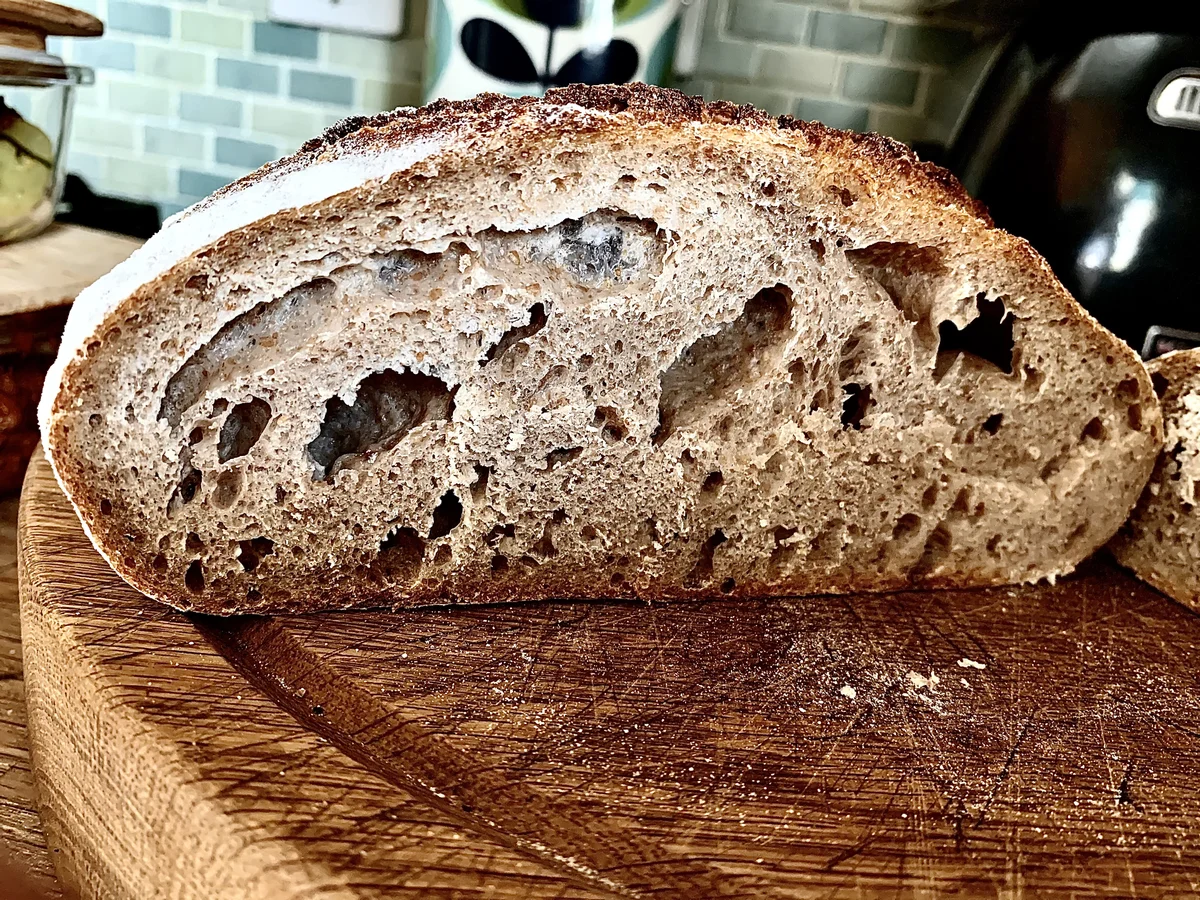
This sourdough loaf uses a prepared starter and sponge, with a long rest and repeated folds to develop its texture. Bake it in a covered casserole or on a heated baking stone for a crisp, golden crust.
Ingredients
- 30 gstarter
- 20 gstrong white flour
- 20 gwholemeal rye flour
- 452 gflour
- 8 gsalt
- 285 gwater
- 90 gsponge
Instructions
- 1
Prepare the starter
The night before baking, mix the starter, strong white flour and wholemeal rye flour. Cover with kitchen paper and leave on the worktop overnight.
- 2
Check the preparations
Once the starter has been prepared and fed correctly, and the sponge is ready, you can begin making the bread.
- 3
Rest the dough
Put the flour, water and sponge in a mixing bowl, leaving out the salt. Leave the mixture for 1 hour to hydrate.
- 4
Mix in salt
Add the salt and mix it into the dough.
- 5
Work the dough
Work the dough in the bowl. If it needs more flour or water, adjust it now; it should be sticky and loose enough to pull away from the bowl.
- 6
Stretch and tuck
Stretch the dough and tuck it underneath, rotating the bowl as you go. Repeat this five times, turning the bowl.
- 7
Bulk proof
Cover the bowl with a damp cloth and leave the dough to rest for about 45 minutes. Repeat the stretching and tucking process five to seven times. Once the dough is more manageable, silky and smooth, cover the bowl and refrigerate it overnight.
- 8
Shape and prove
In the morning, fold the dough in the middle and roll it to create tension. Put it in a well-floured proving basket, cover it and leave it to rise for at least 4 hours, or overnight in the refrigerator.
- 9
Score the loaf
Turn the dough out onto non-stick baking paper and score its surface. Lift it using the paper into a heated baking stone or cast-iron dish or casserole, then spray it with water.
- 10
Bake until golden
If using a casserole, cover it with a lid. Bake in an oven preheated to 230°C for 20 minutes, then remove the lid and bake for another 20 minutes, until golden and hollow-sounding when tapped.
What is sourdough bread?
Sourdough is bread leavened with a culture of wild yeast and bacteria rather than relying only on commercial baker’s yeast. Its long fermentation gives the loaf a distinctive tang and a chewy crumb.
This version combines a prepared starter and sponge with a long, cool rest. Repeated folds help build structure without intensive kneading.
Nutrition and macros by portion
The nutrition label shows one serving as written: 430 calories, 13g protein, 89g carbs, 2g fat.
| Portion | Adjustment | kcal | Protein | Carbs | Fat |
|---|---|---|---|---|---|
| Lighter | Smaller slice, more vegetables | 301 kcal | 9g | 62g | 1g |
| This serving | As written | 430 kcal | 13g | 89g | 2g |
| Hungry | Larger slice | 645 kcal | 20g | 134g | 3g |
Most of the carbohydrates and energy come from the flour, while the flour and fermented dough also provide most of the protein. The small amount of listed salt contributes much of the sodium; the recipe contains very little added fat. Pair a slice with eggs, cheese or another protein and some vegetables to balance the plate.
The starter and sponge
Starter: the recipe begins with a small amount of starter mixed with strong white flour and wholemeal rye flour the night before baking. Cover it with kitchen paper as directed and leave it on the worktop overnight.
Sponge: add the 90 g of prepared sponge with the flour and water. The method assumes it is ready to use; it does not give separate instructions for making it.
Hydration before salt
Autolyse: leave the flour, water and sponge together for 1 hour before adding salt. This gives the flour time to absorb the water.
Salt: mix it in after that rest, as directed. The dough should remain sticky and loose enough to pull from the bowl.
Build structure with folds
Stretch and tuck: draw up a portion of dough and tuck it underneath, turning the bowl as you work around it. The recipe calls for five turns in each round.
Rest: cover the bowl with a damp cloth and leave the dough for about 45 minutes between rounds. Repeat the process five to seven times, looking for dough that becomes smoother and easier to handle.
Shape and judge the rise
Shape: fold the dough through the middle and roll it to create tension before placing it in a well-floured proving basket. Keep the cover on while it rises.
Timing: allow at least 4 hours at this stage, or leave it overnight in the refrigerator. The method does not give a specific volume cue, so follow the stated timing and handle the dough gently.
Bake for a crisp crust
Steam: spray the scored loaf with water before baking. A lid on the casserole, if using one, keeps the loaf covered for the first 20 minutes.
Finish: remove the lid after 20 minutes and bake for another 20 minutes at 230°C. The recipe’s cues are a golden crust and a hollow sound when tapped.
Serving the loaf
Let the loaf cool before slicing so the crumb can set. Serve it with soup, cheese or eggs, or use it for toast.
The bread is substantial on its own, so pair a slice with a source of protein and vegetables for a more rounded plate.
Recipe notes & tips
- Prepare the starter the night before you plan to bake.
- Keep the dough covered during rests so its surface does not dry out.
- Use a well-floured proving basket to help prevent the shaped dough sticking.
- Score the loaf just before baking, after turning it onto the baking paper.
- Use oven gloves when handling the heated stone or cast-iron dish.
- Wait for the loaf to cool before slicing for a neater crumb.
Variations
- More rye: replace some of the flour with wholemeal rye flour, bearing in mind the dough may behave differently.
- Seeded loaf: add seeds to the dough for extra texture.
- Herb loaf: mix chopped herbs into the dough for a savoury variation.
- Casserole bake: use a lidded cast-iron casserole for the covered first stage.
- Stone bake: use a heated baking stone if you do not have a casserole.
Common mistakes to avoid
- Adding salt too early: leave it out during the 1-hour hydration rest, then mix it in.
- Drying the dough: keep the bowl covered with a damp cloth during the repeated rests.
- Using a dry proving basket: flour it well before adding the shaped dough.
- Skipping the score: score the surface before baking so the loaf has an opening to expand through.
- Removing the lid too soon: keep the casserole covered for the first 20 minutes, then uncover it for the final 20.
- Cutting the loaf hot: allow it to cool first so the crumb has time to set.
How to store
Once completely cool, store the loaf in a bread bag or wrapped in a clean cloth at room temperature and use within 2–3 days. Refresh slices in a toaster or warm them briefly in the oven.
Frequently asked questions
Can I leave the dough in the fridge overnight?
Yes. The method calls for an overnight refrigerator rest after bulk proofing, and also offers an overnight refrigerated rise after shaping.
How many stretch-and-fold rounds should I do?
Repeat the process five to seven times, resting the dough for about 45 minutes between rounds.
How long does the shaped dough need to rise?
Leave it for at least 4 hours, or prove it overnight in the refrigerator, as the recipe describes.
Can I bake the loaf without a casserole?
Yes. The method also gives a heated baking stone as an option. It does not specify a lid for the stone-baked loaf.
How do I know when the bread is done?
After 20 minutes covered, bake uncovered for another 20 minutes at 230°C. The loaf should be golden and sound hollow when tapped.
Why is my dough sticky?
The method describes the dough as sticky and loose enough to pull from the bowl. If it needs adjustment, add flour or water while working it, as directed.
Cook it from the original
This recipe comes from canterburybakingschool.com. Their page has the author’s own photos, notes and tips — the best place to cook it from.
Open the recipe on canterburybakingschool.com