
Summer Fruit Salad
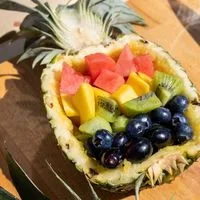
A colourful mix of tropical fruit, served in a hollowed-out pineapple for a bright centrepiece as well as a refreshing dessert or snack. Arrange the pieces in rainbow order or toss them together, then serve chilled with sparkling water and lemon.
Ingredients
- 1pineapple
- to tastewatermelon
- to tastemango
- to tastekiwi
- to tasteblueberries
- to tastered grapes
Instructions
- 1
Prepare the fruit
Cut the pineapple in half and scoop out the flesh. Cut the pineapple flesh, watermelon, mango and kiwi into pieces. Use a small paring knife for smaller fruit and a chef’s knife for larger fruit such as the watermelon.
- 2
Fill the pineapple
Arrange all the fruit in the hollowed-out pineapple, either in rainbow order or mixed together.
- 3
Serve the salad
Set the filled pineapple on a wooden board and serve. Accompany it with a glass of ice-cold sparkling water with lemon.
What is summer fruit salad?
Fruit salad is a simple dish of cut fresh fruit, enjoyed in many cuisines and with no single fixed recipe. This tropical version brings together pineapple, watermelon, mango, kiwi, blueberries and red grapes.
Pineapple makes a natural serving bowl, while the different colours make the fruit easy to arrange as a rainbow. The fruit needs little more than careful cutting and a short time to chill.
Nutrition and macros by portion
The nutrition label shows one serving as written: 410 calories, 4g protein, 100g carbs, 1g fat.
| Portion | Adjustment | kcal | Protein | Carbs | Fat |
|---|---|---|---|---|---|
| Lighter | Smaller fruit serving | 287 kcal | 3g | 70g | 1g |
| This serving | As written | 410 kcal | 4g | 100g | 1g |
| Hungry | Add more fruit | 615 kcal | 6g | 150g | 2g |
Most of the carbohydrates and natural sugars come from the fruit, while the fruit also contributes fibre. This is a very low-fat dish with only a modest amount of protein; pair it with yoghurt or another protein-rich food if you want a more substantial plate.
Choosing and preparing the fruit
Pineapple: choose one that feels heavy for its size and has a sweet, fruity smell near the base. Scoop out the flesh carefully so the shell stays intact enough to hold the salad.
Other fruit: use ripe mango and kiwi that still hold their shape when cut. Choose a watermelon that is firm and blueberries and grapes that are fresh and unblemished.
Cutting for an even mix
Large fruit: cut the watermelon and pineapple into manageable pieces, keeping them small enough to pick up easily. A chef’s knife is useful for the larger pieces.
Smaller fruit: use a paring knife for the mango and kiwi, and keep the pieces broadly similar in size. Leave blueberries whole and halve larger grapes if you like.
Filling the pineapple bowl
Rainbow order: place the fruit in coloured groups for a neat, striking display. Add the pieces gently so the pineapple shell does not split.
Mixed together: combine the pieces for a quicker, more casual finish. If preparing ahead, keep the fruit chilled and fill the pineapple shortly before serving.
Serving and timing
Serve the salad on a wooden board as suggested, or transfer the filled pineapple to a stable platter. It works well as a light dessert, a brunch dish or a colourful addition to a summer spread.
Offer ice-cold sparkling water with lemon alongside. The recipe gives no preparation or chilling time, so allow enough time to cut the fruit and serve it cold if preferred.
Texture and freshness
Keep the fruit pieces intact rather than mashing or stirring them vigorously. This helps the softer mango and kiwi retain their shape and keeps the salad looking fresh.
The fruit is ready when it is cut into bite-sized pieces and arranged in the pineapple shell. Taste the fruit before serving; no extra sweetener is specified.
Recipe notes & tips
- Cut the pineapple over a board to catch its juice.
- Keep the pineapple shell intact when scooping out the flesh.
- Use a sharp knife and a stable chopping board for the watermelon.
- Cut the fruit into similarly sized pieces for easier serving.
- Chill the fruit before filling the pineapple if you prefer it cold.
- Arrange the most colourful pieces near the top for a vivid presentation.
Variations
- Add citrus: serve with lemon or lime wedges for a brighter finish.
- Use seasonal fruit: swap in other ripe fruit while keeping a mix of colours and textures.
- Add fresh mint: scatter a few torn leaves over the salad just before serving.
- Serve with yoghurt: offer plain yoghurt on the side for a creamy accompaniment.
- Make individual portions: divide the fruit between small bowls instead of using the pineapple shell.
Common mistakes to avoid
- Cutting on an unstable board: place a damp cloth beneath the board to help keep it steady.
- Scooping too deeply: leave the pineapple shell sturdy enough to hold the fruit.
- Using overripe fruit: choose fruit that is ripe but still firm enough to cut cleanly.
- Mixing too roughly: fold the pieces gently to avoid crushing the softer fruit.
- Filling too early: add the fruit to the pineapple shortly before serving to keep the presentation fresh.
How to store
Store leftover fruit in an airtight container in the fridge and eat within 1–2 days for the best texture. Keep it separate from the pineapple shell if the shell has softened; serve chilled, as reheating is not suitable.
Frequently asked questions
Can I make this fruit salad ahead of time?
You can cut the fruit in advance and keep it covered in the fridge. Fill the pineapple shortly before serving for the best presentation.
How do I stop the pineapple bowl from wobbling?
Trim a very thin slice from the underside so it sits flat, taking care not to cut through the shell.
Do I need to remove the seeds from the watermelon?
Use seedless watermelon for convenience, or remove visible seeds as you cut it.
Can I use frozen fruit?
Fresh fruit is best for a crisp, colourful presentation. Thawed frozen fruit can release extra liquid and soften the other pieces.
What can I serve with the salad?
Serve it with ice-cold sparkling water and lemon as described, or offer yoghurt alongside for a more substantial snack.
Cook it from the original
This recipe comes from cookinglife.eu. Their page has the author’s own photos, notes and tips — the best place to cook it from.
Open the recipe on cookinglife.eu