
Pasta Aglio e Olio
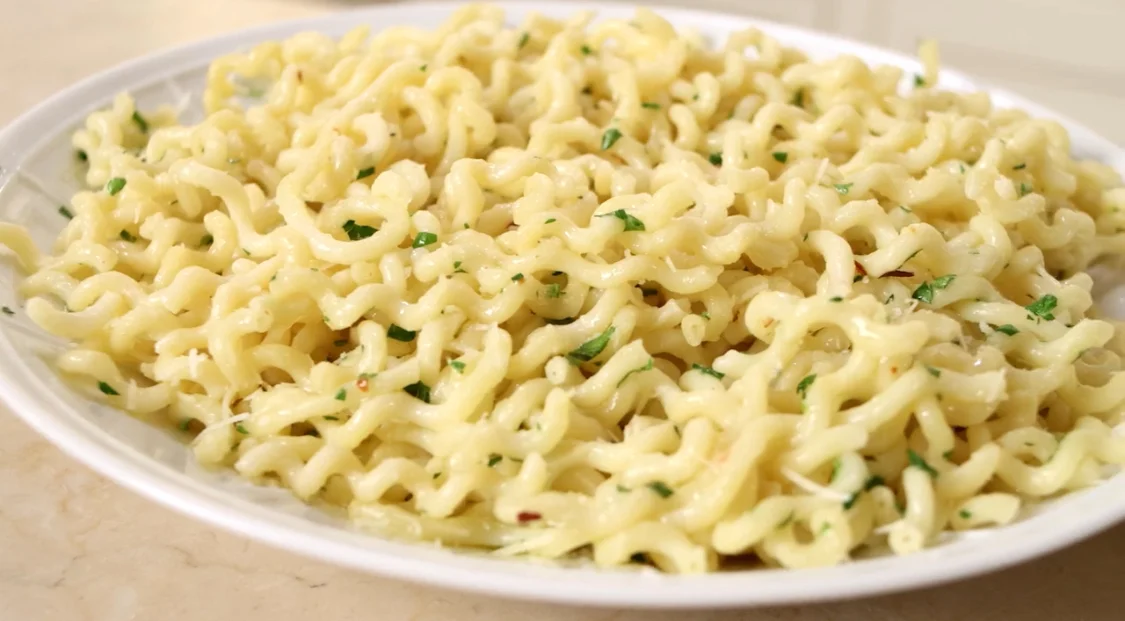
Pasta aglio e olio is a simple spaghetti dish coated in olive oil, gently warmed garlic and a little chilli. It makes a quick meal from pantry staples, with parsley and optional cheese to finish.
Ingredients
- 60 ml (¼ cup)everyday extra-virgin olive oil
- to tastehigh-quality extra-virgin olive oil, for finishing
- 454 g (1 lb)dry spaghetti or other long pasta
- 5 clovesgarlic, peeled, the central germ removed if present, and sliced very thinly
- 1 teaspoonred pepper flakes (optional)
- 30 ml (2 tablespoons)flat-leaf parsley, minced
- to tastegrated Parmigiano or Pecorino (optional)
- A palmful (about 60 ml; ¼ cup)kosher salt
Instructions
- 1
Boil the water
Bring a large pot of water to the boil.
- 2
Salt the water
Add a palmful of kosher salt, about 60 ml (¼ cup).
- 3
Cook the pasta
Add the pasta and stir until the water returns to the boil.
- 4
Set the timer
Set a timer for four minutes less than the packet's stated cooking time for al dente.
- 5
Prepare the pan
Put the everyday olive oil and sliced garlic in a large, cold sauté pan.
- 6
Warm the garlic
When the timer sounds, turn the hob to medium-low and warm the garlic in the oil for two minutes, taking care not to let it burn.
- 7
Season the oil
Season with salt and red pepper flakes.
- 8
Transfer the pasta
Lift the pasta straight from the boiling water into the pan.
- 9
Add pasta water
Pour 120 ml (½ cup) of pasta water into the pan.
- 10
Toss until glossy
Toss thoroughly until the pasta absorbs the water and takes on a sheen.
- 11
Finish and serve
Take the pan off the heat. Finish with the high-quality olive oil, parsley and cheese if using, then toss and serve.
What is pasta aglio e olio?
Aglio e olio means garlic and oil in Italian, and the dish is associated with Naples and the wider cooking tradition of southern Italy. Its appeal lies in turning a few everyday ingredients into a savoury coating for pasta.
This version warms thinly sliced garlic gently in olive oil, then uses starchy pasta water to bring the sauce together. Parsley adds freshness, while chilli and grated cheese are optional finishes.
Nutrition and macros by portion
The nutrition label shows one serving as written: 540 calories, 18g protein, 75g carbs, 16g fat.
| Portion | Adjustment | kcal | Protein | Carbs | Fat |
|---|---|---|---|---|---|
| Lighter | More vegetables, less pasta | 378 kcal | 13g | 53g | 11g |
| This serving | As written | 540 kcal | 18g | 75g | 16g |
| Hungry | Larger pasta portion | 810 kcal | 27g | 113g | 24g |
Most of the carbohydrates and some of the protein come from the pasta; the olive oil supplies most of the fat. Cheese, if added, contributes further protein and fat, while the final amount of salt depends on how much is retained from the cooking water. Serve a smaller pasta portion with a generous salad or vegetables to balance the plate.
Choose the pasta and oil
Long pasta: Spaghetti is a classic choice, but another long shape works too. Cook it briefly in the water before finishing it in the pan so it can take up the sauce.
Two oils: The everyday extra-virgin olive oil is used to warm the garlic. A more aromatic oil goes on at the end, where its flavour stays prominent.
Keep the garlic gentle
Cold start: Adding the garlic and oil to a cold pan lets them warm together gradually. Keep the heat at medium-low and watch the slices closely during their two minutes in the pan.
Thin slices: Slicing the garlic very thinly helps it warm through in the short cooking time. Remove the central germ if it is present, as directed in the ingredient list.
Use pasta water well
Starchy liquid: The recipe adds 120 ml (½ cup) of pasta water to the pan. Transfer the pasta directly from its pot so a little cooking water comes along with it.
Glossy finish: Toss thoroughly so the pasta absorbs the liquid and the oil coats it evenly. If the mixture needs more loosening, the reserved cooking water is the useful ingredient to reach for.
Check the pasta's doneness
Early timing: The timer is set for four minutes less than the packet's al dente time because the pasta continues cooking in the pan.
Final cue: Toss the pasta with the oil and water until it has a sheen. The method does not give a separate pan-cooking time, so use the pasta's texture as your guide.
Finish off the heat
Fresh additions: Add the finishing oil and minced parsley only after taking the pan off the heat. This keeps the final seasoning distinct from the garlic oil used for cooking.
Cheese: Grated Parmigiano or Pecorino can be tossed through at the end or served at the table. Leave it out for a simpler, dairy-free version.
What to serve alongside
A crisp green salad or simply cooked vegetables make an easy companion to the pasta. Serve the dish promptly, while its oil-and-water coating is glossy.
The chilli level is easy to adjust at the table, so keep the flakes optional if you are serving people with different preferences.
Recipe notes & tips
- Slice the garlic evenly so the pieces warm at a similar rate.
- Have the parsley and optional cheese ready before the pasta finishes cooking.
- Keep the pasta water in the pot until you have transferred the pasta.
- Use a large pan so you can toss the pasta and sauce together easily.
- Taste before adding more salt, since the cooking water is already salted.
Variations
- More chilli: Increase the red pepper flakes for a hotter finish.
- Herb swap: Use finely chopped fresh parsley as written, or add a little extra for a greener flavour.
- Cheese finish: Choose grated Parmigiano or Pecorino, or leave it out.
- Lemon lift: Add a little finely grated lemon zest off the heat for a bright variation.
- Vegetable addition: Toss in quickly cooked greens before serving for a more substantial plate.
Common mistakes to avoid
- Burnt garlic: Start it in a cold pan and keep the heat medium-low for the two-minute warming step.
- Overcooked pasta: Set the timer for four minutes before the packet's al dente time, as instructed.
- Dry pasta: Add the specified 120 ml (½ cup) of pasta water and toss thoroughly.
- Greasy coating: Toss until the pasta absorbs the water and the mixture looks glossy.
- Flat flavour: Taste before serving and adjust the salt or optional chilli to suit.
How to store
Refrigerate leftovers in a covered container and use within 3 days. Reheat gently in a pan with a splash of water, tossing until warmed through; the sauce may not be as glossy as when freshly made.
Frequently asked questions
Can I use a pasta shape other than spaghetti?
Yes. The recipe allows any long pasta, so linguine or another long shape can be used.
Why does the garlic go into a cold pan?
The method warms the oil and garlic together gradually, helping you keep control of the garlic as it cooks. Watch it closely and do not let it burn.
Why is pasta water added to the oil?
The cooking water helps the oil coat the pasta rather than sit apart from it. Toss until the pasta absorbs the water and looks glossy.
Can I leave out the cheese?
Yes. The cheese is optional, and the pasta can be served without it.
When should I add the finishing olive oil?
Add it off the heat, along with the parsley and optional cheese, just before tossing and serving.
How can I make the dish less spicy?
Leave out the red pepper flakes, which are optional, or use less than the listed teaspoon.
Cook it from the original
This recipe comes from appetitomagazine.com. Their page has the author’s own photos, notes and tips — the best place to cook it from.
Open the recipe on appetitomagazine.com