
Oven-Braised Chicken Cacciatore
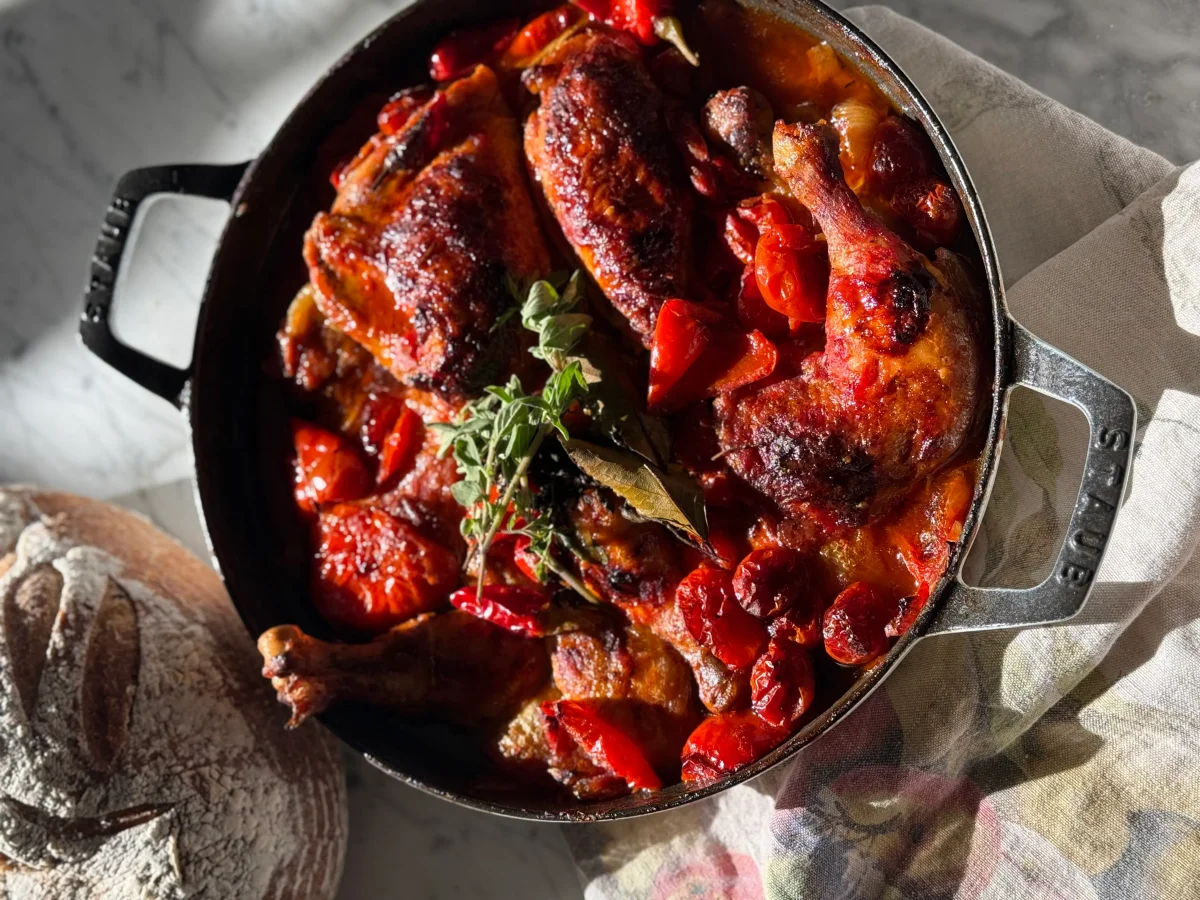
Oven-braised chicken cacciatore combines browned bone-in chicken with peppers, tomatoes, olives, wine and herbs in a slow-cooked, savoury sauce. The long, hands-off braise makes it a comforting meal to serve straight from the pan, with plenty of juices for spooning over the chicken.
Ingredients
- 1.36 kg (3 lb)bone-in chicken pieces (breasts, thighs or drumsticks)
- al gustoextra virgin olive oil
- 1yellow onion, roughly chopped
- 3–4 clovesgarlic, smashed
- 2–3small red bell peppers, sliced
- 2Calabrian chilli peppers
- 2 canscherry tomatoes or crushed tomatoes
- 60 ml (¼ cup)black cured olives
- 160 ml (⅔ cup)white wine
- 180 ml (¾ cup)chicken stock
- 3fresh bay leaves
- 3 sprigsfresh oregano
- al gustosea salt and black pepper
- 15 ml (1 tbsp)Sicilian oregano
Instructions
- 1
Heat the oven
Preheat the oven to 177°C (350°F).
- 2
Season the chicken
Season the chicken pieces with extra virgin olive oil, plenty of sea salt, black pepper and Sicilian oregano.
- 3
Rub in seasoning
Rub the oil and seasonings well over the chicken.
- 4
Sear the chicken
Sear the chicken thoroughly and evenly, then remove it from the pan.
- 5
Soften the vegetables
Sauté the vegetables until soft, for 7–10 minutes.
- 6
Add the liquids
Add the wine, tomatoes and chicken stock.
- 7
Return the chicken
Put the chicken back in the pan with the olives and herbs.
- 8
Braise in the oven
Braise uncovered in the oven for at least 2 hours.
- 9
Check the chicken
The chicken should be well browned and tender enough to fall apart.
- 10
Serve with juices
Serve straight away, arranging the vegetables around the chicken and spooning the juices over the top.
What is chicken cacciatore?
Cacciatore means “hunter-style” in Italian and commonly describes a rustic preparation of meat cooked with vegetables, herbs and wine. Versions vary by region and household, but tomatoes, peppers and aromatics are familiar companions.
This version browns bone-in chicken first, then braises it uncovered with tomatoes, peppers, olives and herbs. The oven does most of the work, giving the chicken time to become tender while the sauce concentrates.
Nutrition and macros by portion
The nutrition label shows one serving as written: 690 calories, 55g protein, 17g carbs, 42g fat.
| Portion | Adjustment | kcal | Protein | Carbs | Fat |
|---|---|---|---|---|---|
| Lighter | More peppers, less oil | 483 kcal | 39g | 12g | 29g |
| This serving | As written | 690 kcal | 55g | 17g | 42g |
| Hungry | Add bread or polenta | 1035 kcal | 83g | 26g | 63g |
Chicken provides most of the protein, while the tomatoes and vegetables contribute some carbohydrates; the olive oil and olives supply much of the fat. Serve with a generous portion of vegetables or salad, and add bread or potatoes if you want a more substantial plate.
Choose the chicken pieces
Bone-in pieces: breasts, thighs and drumsticks all work, as long as the pieces are of a reasonably similar size. Bone-in chicken brings flavour to the braising juices, though breasts may become tender sooner than thighs or drumsticks.
Skin and browning: dry the chicken surface before seasoning if it is wet, and sear the pieces in batches if needed. A crowded pan can prevent even browning.
Build the flavour base
Vegetables: soften the onion, garlic and peppers for 7–10 minutes before adding the liquids. This gives them a head start so they become tender during the long braise.
Wine and tomatoes: white wine lifts the browned flavour from the pan, while tomatoes and stock create the braising liquid. Cherry tomatoes keep their shape more than crushed tomatoes, so either choice gives a slightly different texture.
Get a good braise
Searing: brown the chicken thoroughly and evenly, then take it out before cooking the vegetables. Leave any browned bits in the pan; they become part of the sauce when the liquids are added.
Uncovered cooking: the recipe braises the chicken uncovered for at least 2 hours at 177°C. Keep the chicken nestled in the sauce and check that the pan is not drying out; the finished meat should be deeply browned and very tender.
Balance the herbs and heat
Oregano: fresh oregano sprigs and Sicilian oregano both go into this dish, giving the sauce a pronounced herbal character. Bay leaves add a savoury background note; remove them before serving.
Calabrian chillies: these contribute heat, which can vary from one chilli to another. For a gentler result, use fewer or remove them before serving.
What to serve alongside
The tomato and wine juices are worth serving generously, so pair the chicken with bread, polenta or potatoes to catch them. A simple green salad or steamed green vegetables can add a fresh contrast.
Place the vegetables around the chicken as directed and spoon the pan juices over the top just before serving.
Recipe notes & tips
- Pat wet chicken pieces dry before seasoning to help them brown evenly.
- Sear the chicken in batches if the pan is too crowded.
- Keep the browned bits in the pan when you remove the chicken.
- Use a pan that can go safely from the hob to the oven.
- Taste the sauce before serving and adjust the salt and pepper to suit the olives and stock.
Variations
- Use chicken thighs: choose bone-in thighs for a particularly succulent result.
- Swap the tomatoes: use cherry tomatoes for more distinct pieces or crushed tomatoes for a smoother sauce.
- Adjust the chilli: reduce the Calabrian chillies for less heat or add more if you prefer it punchier.
- Add mushrooms: sauté sliced mushrooms with the vegetables for an earthier variation.
- Change the wine: use a dry red wine for a deeper, more robust sauce.
Common mistakes to avoid
- Crowding the pan: the chicken may steam rather than brown; sear it in batches.
- Skipping the sear: brown the chicken thoroughly first to build flavour in the pan.
- Adding the chicken too early: soften the vegetables and add the liquids before returning the chicken to the pan.
- Using a pan that is not oven-safe: transfer everything to a suitable ovenproof dish before braising.
- Overlooking the chillies: their heat can vary, so start cautiously if you are unsure.
How to store
Cool leftovers promptly and refrigerate in a sealed container for up to 3 days. Reheat gently in a covered pan until piping hot throughout, adding a splash of stock or water if the sauce has thickened.
Frequently asked questions
Can I use boneless chicken?
Yes, but it may cook more quickly and can become dry during a braise of at least 2 hours. Check it earlier and remove it once tender, if necessary.
Can I make this without Calabrian chillies?
Yes. Leave them out for a milder dish; the chicken, peppers, tomatoes and herbs will still make a flavourful sauce.
Which tomatoes should I use?
Either cherry tomatoes or crushed tomatoes will work. Cherry tomatoes give the sauce more distinct pieces, while crushed tomatoes make it more uniform.
How can I tell when the chicken is ready?
The recipe describes the chicken as well browned and ready to fall apart. The meat should be very tender when tested with a fork.
Can I prepare it ahead?
Yes. Cook it ahead, refrigerate it once cooled, and reheat gently with the sauce until piping hot throughout.
What should I serve with chicken cacciatore?
Bread, polenta or potatoes are useful for soaking up the juices. A green salad or simple green vegetables make a lighter accompaniment.
Cook it from the original
This recipe comes from appetitomagazine.com. Their page has the author’s own photos, notes and tips — the best place to cook it from.
Open the recipe on appetitomagazine.com