
Spaghetti alla Carbonara
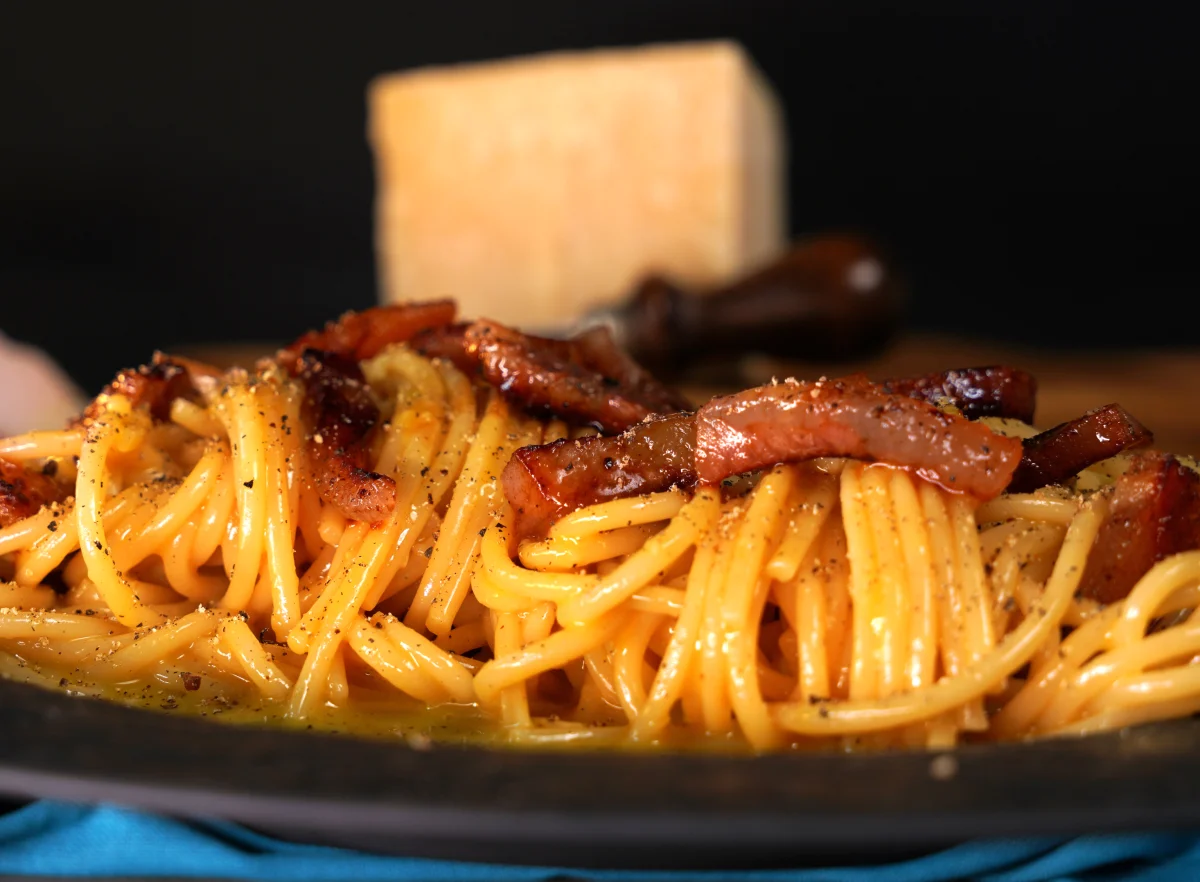
Spaghetti alla Carbonara is a Roman pasta dish coated in a silky sauce made with eggs, Pecorino Romano and rendered guanciale. This version builds flavour with briefly toasted black pepper and finishes the spaghetti in the guanciale fat for a glossy, savoury result.
Ingredients
- 1whole egg
- 4egg yolks
- 99 g (3½ oz)Pecorino Romano cheese, very finely grated
- 142 g (5 oz)guanciale, cut into strips
- 1 pinchfine salt
- 15 ml (1 tbsp)black pepper, medium-coarse ground
- 312 g (11 oz)spaghetti
Instructions
- 1
Toast the pepper
Toast the black pepper in a large, dry skillet over very low heat for about 1 minute, just until fragrant. Tip it into a small bowl and set aside.
- 2
Cook the guanciale
Cut the guanciale into strips about 2.5 cm by 0.8 cm. Sear them in an ungreased pan over low heat. Once the fat begins to look translucent, raise the heat to medium and cook until the strips are golden brown and crisp. Set them aside, leaving the rendered fat in the pan.
- 3
Mix the sauce
Whisk the whole egg, egg yolks and Pecorino together until smooth and creamy. Set the sauce aside.
- 4
Part-cook pasta
Cook the spaghetti in slightly less water than usual, for three-quarters of the time stated on the packet for al dente pasta. Drain it and immediately transfer it to the pan with the guanciale fat. Add 1 ladle of hot pasta water and stir. Slowly drizzle ½ a ladle of hot pasta water into the egg and Pecorino mixture, whisking continuously until the sauce is creamy and shiny.
- 5
Finish the pasta
Cook the spaghetti in the skillet until al dente. Remove the pan from the heat and immediately add the egg sauce to the hot spaghetti. Stir continuously with tongs to coat the pasta; the residual heat will cook the egg mixture slightly and melt the Pecorino. Mix in the toasted pepper and reserved guanciale. Plate once the sauce coats the back of a spoon, as it will thicken further as it cools, and serve immediately.
What is spaghetti alla Carbonara?
Carbonara is a Roman pasta dish traditionally built around pasta, eggs, hard cheese, cured pork and black pepper. Its defining sauce is made without cream: eggs, cheese and starchy pasta water come together into a smooth coating.
This version uses Pecorino Romano and guanciale, whose rendered fat helps carry the sauce across the spaghetti. Toasting the pepper briefly brings out its aroma before it joins the rich, salty ingredients.
Nutrition and macros by portion
The nutrition label shows one serving as written: 690 calories, 31g protein, 68g carbs, 32g fat.
| Portion | Adjustment | kcal | Protein | Carbs | Fat |
|---|---|---|---|---|---|
| Lighter | Smaller pasta portion | 483 kcal | 22g | 48g | 22g |
| This serving | As written | 690 kcal | 31g | 68g | 32g |
| Hungry | Larger pasta portion | 1035 kcal | 47g | 102g | 48g |
Most of the carbohydrates come from the spaghetti, while the guanciale fat, egg yolks and Pecorino contribute much of the fat. Eggs, cheese and guanciale also supply protein. Pair a serving with a crisp green salad or vegetables to add freshness and balance the plate.
The key ingredients
Guanciale: This cured pork cheek renders fat as it cooks, adding savoury depth to the pan. Cut it into evenly sized strips so they brown at a similar rate.
Pecorino Romano: Finely grated cheese blends more readily into the eggs than coarse shavings. Its saltiness is part of the seasoning, so taste before adding extra salt.
Eggs: One whole egg with four yolks gives the sauce richness and helps it coat the pasta. Whisk the mixture smooth before adding warm pasta water.
Build the sauce gently
Temper the egg mixture by whisking in the hot pasta water gradually, rather than pouring it in all at once. This warms the sauce and loosens it while keeping the eggs from heating too quickly.
Take the skillet off the heat before adding the egg sauce. Stir the hot pasta continuously so the mixture turns glossy without scrambling.
Keep the pasta water starchy
Cooking the spaghetti in a little less water than usual leaves the cooking water more concentrated with starch. That starch helps the egg, cheese and guanciale fat form a cohesive coating.
Reserve the hot water as you drain the pasta, and use it in the amounts directed. Add it steadily to the egg mixture while whisking.
Follow the texture cues
The guanciale is ready when its strips are golden and crisp, after the fat has started to turn translucent. Keep an eye on it as the heat rises so it browns without burning.
The finished sauce should look shiny and cling to the spaghetti. Stop cooking when it coats the back of a spoon; it will thicken a little more on the plate.
Serve it straight away
Carbonara is best plated as soon as the sauce is ready, while it is still loose and glossy. Warm bowls can help the pasta stay hot at the table.
A simple green salad or lightly dressed leaves make a fresh contrast to the rich pasta. Serve any extra Pecorino and black pepper at the table.
Recipe notes & tips
- Grate the Pecorino very finely so it mixes smoothly with the eggs.
- Use a dry pan and very low heat to toast the pepper without scorching it.
- Keep the guanciale fat in the skillet; it is used to finish the spaghetti.
- Save enough hot pasta water to loosen both the spaghetti and the egg sauce.
- Have the egg mixture ready before draining the pasta, as the finishing steps move quickly.
- Take the pan off the heat before stirring in the egg sauce.
Variations
- Use pancetta: Replace the guanciale with pancetta if guanciale is unavailable.
- Try another hard cheese: Use finely grated Parmesan in place of some or all of the Pecorino for a milder flavour.
- Adjust the pepper: Add a little less for a gentler finish or more for a pepper-forward dish.
- Change the pasta shape: Use another long pasta shape, while keeping the same sauce method.
- Add extra cheese: Offer more finely grated Pecorino at the table for those who want a saltier, cheesier finish.
Common mistakes to avoid
- Scrambling the eggs: Take the skillet off the heat before adding the sauce and keep stirring.
- Adding pasta water too quickly: Drizzle it into the egg mixture gradually while whisking.
- Discarding the guanciale fat: Leave it in the pan to coat and flavour the spaghetti.
- Overcooking the guanciale: Raise the heat only after the fat starts to turn translucent, then watch for a golden, crisp finish.
- Draining without reserving water: Keep hot pasta water available for loosening the sauce and finishing the pasta.
- Waiting too long to serve: Plate when the sauce coats the back of a spoon, before it thickens further.
How to store
For the best texture, serve Carbonara immediately. If needed, refrigerate leftovers in an airtight container for up to 2 days; reheat gently in a pan with a splash of water, stirring often, and avoid high heat so the sauce does not split.
Frequently asked questions
Can I make Carbonara without guanciale?
Yes. Pancetta is a practical substitute, though its flavour differs from guanciale. Cook it until browned and render its fat in the same way.
Can I use Parmesan instead of Pecorino Romano?
Yes. Parmesan is generally milder, so the finished sauce will taste less sharp and salty. Grate it finely so it blends into the eggs.
Why does the recipe use less water for the spaghetti?
A smaller volume of water becomes more concentrated with pasta starch. The starchy water helps the sauce cling to the spaghetti.
How do I stop the egg sauce from scrambling?
Whisk hot pasta water into the egg mixture gradually, then take the skillet off the heat before combining the sauce with the spaghetti. Stir continuously as you toss.
How do I know when the sauce is ready?
It should look creamy and glossy and coat the back of a spoon. Serve promptly, as it continues to thicken as it cools.
Can I prepare the sauce ahead?
It is best mixed shortly before cooking the pasta, then used right away. The finished dish does not hold its silky texture well if left to stand.
Cook it from the original
This recipe comes from appetitomagazine.com. Their page has the author’s own photos, notes and tips — the best place to cook it from.
Open the recipe on appetitomagazine.com