
Turkey with maple syrup
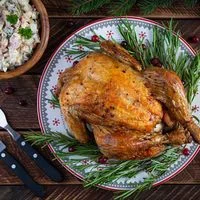
This Thanksgiving turkey is coated with seasoned butter and maple syrup, then roasted until it reaches a safe internal temperature. Rosemary and cranberries finish it with a simple festive garnish.
Ingredients
- 1turkey
- 300 gbutter
- 300 gmaple syrup
- to tastesalt and freshly ground black pepper
- to tasterosemary and cranberries, for the garnish
Instructions
- 1
Prepare the turkey
Heat the oven to 150°C. Pat the turkey dry with a kitchen towel.
- 2
Season with butter
When the butter is semi-soft, mix it with salt and freshly ground pepper. Spread it over the outside of the turkey and beneath the skin.
- 3
Add the syrup
Brush the maple syrup over the turkey.
- 4
Roast the turkey
Place the turkey in the oven and roast for 70 to 100 minutes. It is ready when the internal temperature reaches 71°C.
- 5
Garnish and serve
Garnish the turkey with rosemary and cranberries.
What is maple syrup turkey?
This is a roast turkey prepared with butter, maple syrup, salt and pepper, then finished with rosemary and cranberries. The recipe is labelled Dutch and intended for Thanksgiving, combining a savoury roast with a sweet glaze.
The butter is spread both over and beneath the skin, while the syrup is brushed on the outside. That gives the bird two distinct layers of flavour without adding extra steps or ingredients.
Nutrition and macros by portion
The nutrition label shows one serving as written: 1100 calories, 60g protein, 50g carbs, 61g fat.
| Portion | Adjustment | kcal | Protein | Carbs | Fat |
|---|---|---|---|---|---|
| Lighter | Less butter and syrup | 770 kcal | 42g | 35g | 43g |
| This serving | As written | 1100 kcal | 60g | 50g | 61g |
| Hungry | Larger turkey portion | 1650 kcal | 90g | 75g | 92g |
The butter is the main source of fat, while the maple syrup supplies most of the carbohydrates; turkey provides most of the protein. Pair a serving with vegetables and a moderate portion of potatoes or another starch for a more rounded plate.
Why butter goes under the skin
Under the skin: gently loosen it enough to spread on the seasoned butter without tearing it. This brings the butter into contact with the meat as well as the surface.
Outside: coat the skin with the remaining butter mixture before brushing on the syrup. The recipe calls for semi-soft butter, which is easier to mix and spread than cold butter.
Getting the turkey ready
Dry skin: pat the turkey thoroughly with a kitchen towel before applying the butter. A dry surface makes it easier to spread the coating evenly.
Butter: let it soften until pliable, but not melted, then mix in the salt and freshly ground pepper. The recipe gives no precise seasoning quantity, so adjust it to taste.
Roasting time and doneness
Oven: roast at 150°C for the stated 70 to 100 minutes. The turkey’s size is not specified, so use the cooking time as a guide rather than relying on it alone.
Temperature: check the thickest part of the meat with a thermometer, avoiding contact with bone. The recipe says the turkey is ready at an internal temperature of 71°C.
The maple coating
Brush the maple syrup over the turkey after spreading on the butter. This keeps the order of the recipe’s coatings clear and gives the outside a sweet finish.
Keep an eye on the surface as it roasts, since syrup can darken. If the turkey reaches the stated internal temperature before the estimated cooking time is up, follow the temperature cue.
Serving the turkey
Rosemary and cranberries: use them as the finishing garnish just before serving. Their aromatic, tart character contrasts with the sweet syrup and rich butter.
For a balanced plate, serve the turkey with vegetables and a starchy side such as potatoes. The recipe does not specify sides, so choose accompaniments that suit your Thanksgiving meal.
Recipe notes & tips
- Pat the turkey dry before adding the butter mixture.
- Use semi-soft butter so it spreads easily beneath the skin.
- Brush the syrup over the turkey after applying the butter.
- Use a thermometer to check the internal temperature rather than relying only on the roasting time.
- Keep the turkey size in mind because the recipe does not specify one and the stated time may not suit every bird.
- Add the rosemary and cranberries as the garnish when the turkey is ready to serve.
Variations
- Herb butter: mix finely chopped rosemary into the softened butter.
- Citrus garnish: add orange slices alongside the cranberries when serving.
- Peppery finish: use extra freshly ground pepper in the butter mixture.
- Cranberry side: serve additional cranberries separately for a sharper contrast to the maple glaze.
Common mistakes to avoid
- Cold butter: it is difficult to spread beneath the skin, so let it soften until pliable.
- Wet skin: the butter can slip around, so pat the turkey dry first.
- Torn skin: spread the butter gently beneath it to avoid making openings.
- Relying only on time: turkey size affects roasting, so check the internal temperature.
- Overlooking the syrup: its surface can darken, so keep an eye on the turkey as it roasts.
How to store
Refrigerate leftover turkey in a covered container within 2 hours of serving and use within 3 to 4 days. Reheat until piping hot throughout, adding a little stock or water if the meat seems dry.
Frequently asked questions
How long does the turkey take to roast?
The recipe gives 70 to 100 minutes at 150°C, but it does not specify the bird’s weight. Check the internal temperature as well; the recipe gives 71°C as the doneness point.
How much salt and pepper should I use?
The recipe does not give amounts, so season the butter to taste before spreading it on the turkey.
Can I use melted butter?
The recipe specifies semi-soft butter. Melted butter is harder to spread beneath the skin, so soften it until pliable instead.
When should I add the maple syrup?
Brush it over the turkey after spreading the seasoned butter on the outside and beneath the skin.
How do I know when the turkey is done?
Check the internal temperature with a thermometer; the recipe states 71°C. The cooking time alone may not be reliable because no turkey weight is provided.
Cook it from the original
This recipe comes from cookinglife.eu. Their page has the author’s own photos, notes and tips — the best place to cook it from.
Open the recipe on cookinglife.eu