
Zucchini and Onion Frittata
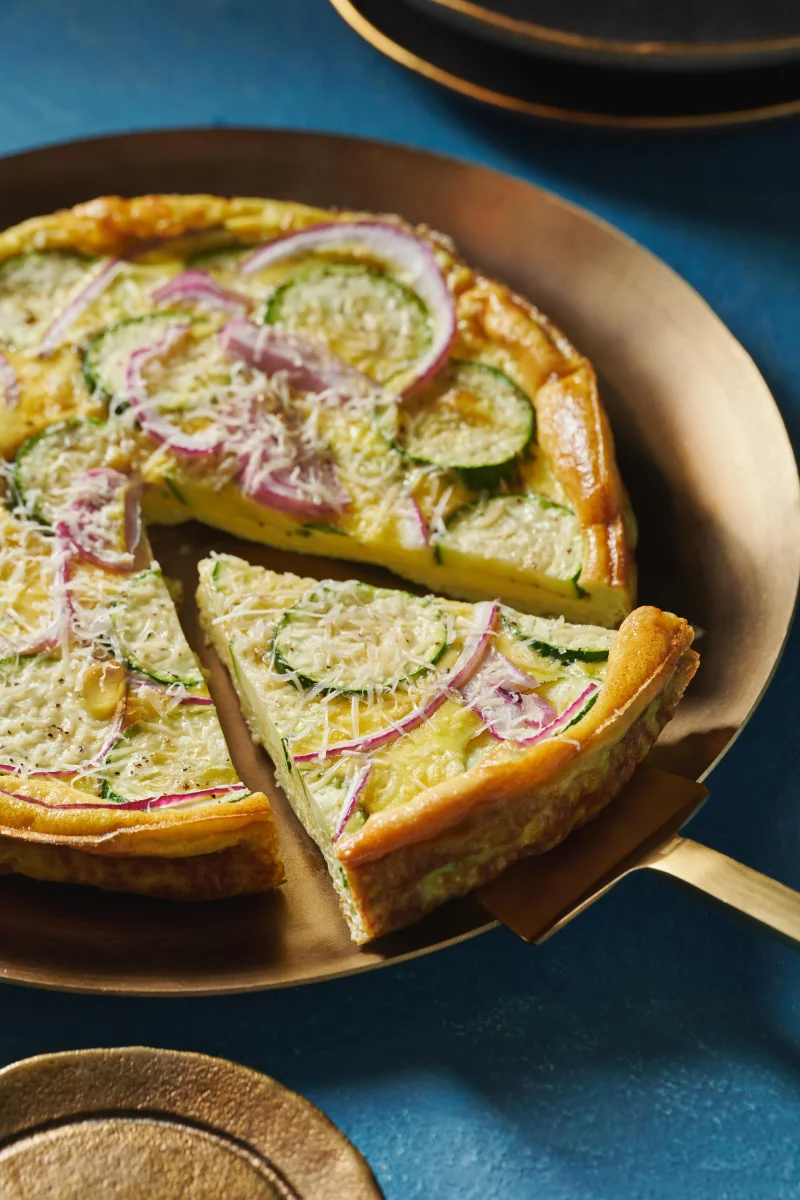
This zucchini and onion frittata pairs tender vegetables with eggs and melted provolone for a filling meal that works warm or at room temperature. It is a practical choice for brunch or a simple dinner, and can be served straight from the ovenproof skillet.
Ingredients
- 12eggs
- to tastekosher salt and black pepper
- 30 ml (2 Tbsp)olive oil
- 1 small red onion, julienned (60 ml / ¼ cup)red onion
- 1, cut into 6 mm (¼-inch)-thick slicescourgette
- 4 slicesprovolone
- 10 g (2 Tbsp)grated Parmesan, for garnish
Instructions
- 1
Preheat the oven
Heat the oven to 200°C (400°F).
- 2
Whisk the eggs
In a medium bowl, whisk the eggs together and season with kosher salt and black pepper.
- 3
Soften the onion
Warm the olive oil in a large ovenproof frying pan over medium-high heat. Add the onion and cook for 3 minutes, until softened.
- 4
Set the frittata
Pour the whisked eggs over the hot onion and arrange the courgette slices on top. Turn the heat to low and cook for 2 minutes, until the eggs begin to set at the edges. Watch that the edges do not burn; take the pan off the heat if necessary.
- 5
Bake with cheese
Bake for 15–17 minutes, until the eggs are fluffy and cooked through. Add the provolone on top and bake for 1 more minute, until it melts.
- 6
Slice and serve
Run a spatula around the edge of the pan and slide the frittata onto a plate. Sprinkle with Parmesan, cut into wedges and serve warm or at room temperature.
What is a frittata?
A frittata is an Italian-style egg dish cooked with vegetables, cheese or other fillings, then served in slices. This version combines courgette and red onion with provolone, using a short stovetop cook followed by baking to finish the centre.
The method helps the eggs set evenly while the vegetables remain visible on top. It also makes the dish easy to portion into wedges for brunch or a light meal.
Nutrition and macros by portion
The nutrition label shows one serving as written: 730 calories, 48g protein, 8g carbs, 54g fat.
| Portion | Adjustment | kcal | Protein | Carbs | Fat |
|---|---|---|---|---|---|
| Lighter | Use less provolone | 511 kcal | 34g | 6g | 38g |
| This serving | As written | 730 kcal | 48g | 8g | 54g |
| Hungry | Serve with crusty bread | 1095 kcal | 72g | 12g | 81g |
The eggs provide most of the protein, while the olive oil, eggs and cheeses contribute much of the fat; the small amount of carbohydrate comes mainly from the onion and courgette. Pair a wedge with a generous green salad or extra vegetables for a more balanced plate.
The vegetable base
Red onion: Cooking it first softens its texture and mellows its sharpness before the eggs go in. Keep the pieces fairly even so they soften at a similar rate.
Courgette: Slicing it about 6 mm thick helps it cook through during the oven stage without disappearing into the eggs. Arrange the slices over the surface for an even spread in each wedge.
Getting the eggs right
Even whisking: Whisk until the yolks and whites are combined, then season before pouring them into the pan. This gives the frittata a consistent flavour throughout.
Gentle heat: The brief low-heat stage begins setting the edges before baking. Check the base and sides so they do not catch; remove the pan from the hob if they are browning too quickly.
How to judge doneness
Set centre: Bake until the eggs look fluffy and are cooked through, allowing 15–17 minutes as directed. If the middle still appears liquid, give it a little more time in the oven and check again.
Melted topping: Add the provolone only for the final minute so it melts over the surface without needing a longer bake. A spatula should be able to loosen the edge when the frittata is ready to slide out.
Serving it warm or cool
Warm: Serve the frittata soon after baking for soft eggs and melted provolone. A simple green salad or sliced tomatoes make a fresh side.
Room temperature: The wedges can also be served once they have cooled. This is useful for a relaxed brunch spread where the dish does not need to be eaten straight from the oven.
Using the right pan
Ovenproof pan: The same pan moves from hob to oven, so make sure its handle is suitable for oven use. A wide pan also gives the eggs room to set in an even layer.
Loosening the edge: Run a spatula around the whole perimeter before sliding the frittata onto a plate. If it resists, gently work around the stuck area rather than forcing the centre.
Recipe notes & tips
- Use an ovenproof pan with a wide base so the egg mixture cooks in an even layer.
- Keep the onion moving occasionally as it cooks so it softens without catching.
- Arrange the courgette slices evenly to make each wedge easier to portion.
- Check the edges during the stovetop stage and move the pan off the heat if they begin to brown too fast.
- Let the frittata rest briefly before sliding it onto a plate if it feels delicate.
Variations
- Add herbs: Scatter chopped parsley or chives over the top before serving.
- Use another cheese: Replace the provolone with sliced mozzarella for a mild, stretchy topping.
- Add spinach: Wilt a handful in the pan after softening the onion, then add the eggs.
- Try a different onion: Use a small yellow onion in place of the red onion.
- Make it peppery: Add a pinch of chilli flakes to the eggs with the salt and black pepper.
Common mistakes to avoid
- Overcooking the onion: Cook it only until softened, about 3 minutes, so it does not brown too much before the eggs go in.
- Burning the edges: Keep the hob on low once the eggs are added and take the pan off the heat if the edges darken.
- Crowding the surface: Arrange the courgette in an even layer so the slices are distributed through the frittata.
- Adding cheese too early: Put the provolone on for the final minute of baking so it melts without overbaking.
- Forcing it from the pan: Loosen the full edge with a spatula before sliding the frittata onto a plate.
How to store
Cool leftovers, cover and refrigerate for up to 3 days. Reheat gently in a low oven or microwave until warmed through, or serve the wedges at room temperature.
Frequently asked questions
Can I make this frittata ahead?
Yes. Bake it in advance, refrigerate once cooled and serve it cold or at room temperature, or reheat it gently before serving.
How do I know the eggs are cooked through?
The eggs should look fluffy and set rather than liquid in the centre. Bake for the stated 15–17 minutes, checking the middle before adding the provolone.
Can I use a frying pan that is not ovenproof?
No, the recipe transfers the pan from the hob to the oven. Use an ovenproof pan, including an oven-safe handle.
Can I serve it at room temperature?
Yes. The method explicitly allows serving it warm or at room temperature, making it suitable for a brunch spread.
What can I serve with zucchini and onion frittata?
Try a green salad, sliced tomatoes or crusty bread alongside it. These sides complement the eggs and vegetables without complicating the meal.
Cook it from the original
This recipe comes from appetitomagazine.com. Their page has the author’s own photos, notes and tips — the best place to cook it from.
Open the recipe on appetitomagazine.com