
Vegan Ricotta Tortellini
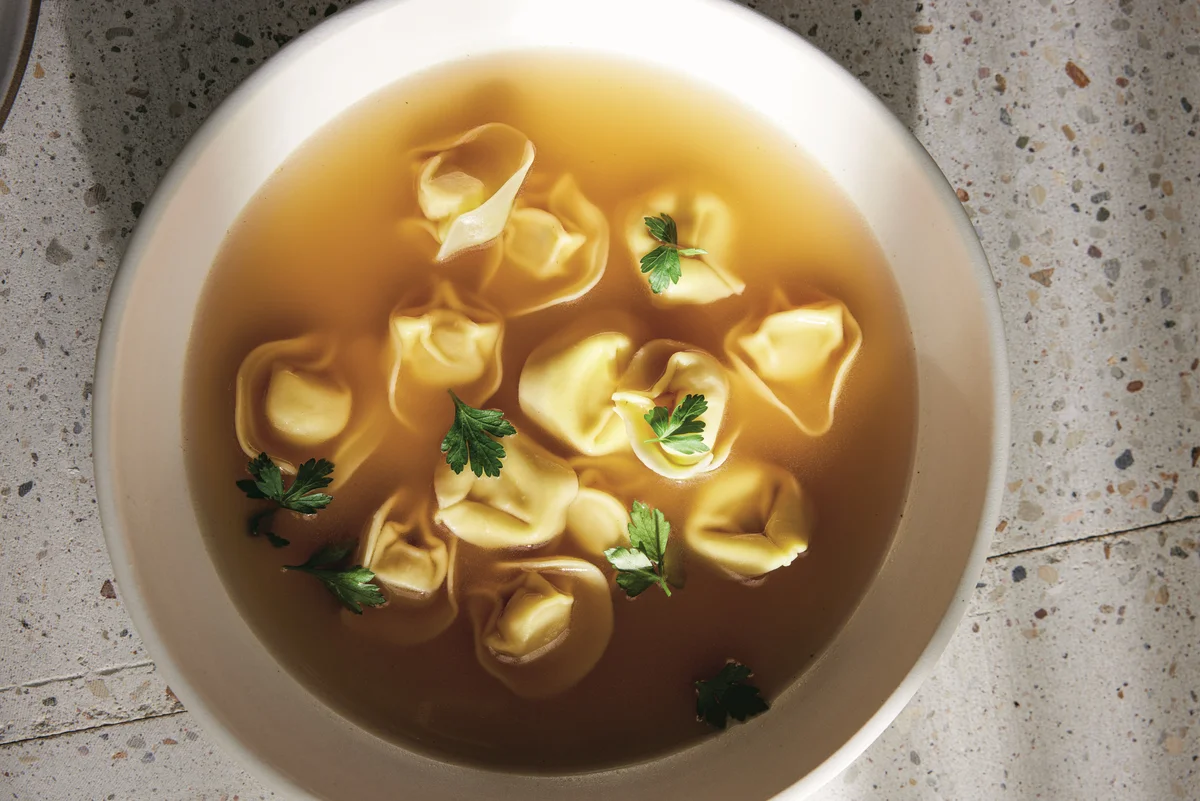
These vegan tortellini are filled with creamy plant-based ricotta, parsley and a savoury Parmesan-style addition, then folded into little rings. They’re a hands-on pasta project that works well for a special dinner or a make-ahead batch.
Ingredients
- 240 ml (1 cup)Fluffy Pumpkin Seed Ricotta (page 31 of the book) or shop-bought vegan ricotta
- 60 ml (¼ cup)Umami-Packed Cashew Parm (page 27 of the book), nutritional yeast or shop-bought vegan Parmesan
- 2 tablespoonsfinely chopped fresh flat-leaf parsley
- To tastefine sea salt
- 227 g (8 ounces)Fresh “Egg” Pasta
- For dustingplain flour
Instructions
- 1
Mix the filling
In a bowl, combine the ricotta, Cashew Parm if using, parsley and ¼ teaspoon salt. Taste the mixture and add more salt if needed.
- 2
Divide the dough
Cut the pasta dough into 4 equal pieces. Work with one piece at a time, keeping the other three covered with a damp kitchen towel.
- 3
Roll the pasta
Pass one piece through a pasta machine, adjusting the settings to make progressively thinner sheets until the dough is paper-thin. Repeat with the remaining pieces, keeping both rolled and unrolled dough covered with the towel as you work.
- 4
Prepare the station
Lightly flour a large baking tray. Set out a small bowl of water for moistening the dough and a shallow bowl of flour for dusting the tortellini as you shape them.
- 5
Cut the squares
Cut each pasta sheet into 7.5 cm (3-inch) squares.
- 6
Fill each square
Turn a square so it sits like a diamond. Place 1 heaped teaspoon of filling in the centre, then fold the bottom point up to meet the top point, making a triangle.
- 7
Shape the tortellini
Press gently around the filling to push out any trapped air. Fold the triangle’s straight bottom edge up and over the filling, then fold it up and over once more. Moisten the two outer points with a damp finger, wrap one point around the other to make a ring and press to seal.
- 8
Flour and arrange
Place each shaped tortellino in the bowl of flour as you work, repeating with the remaining squares. Toss the finished tortellini gently in the flour, dust off any excess and arrange them on the prepared tray.
- 9
Boil the water
Bring a large pot of salted water to the boil, then lower the heat so it simmers gently rather than boiling vigorously.
- 10
Cook in batches
Use a slotted spoon to lower in as many tortellini as fit without crowding the pot. Cook until they float, about 5 minutes, and repeat with any remaining tortellini.
- 11
Serve warm
Transfer the tortellini to serving dishes and add your preferred sauce and any garnishes. Serve warm.
What are tortellini?
Tortellini are small filled pasta rings associated with the Emilia-Romagna region of Italy. Their traditional shape is made by folding a filled square or circle of pasta around a finger and sealing the ends together.
This version uses vegan ricotta with parsley and a savoury cheese-style addition. The filling is simple, so the careful shaping and a well-seasoned mixture give each bite its character.
Nutrition and macros by portion
The nutrition label shows one serving as written: 25 calories, 1g protein, 3g carbs, 1g fat.
| Portion | Adjustment | kcal | Protein | Carbs | Fat |
|---|---|---|---|---|---|
| Lighter | Use less filling | 18 kcal | 1g | 2g | 1g |
| This serving | As written | 25 kcal | 1g | 3g | 1g |
| Hungry | Serve a larger portion | 38 kcal | 2g | 5g | 2g |
Most of the carbohydrates come from the fresh pasta, while the ricotta and Cashew Parm contribute much of the fat and some protein. The exact macros depend on the pasta dough and which vegan ricotta and cheese-style ingredient you use; serve with vegetables or salad to round out the plate.
Choosing the filling
Ricotta: A pumpkin-seed ricotta or a shop-bought vegan alternative provides the soft, creamy base. If it seems especially wet, drain it briefly so the filling is easier to portion.
Savoury addition: Cashew Parm brings a salty, nutty note; nutritional yeast or vegan Parmesan can stand in. Taste before adding extra salt, since these options can vary in saltiness.
Keep the pasta covered
Uncovered fresh pasta can dry out and become difficult to seal. Keep both the dough you have not rolled and the sheets you have finished under a damp towel while working.
Roll one portion at a time and shape the squares soon after cutting them. A little water on the edges helps them stick, but use only enough to moisten the dough.
Seal without trapped air
Filling: Use 1 heaped teaspoon in the centre of each square, keeping it away from the edges. Too much filling makes the folds harder to close securely.
Seal: Press out air around the filling before folding the lower edge over it. Bring the two moistened points together firmly so the ring stays closed during cooking.
Flour and handle gently
Dusting: A light coating of flour keeps the shaped pasta from sticking to the tray or to its neighbours. Shake or brush away excess so the pot does not become unnecessarily cloudy.
Handling: Lower the tortellini into the simmering water with a slotted spoon rather than dropping them in. A gentle simmer is less likely to knock the delicate folds apart.
Cook by feel
The method gives about 5 minutes as a guide, but pasta thickness and the size of the tortellini affect the cooking time. Start checking once they float and taste one to confirm the pasta is tender.
Cook in batches that leave room for the tortellini to move freely. Crowding cools the water and makes it harder to handle the pasta without damaging its shape.
Choose a simple sauce
Serve the tortellini warm with a favourite sauce and any garnishes you like. A light sauce lets the parsley and creamy filling come through, while a richer sauce makes the dish more substantial.
For a balanced plate, add vegetables such as roasted courgette or a crisp green salad. Finish with a little vegan Parmesan if you want a more savoury topping.
Recipe notes & tips
- Keep the dough and pasta sheets covered with a damp towel to stop them drying out.
- Make a test tortellino first to check that the dough folds and seals easily.
- Use a lightly floured tray so the shaped pasta can be lifted without tearing.
- Keep the water at a gentle simmer once it reaches the boil.
- Cook only as many tortellini at once as can move freely in the pot.
Variations
- Herb change: Swap some of the parsley for finely chopped fresh basil.
- Peppery filling: Add a little black pepper to the ricotta mixture.
- Lemon note: Stir a small amount of finely grated lemon zest into the filling.
- Different cheese-style topping: Use nutritional yeast in place of Cashew Parm or vegan Parmesan.
- Vegetable side: Pair with roasted seasonal vegetables for a more substantial meal.
Common mistakes to avoid
- Dry dough: Keep unused pasta covered with a damp towel so it stays pliable.
- Overfilled squares: Stick to 1 heaped teaspoon so the edges can seal properly.
- Trapped air: Press around the filling before folding to help prevent the tortellini opening.
- Wet edges: Moisten the points lightly; too much water can make the dough slippery.
- Boiling too hard: Reduce the heat to a gentle simmer to avoid rough handling in the pot.
- Crowded pot: Cook in batches so the tortellini have room and the water stays hot.
How to store
Keep uncooked tortellini in a single layer on a lightly floured tray, covered, in the fridge and cook within 1 day. For longer storage, freeze them on the tray until firm, then transfer to a sealed freezer container; cook from frozen, allowing extra time and checking for tenderness. Refrigerate cooked leftovers in a sealed container for up to 3 days and reheat gently in hot sauce or simmering water.
Frequently asked questions
Can I make the tortellini ahead?
Yes. Shape them and keep them covered on a lightly floured tray in the fridge, then cook within 1 day. For longer keeping, freeze them in a single layer before transferring them to a container.
Can I cook them from frozen?
Yes. Add the frozen tortellini directly to gently simmering salted water and cook until they float and the pasta is tender. They may need longer than the stated 5 minutes.
How do I know when they are cooked?
They should float, and the pasta should taste tender when you check one. Use the stated 5 minutes as a guide rather than relying on the clock alone.
Why are my tortellini opening in the water?
They may have too much filling, trapped air or edges that were not sealed firmly. Use 1 heaped teaspoon, press the air out and moisten the points before pressing them together.
Can I use shop-bought vegan ricotta?
Yes. The recipe allows shop-bought vegan ricotta; if it is very loose, drain it briefly so it is easier to fill and seal.
What sauce should I serve with them?
Use your preferred sauce and garnishes. A lighter sauce keeps the filling prominent, while a richer sauce makes the meal more filling.
Cook it from the original
This recipe comes from appetitomagazine.com. Their page has the author’s own photos, notes and tips — the best place to cook it from.
Open the recipe on appetitomagazine.com