
Vietnamese spring roll
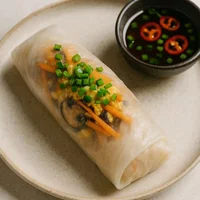
These Vietnamese-inspired spring rolls wrap a savoury mushroom, carrot and egg filling in softened rice paper. They make a fresh starter or a light snack, with tamari or soy sauce for dipping.
Ingredients
- Not specifiedSmall rice paper sheets, about 10 cm in diameter
- 4–5 for the filling; more to tasteBaby carrots
- 1 packChestnut mushrooms
- 1Onion
- 1 bunchSpring onions
- 1–2 clovesGarlic
- 1Egg
- A little, for fryingOlive oil
- To serveTamari or soy sauce
- Optional, to tasteChilli pepper
Instructions
- 1
Prepare vegetables
Thinly slice the mushrooms and 4–5 baby carrots. Finely chop the onion and garlic.
- 2
Cook the filling
Heat a little olive oil in a pan and briefly sauté the onion and garlic. Add the mushrooms and carrot, then fry until the mushrooms are slightly golden.
- 3
Add the egg
Meanwhile, finely slice about 3–4 spring onions. Beat the egg, pour it over the vegetable mixture and stir as it cooks. Once the egg is set, take the pan off the heat.
- 4
Soften rice paper
Dip the rice paper sheets one at a time in a bowl of warm water until just soft enough to handle. Lay each sheet out.
- 5
Fill and roll
Spoon some vegetable mixture onto each sheet and sprinkle with spring onion. Fold one side over the filling, fold in the sides, then roll it up neatly.
- 6
Serve the rolls
Repeat with the remaining filling. Serve with a small dish of tamari or soy sauce, optionally mixed with chilli pepper and spring onion.
What are Vietnamese spring rolls?
Spring rolls are a familiar part of Vietnamese cooking, though fillings and styles vary. This version uses rice paper wrapped around cooked vegetables and egg, rather than a pastry wrapper.
The filling is savoury and soft, while the hydrated rice paper stays delicate and pleasantly chewy. A dipping sauce brings a salty, punchy contrast.
Nutrition and macros by portion
The nutrition label shows one serving as written: 105 calories, 4g protein, 15g carbs, 3g fat.
| Portion | Adjustment | kcal | Protein | Carbs | Fat |
|---|---|---|---|---|---|
| Lighter | Use less dipping sauce | 74 kcal | 3g | 11g | 2g |
| This serving | As written | 105 kcal | 4g | 15g | 3g |
| Hungry | Make an extra roll | 158 kcal | 6g | 23g | 5g |
The rice paper and carrots provide most of the carbohydrate, while the egg and mushrooms contribute protein. The egg and olive oil supply most of the fat; tamari or soy sauce can add a significant amount of sodium depending on how much is used. Serve with extra vegetables or a simple salad to make the plate more substantial.
Build a savoury filling
Mushrooms: Chestnut mushrooms bring a deep, savoury flavour. Slicing them thinly helps them cook through and makes the filling easier to wrap.
Carrot and onion: The carrot adds sweetness and the onion gives the mixture a savoury base. The spring onion is added separately for a fresher finish.
Cook the mixture before wrapping
A quick sauté softens the onion and garlic before the mushrooms and carrot go in. Cook until the mushrooms are slightly golden, as described in the method.
Egg: Pour the beaten egg over the vegetables and keep stirring until it has set. Letting the egg cook fully helps the filling hold together inside the rolls.
Handle rice paper gently
Warm water: Dip each sheet separately and remove it once it is just soft enough to handle. If it becomes very soft in the bowl, it can be more difficult to lift and fold.
Work surface: Lay the softened sheet flat before adding the filling. Keep the filling in a compact line so there is room to fold in the sides.
Fold for a neat roll
Place a manageable spoonful of filling on each sheet rather than overfilling it. Fold one side over, tuck in both sides, then roll the parcel closed.
Rice paper can stick to itself as it softens, so handle each sheet with care and keep the finished rolls separate until serving.
Serve with a dipping sauce
Tamari or soy sauce supplies a salty dip that works well with the mild vegetable-and-egg filling. Add chilli pepper and sliced spring onion if you want extra heat and freshness.
These rolls can be served as a starter or eaten on their own as a snack. They are best enjoyed soon after assembly, while the wrappers are supple.
Recipe notes & tips
- Slice the vegetables thinly so they are easy to wrap.
- Cook the filling until the mushrooms are slightly golden.
- Soften each rice paper sheet individually in warm water.
- Use a modest amount of filling to make folding easier.
- Keep the spring onion for sprinkling over the filling before rolling.
- Put the tamari or soy sauce in a small dish for dipping.
Variations
- Add herbs: Scatter fresh mint or coriander over the filling before rolling.
- More heat: Stir sliced chilli into the dipping sauce.
- Extra crunch: Add thin strips of cucumber to the filling just before wrapping.
- Use tofu: Replace the egg with crumbled tofu cooked with the vegetables.
- Change the sauce: Serve with a sweet chilli dip instead of tamari or soy sauce.
Common mistakes to avoid
- Over-soaking the wrapper: Remove it when just soft enough to handle so it is easier to fold.
- Overfilling: Use a smaller spoonful so the wrapper can close without tearing.
- Crowding the pan: Cook the vegetables in a roomy pan so they can brown rather than steam.
- Adding egg too early: Pour it over the vegetables after they have cooked, then stir until set.
- Rolling loosely: Fold the sides in before rolling to help keep the filling contained.
How to store
Keep leftover rolls covered in the fridge and eat within 1 day, as rice paper can dry out or become sticky. They are best eaten cold or at room temperature; reheating may make the wrappers tough.
Frequently asked questions
How many rice paper sheets do I need?
The recipe does not specify a number. Use one small sheet per roll and continue until the filling is used up.
How long should I soak rice paper?
Dip each sheet in warm water only until it is just soft enough to handle. The recipe does not give a precise soaking time, as sheets can soften at different rates.
Can I make these spring rolls ahead?
They are best assembled close to serving, when the wrappers are still supple. If needed, cover them and refrigerate for up to 1 day.
Can I use soy sauce instead of tamari?
Yes. The recipe offers either tamari or soy sauce for serving.
How do I stop the rolls tearing?
Soften each sheet only until pliable and avoid packing in too much filling. Fold the sides in gently before rolling.
Cook it from the original
This recipe comes from cookinglife.eu. Their page has the author’s own photos, notes and tips — the best place to cook it from.
Open the recipe on cookinglife.eu