
Gluten-free scones
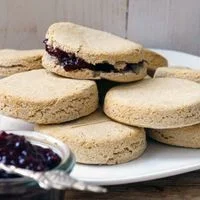
These gluten-free scones combine oat flour with cornflour and potato starch for a simple bake to serve at afternoon tea. Cut them thick, as they do not rise much, and serve with jam or coconut cream.
Ingredients
- 200 gramsgluten-free oat flour
- 100 gramscornflour (cornstarch)
- 50 gramspotato starch
- 250 mlplant-based milk
- 1 largeegg
- 2 teaspoonsbaking powder
- 1 1/2 tablespoonsmaple syrup
- 1 teaspoonvanilla extract
- juice of halflemon
Instructions
- 1
Preheat and mix
Preheat the oven to 175°C. Put the oat flour, cornflour, potato starch, milk, egg, baking powder, maple syrup, vanilla extract and lemon juice in a food processor. Mix until a dough forms, or knead the ingredients together by hand.
- 2
Shape the scones
Roll the dough to your desired thickness, about 5 cm, then cut out rounds with a cutter. The scones do not rise much, so make them fairly thick.
- 3
Bake the scones
Arrange the rounds on a baking tray lined with parchment paper. Bake for about 25 minutes.
- 4
Cool and serve
Leave the scones to cool slightly, then slice them open and serve with sugar-free jam or coconut cream.
What are scones?
Scones are a traditional British bake, commonly served at afternoon tea with a topping or filling. This version uses oat flour and starches instead of wheat flour, with plant-based milk and an egg to bring the dough together.
The blend of flours gives the scones their structure, while cutting them thick helps compensate for their limited rise.
Nutrition and macros by portion
The nutrition label shows one serving as written: 190 calories, 6g protein, 37g carbs, 4g fat.
| Portion | Adjustment | kcal | Protein | Carbs | Fat |
|---|---|---|---|---|---|
| Lighter | Skip the coconut cream | 133 kcal | 4g | 26g | 3g |
| This serving | As written | 190 kcal | 6g | 37g | 4g |
| Hungry | Serve two scones | 285 kcal | 9g | 56g | 6g |
The oat flour and starches provide most of the carbohydrates, while the egg contributes protein and some fat. The milk and egg also affect the final nutrition, so figures will vary with the type of plant-based milk used. Serve with fruit alongside, or add a protein-rich accompaniment if you want a more balanced plate.
Choosing the flour blend
Oat flour: use flour labelled gluten-free if you need to avoid gluten, as oats can be subject to cross-contact during processing.
Starches: cornflour and potato starch lighten the oat flour blend. Measure them carefully so the proportions stay balanced.
Making the dough
Mixing: a food processor is a quick way to combine everything, but the dough can also be kneaded by hand. Stop once it comes together rather than working it for a long time.
Consistency: the recipe gives no extra liquid adjustment, so combine the listed ingredients first and handle the dough gently when rolling.
Cutting and shaping
Thickness: roll the dough to about 5 cm, as the scones do not rise much in the oven. Thinner rounds will bake up flatter.
Cutter: press a round cutter straight down to make the scones. Gather and reroll scraps as needed, handling them lightly.
Checking for doneness
Timing: bake at 175°C for about 25 minutes, as directed. Keep an eye on the tray towards the end, since ovens can vary.
Cue: the recipe does not specify a visual doneness test, so use the stated baking time as your guide and let the scones cool slightly before slicing.
Serving at tea time
Toppings: serve the scones sliced open with sugar-free jam or coconut cream, as suggested in the recipe. Add the topping shortly before eating.
Pairing: tea makes a natural accompaniment, while fresh fruit can add a bright contrast to the soft, lightly sweet scones.
Recipe notes & tips
- Use a parchment-lined tray to make lifting the baked scones easier.
- Measure the flours and starches by weight for consistent results.
- Roll the dough to about 5 cm so the scones are not too thin.
- Handle the dough gently when gathering and rerolling scraps.
- Let the scones cool slightly before slicing them open.
Variations
- Citrus twist: add finely grated lemon zest for a stronger lemon note.
- Dried fruit: fold in a small handful of raisins before shaping.
- Spiced dough: add a pinch of cinnamon for a warm flavour.
- Berry topping: serve with fresh berries alongside the jam or coconut cream.
- Different milk: use your preferred plant-based milk, keeping the amount at 250 ml.
Common mistakes to avoid
- Cutting them too thin: the scones do not rise much, so roll the dough to about 5 cm.
- Overmixing: stop once the dough comes together to avoid unnecessary handling.
- Skipping the parchment: line the tray so the scones are easier to remove.
- Slicing while very hot: let the scones cool slightly first so they are easier to handle.
- Changing the flour ratios: measure the oat flour and starches carefully for a consistent dough.
How to store
Once cool, store the scones in an airtight container at room temperature and eat within 2 days. Rewarm briefly in a low oven, or freeze them in a sealed container and thaw before serving.
Frequently asked questions
Why are my scones flat?
The recipe notes that these scones do not rise much. Roll the dough to about 5 cm rather than cutting thin rounds.
Can I make the dough without a food processor?
Yes. Combine the ingredients and knead them by hand until a dough forms.
Can I use a different plant-based milk?
The recipe does not specify a particular type, so you can use your preferred plant-based milk. Its nutrition and flavour may change the result slightly.
How do I serve these scones?
Slice them open after they have cooled slightly and serve with sugar-free jam or coconut cream.
Are these suitable for someone avoiding gluten?
They are made with gluten-free oat flour rather than wheat flour. If gluten avoidance is essential, choose oat flour and other ingredients labelled gluten-free.
Cook it from the original
This recipe comes from cookinglife.eu. Their page has the author’s own photos, notes and tips — the best place to cook it from.
Open the recipe on cookinglife.eu