
Gogoși
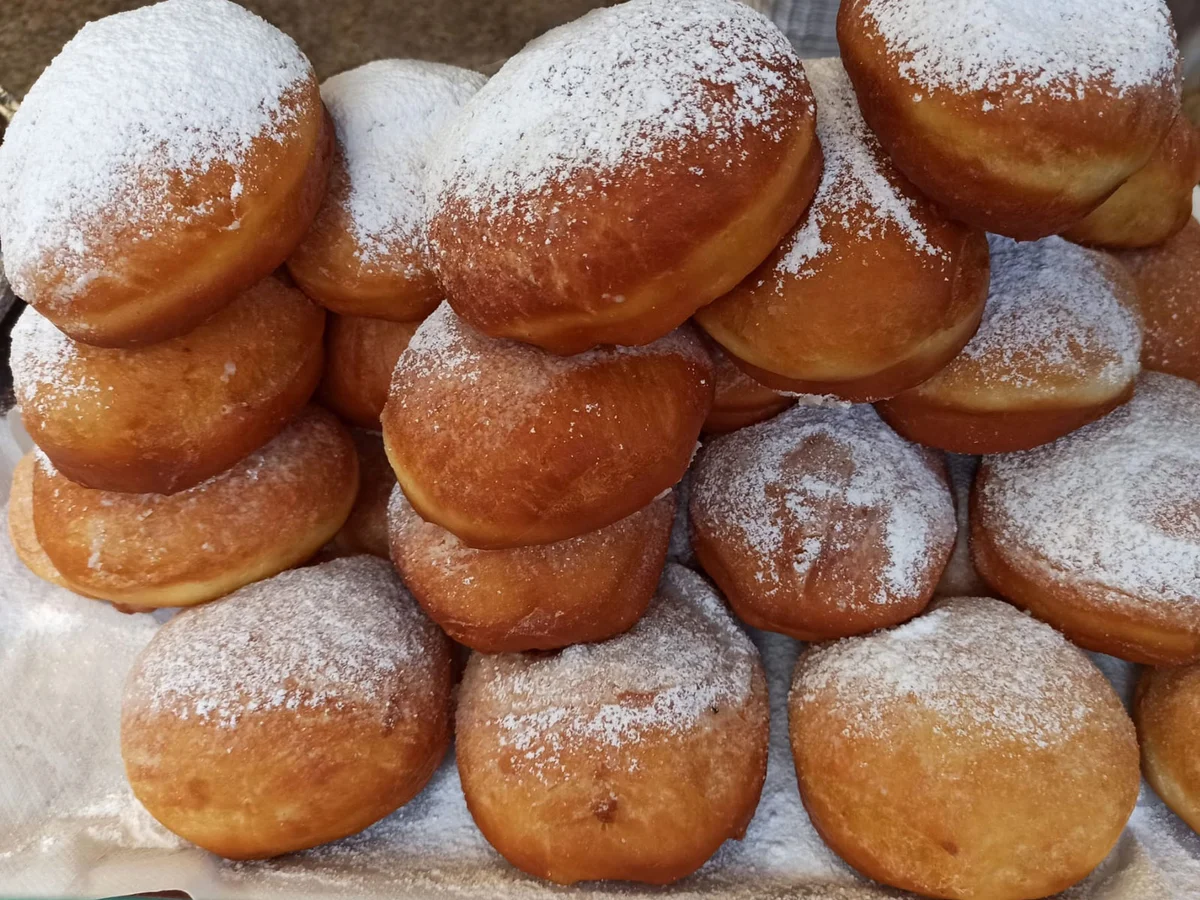
Gogoși are Romanian yeasted doughnuts with a tender, brioche-like centre, a golden fried crust and a dusting of icing sugar. Make them for a family treat or festive gathering; they are especially good while warm and remain soft as they cool.
Ingredients
- 500 gplain flour
- 25 g fresh yeast (or 7 g dried)fresh yeast
- 250 mlwhole milk, lukewarm
- 1 teaspoonsugar
- 2whole eggs
- 50 gbutter, melted
- zest of 1unwaxed lemon, finely grated
- about 600 mlpeanut oil, for frying
- 4–5 gsalt
- to tasteicing sugar, for dusting
Instructions
- 1
Activate the yeast
Stir the fresh yeast into the lukewarm milk with the teaspoon of sugar and leave it to activate for 10 minutes. Sift the flour into a large bowl, then add the sugar, eggs, melted butter, salt, lemon zest and yeast mixture.
- 2
Knead the dough
Mix with a wooden spoon until combined. Turn the dough onto a floured work surface and knead by hand for 8–10 minutes, until smooth and elastic; alternatively, use a stand mixer for 5–6 minutes.
- 3
Leave to rise
Shape the dough into a ball and put it in an oiled bowl. Cover with a cloth and leave to rise for 1 hour 30 minutes, or until doubled in size.
- 4
Shape the doughnuts
Turn the dough onto a lightly floured surface and shape it into balls of about 40 g each; this should make around 22. Arrange them on a floured tea towel, about 4 cm apart, cover with cling film and leave to rise for another 90 minutes.
- 5
Fry until golden
Heat the peanut oil to 170–175°C. Fry a few dough balls at a time for about 3–4 minutes per batch, turning them halfway through, until puffed and golden.
- 6
Drain and dust
Lift the gogoși from the oil and drain them on kitchen paper. Once all are cooked, dust with icing sugar. In Romania, a usual serving is 3–4 gogoși per person.
What are gogoși?
Gogoși are Romanian fried doughnuts, commonly enjoyed alongside other traditional sweets such as papanași. Families often have their own versions, and they are a familiar treat at fairs, folk festivals and Sunday gatherings.
This version uses an enriched, yeasted dough with eggs, butter and lemon zest. The dough rises before frying, giving the finished doughnuts a soft interior beneath their crisp, golden exterior.
Nutrition and macros by portion
The nutrition label shows one serving as written: 700 calories, 17g protein, 81g carbs, 32g fat.
| Portion | Adjustment | kcal | Protein | Carbs | Fat |
|---|---|---|---|---|---|
| Lighter | Serve fewer doughnuts | 490 kcal | 12g | 57g | 22g |
| This serving | As written | 700 kcal | 17g | 81g | 32g |
| Hungry | Add another doughnut | 1050 kcal | 26g | 122g | 48g |
Flour supplies most of the carbohydrates, while eggs contribute protein and the butter and frying oil provide much of the fat. For a more balanced plate, serve a smaller number with fresh fruit rather than treating the doughnuts as the whole meal.
Building flavour into the dough
Yeast and milk: Lukewarm milk helps bring the yeast into the dough; it should feel warm rather than hot. The teaspoon of sugar is used to activate the yeast and is also added to the dough.
Butter and lemon: Melted butter gives the dough its brioche-like richness, while lemon zest brings a fresh aroma. Finely grate only the coloured outer peel to avoid the bitter white pith.
Kneading and proofing
Kneading: Work the dough for 8–10 minutes by hand, or 5–6 minutes in a stand mixer. It is ready when it feels smooth and elastic rather than rough or easily torn.
First rise: Leave the covered dough in a draught-free place for 1 hour 30 minutes, or until it has doubled. The visual cue matters more than the clock if the room is cool.
Shaping evenly
Portioning: Aim for balls of about 40 g so they cook at a similar rate. Keeping them evenly sized also makes the batch easier to fry in small groups.
Second rise: Space the balls about 4 cm apart on a floured tea towel and cover them with cling film for 90 minutes. Handle them gently when moving them so they keep as much of their airy shape as possible.
Getting the frying right
Oil temperature: Heat the peanut oil to 170–175°C and fry only a few doughnuts at once. A thermometer helps keep the temperature steady as each batch goes in.
Doneness: Turn each doughnut halfway through its 3–4 minute frying time. Look for a puffed shape and an even golden colour, then drain the doughnuts on kitchen paper.
Serving the gogoși
Icing sugar: Dust the cooked doughnuts before serving, adjusting the amount to taste. They are particularly appealing warm, when the contrast between the crisp outside and soft centre is clear.
On the side: Serve them on their own with tea or coffee, or add fresh fruit for a lighter contrast. Allow freshly fried doughnuts to cool briefly before serving.
Recipe notes & tips
- Check that the milk is lukewarm before mixing it with the yeast.
- Use the dough’s smooth, elastic feel as a cue that it has been kneaded enough.
- Let the first rise continue until the dough has doubled, even if it takes longer in a cool room.
- Keep the shaped dough balls evenly spaced so they have room to rise.
- Fry a few doughnuts at a time to help maintain the oil temperature.
- Dust with icing sugar just before serving for a fresh finish.
Variations
- Vanilla: Add a little vanilla extract to the dough for a mellow, sweet aroma.
- Citrus: Replace the lemon zest with finely grated orange zest.
- Cinnamon sugar: Toss the drained doughnuts in a mixture of sugar and cinnamon instead of icing sugar.
- Filled doughnuts: Once cool, fill the doughnuts with jam using a piping bag.
- Dried yeast: Use 7 g dried yeast in place of the 25 g fresh yeast.
Common mistakes to avoid
- Hot milk: It can hinder the yeast; use lukewarm milk instead.
- Under-kneading: The dough may lack elasticity; knead for the full 8–10 minutes by hand or 5–6 minutes in a mixer.
- Rushing the rise: The doughnuts may be less airy; wait for the dough to double and allow the shaped balls their full 90-minute rise.
- Crowded frying: Adding too many at once can lower the oil temperature; fry just a few per batch.
- Oil too hot: The outside can colour before the centre cooks; keep the oil between 170 and 175°C.
- Skipping the turn: One side may brown more than the other; turn each doughnut halfway through frying.
How to store
Keep cooled gogoși in an airtight container at room temperature for up to 2 days. Warm them briefly in a low oven before serving; avoid microwaving for too long, as it can make them chewy.
Frequently asked questions
How many gogoși does this recipe make?
The recipe makes about 22 doughnuts of roughly 40 g each. It serves 5, with the method noting that a usual Romanian portion is 3–4 gogoși.
Can I use dried yeast instead of fresh yeast?
Yes. Use 7 g dried yeast instead of 25 g fresh yeast, as specified in the ingredient list.
How can I tell when the dough has risen enough?
After the first rise, it should have doubled in size. The shaped doughnuts should look puffy after their second rise.
What temperature should the oil be?
Heat the peanut oil to 170–175°C. Fry in small batches and let the oil return to the right temperature between batches if needed.
Can I prepare the dough ahead?
The recipe gives room-temperature rising times, rather than an overnight method. For the best result, follow the two rises and fry the doughnuts on the day you make them.
Are gogoși best served warm?
They are especially good warm, but the recipe notes that they stay soft at room temperature too. Dust them with icing sugar once the batch is cooked.
Cook it from the original
This recipe comes from fragolosi.it. Their page has the author’s own photos, notes and tips — the best place to cook it from.
Open the recipe on fragolosi.it