
Cacio e Pepe White Asparagus
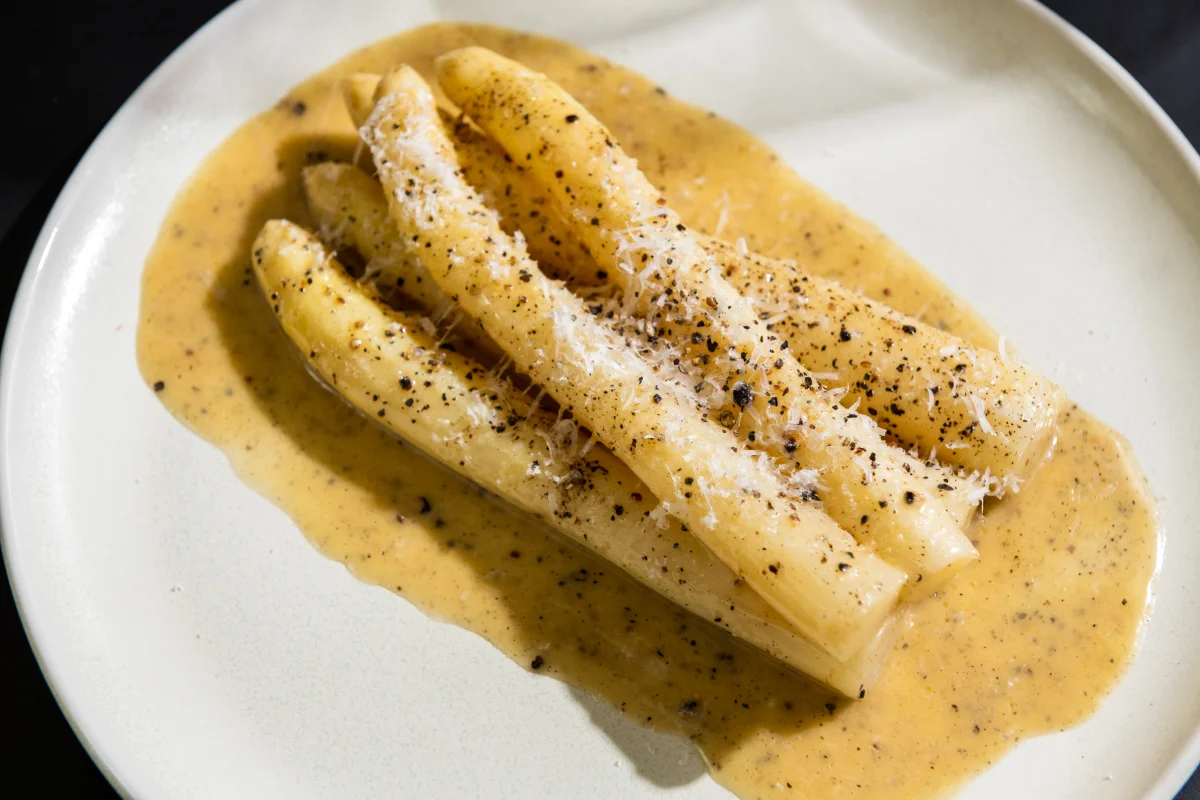
White asparagus is served with a peppery butter, chicken stock and Pecorino Romano emulsion, in a preparation inspired by cacio e pepe. Blanching the spears ahead keeps the final pan cooking quick and gives them a tender finish.
Ingredients
- 40 spearswhite asparagus from the Loire
- to tastesalt
- 4 spearsblanched white asparagus
- 1 tbspcracked black pepper
- 1 tspcracked white pepper
- 475 ml (2 cups)chicken stock
- 57 g (½ stick)butter
- 100 g (1 cup)grated Pecorino Romano
- 1 tspfresh lemon juice
Instructions
- 1
Boil salted water
Bring a large pan of heavily salted water to a rolling boil. Fill a large bowl with ice and water to make an ice bath.
- 2
Peel the asparagus
Peel each white asparagus spear from just below the head down to the tip, taking care to peel evenly and avoid leaving flat edges.
- 3
Blanch in batches
Add the peeled spears to the boiling water in batches of ten. Cook for about 4 minutes, until just tender.
- 4
Cool the spears
Lift the asparagus straight from the boiling water and place it in the ice bath to stop the cooking. Leave it until completely cool.
- 5
Chill until needed
Remove the spears from the ice bath and shake off excess water. Arrange them on a kitchen towel on a tray and refrigerate until needed.
- 6
Heat the pan
For one serving, set a sauté pan just large enough to hold four spears flat over a medium-high heat.
- 7
Toast the peppers
Add the cracked black and white pepper to the pan. Toast until fragrant and just beginning to smoke.
- 8
Boil the stock
Pour in the chicken stock and bring it to a rapid boil.
- 9
Add asparagus
Put the white asparagus in the pan, then add the butter.
- 10
Emulsify the butter
Swirl the pan so the butter combines with the stock and coats the asparagus.
- 11
Reduce the sauce
Keep the emulsion boiling until it has reduced by two thirds.
- 12
Melt in the cheese
Take the pan off the heat. Add the lemon juice, then the cheese, and swirl the pan again until the cheese melts into the emulsion.
- 13
Check the seasoning
Taste the sauce and add a little salt if needed.
- 14
Plate the asparagus
Line up the spears in a pasta bowl and spoon the emulsion over them.
- 15
Finish and serve
Grate fresh Pecorino over the asparagus and serve.
What is cacio e pepe white asparagus?
Cacio e pepe is a Roman pasta preparation built around cheese and black pepper. This version applies that pepper-and-cheese pairing to white asparagus rather than pasta, using stock and butter to make a coating sauce.
White asparagus is grown without exposure to light, which keeps its colour pale and gives it a mild, delicate flavour. Blanching the spears first, then finishing them in the peppery emulsion, keeps the final cooking focused and quick.
Nutrition and macros by portion
The nutrition label shows one serving as written: 100 calories, 7g protein, 8g carbs, 7g fat.
| Portion | Adjustment | kcal | Protein | Carbs | Fat |
|---|---|---|---|---|---|
| Lighter | Use less butter and cheese | 70 kcal | 5g | 6g | 5g |
| This serving | As written | 100 kcal | 7g | 8g | 7g |
| Hungry | Add extra asparagus spears | 150 kcal | 11g | 12g | 11g |
The asparagus supplies most of the carbohydrates, while butter and Pecorino provide much of the fat; the cheese and chicken stock contribute protein. Serve it with a simple salad or additional vegetables for a more substantial, balanced plate.
Choosing and preparing the asparagus
White asparagus: peel each spear carefully from below the head to the tip, removing the fibrous outer layer evenly. The recipe calls for 40 spears for blanching, then four blanched spears for each serving.
Pepper: cracked black and white pepper bring different notes to the sauce. Toast them only until fragrant and just starting to smoke, before adding the stock.
Blanching for a tender finish
Small batches: cook ten spears at a time in rapidly boiling, well-salted water so the water continues to boil around them. About 4 minutes is the guide; the spears should be just tender rather than soft.
Ice bath: transfer the asparagus straight into the ice water to halt the cooking. Cool it completely, then drain and refrigerate the spears on a towel so they are ready for the pan.
Building the emulsion
Stock and butter: bring the chicken stock to a rapid boil before adding the asparagus and butter. Swirl the pan to combine the butter with the stock and coat the spears.
Reduction: boil the liquid until it has reduced by two thirds, as directed. Take the pan off the heat before adding the lemon juice and cheese, then swirl to melt the cheese into the sauce.
How to judge doneness
Tender spears: the asparagus should be just tender after blanching, with enough structure to lift and line up in the serving bowl. Exact timing can vary with the thickness of the spears, so check them as they cook.
Glossy sauce: after the final swirl, the emulsion should cling to the asparagus rather than sit as a thin pool. Keep the pan off the heat as you melt in the cheese.
Timing and serving
Prepare ahead: blanch and chill the asparagus before you start the per-serving sauce. The final pan stage moves quickly, so have the butter, cheese and lemon juice ready to add.
To serve: arrange the four spears in a pasta bowl and cover them with the emulsion. Finish with a fresh grating of Pecorino; bread or a simple green salad can round out the plate.
Recipe notes & tips
- Keep the peeled spears in even-sized batches so they cook at a similar rate.
- Have the ice bath ready before the asparagus goes into the boiling water.
- Drain the blanched spears thoroughly before refrigerating them on the towel.
- Use a pan that lets four spears lie flat without crowding.
- Take the pan off the heat before stirring in the lemon juice and Pecorino.
- Taste before adding salt, since both the stock and cheese may already be salty.
Variations
- More lemon: add a little extra lemon juice at the end for a brighter finish.
- Extra pepper: increase the cracked black pepper for a more pronounced cacio e pepe character.
- Vegetarian stock: use vegetable stock in place of chicken stock for a meat-free version.
- Different hard cheese: use finely grated Parmesan instead of Pecorino Romano for a milder result.
- Fresh herbs: scatter chopped chives over the plated asparagus just before serving.
Common mistakes to avoid
- Uneven peeling: peel from below the head to the tip so tough patches do not remain.
- Overcooking the blanch: start checking around 4 minutes and remove the spears when just tender.
- Skipping the ice bath: transfer the asparagus straight into ice water so residual heat does not keep cooking it.
- Crowding the pan: use a pan sized for four spears so they can lie flat and coat evenly.
- Adding cheese over heat: remove the pan from the hob first to help the cheese melt into the emulsion.
- Over-salting: check the sauce before seasoning because the stock and Pecorino can be salty.
How to store
Keep blanched asparagus covered in the refrigerator and use it within 2 days for the best texture. The finished dish is best served immediately; if needed, reheat it gently in a pan with a splash of stock, avoiding a hard boil after the cheese has been added.
Frequently asked questions
Can I blanch the asparagus ahead of time?
Yes. Cool the spears completely in the ice bath, drain them well and refrigerate them on a towel-covered tray until needed.
How do I know when white asparagus is cooked?
After about 4 minutes of blanching, test a spear: it should be just tender, not floppy. Thicker spears may need a little longer.
Can I use green asparagus?
Yes, but green asparagus is usually thinner and may cook faster. Check it early during blanching and adjust the timing to its thickness.
Why add the Pecorino off the heat?
The method adds the cheese after the pan is removed from the heat, allowing it to melt into the emulsion as you swirl the pan.
Can I make the dish without chicken stock?
Use vegetable stock as a substitute. The sauce will have a different flavour, but the butter, pepper and Pecorino still provide the defining character.
Cook it from the original
This recipe comes from appetitomagazine.com. Their page has the author’s own photos, notes and tips — the best place to cook it from.
Open the recipe on appetitomagazine.com