
Shrimp Oreganata
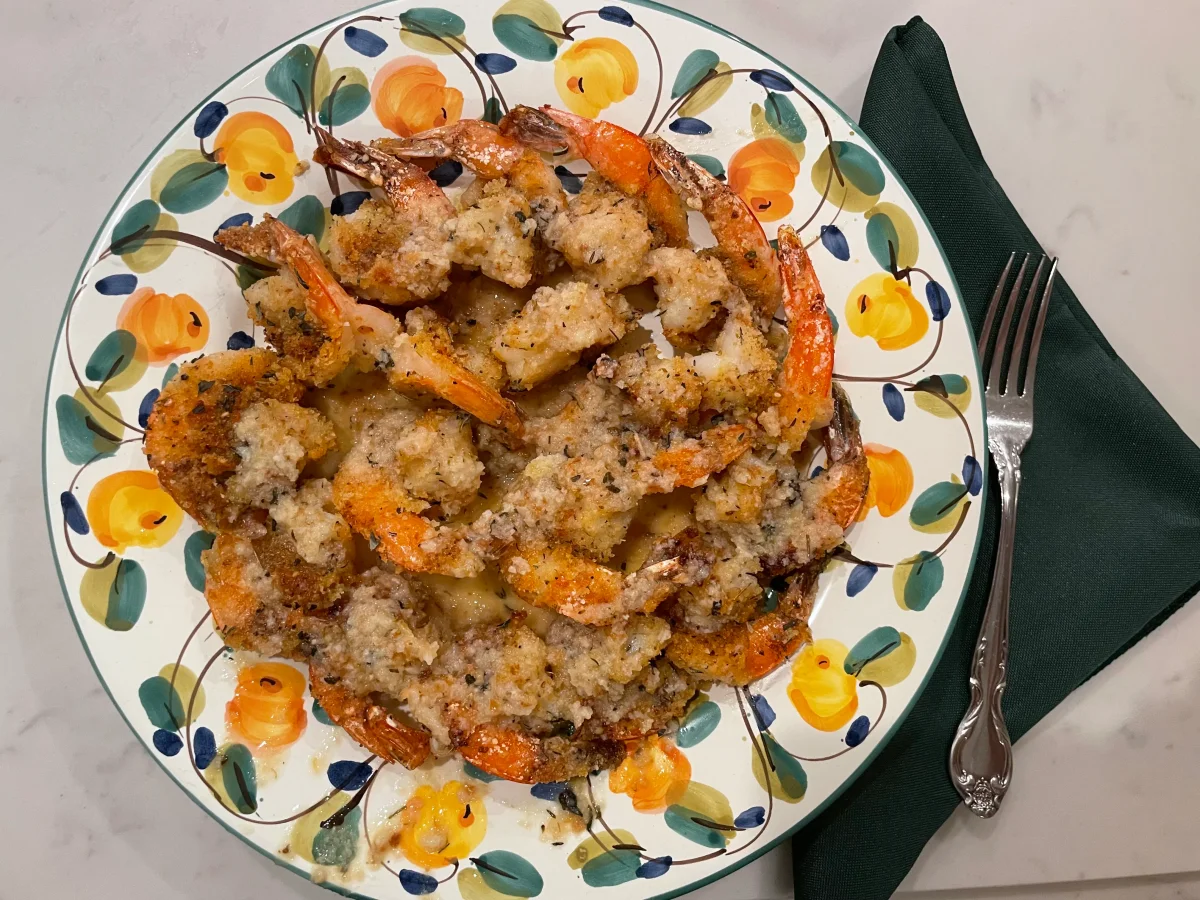
Shrimp Oreganata is oven-baked shrimp with a crisp, herby breadcrumb and Parmesan coating, finished with a buttery white-wine sauce and lemon. It is a quick, special-feeling dish that pairs easily with a simple salad or pasta.
Ingredients
- 454 g (1 lb)medium shrimp, cleaned, peeled with tails intact, butterflied, rinsed and dried on paper towels
- about 75 g (2/3 cup)plain breadcrumbs
- about 33 g (1/3 cup)grated Parmigiano Reggiano
- 1 tbspminced garlic
- 2 tspgrated lemon zest
- 2 tspfennel pollen or dried oregano
- 1/2 tspCajun seasoning or Old Bay
- 28 g (2 tbsp)unsalted butter
- 120 ml (1/2 cup)dry white wine
- 1lemon, quartered
- as neededextra-virgin olive oil
- to tastesalt
Instructions
- 1
Heat the oven
Preheat the oven to 230°C (450°F).
- 2
Oil the shrimp
Put the dry shrimp in a large bowl and coat them with extra-virgin olive oil.
- 3
Season the shrimp
Add salt to taste and the Cajun seasoning or Old Bay. Toss to coat, then set aside.
- 4
Mix the coating
On a baking sheet or in a baking dish, combine the breadcrumbs, Parmigiano, garlic, lemon zest and fennel pollen or oregano. Mix thoroughly.
- 5
Coat the shrimp
Press the butterflied side of each shrimp into the breadcrumb mixture, then coat the top as well. Keep the tails free of crumbs.
- 6
Arrange the shrimp
Coat an ovenproof dish or tray with extra-virgin olive oil. Arrange the shrimp on it, tails pointing up and butterflied sides facing down, leaving space between them.
- 7
Bake the shrimp
Bake for 10 minutes.
- 8
Crisp the tops
Switch on the grill and cook until the tops are just crisp, for 1–2 minutes.
- 9
Plate the shrimp
Remove the dish or tray from the oven and arrange the shrimp on a serving platter.
- 10
Make the sauce
Add the white wine and butter to the baking dish. Stir them into the crumbs left in the dish to make a sauce.
- 11
Spoon over sauce
Spoon the sauce over the shrimp.
- 12
Add the lemon
Squeeze the lemon wedges over the shrimp.
- 13
Serve the shrimp
Serve straight away.
What is shrimp Oreganata?
Oreganata is an Italian-American style of baked seafood topped with seasoned breadcrumbs, often flavoured with herbs, garlic and lemon. The name points to oregano, though this version also offers fennel pollen as an alternative.
Butterflied shrimp provide a broad surface for the crisp coating, while the tails make them easy to handle. Wine and butter stirred into the crumbs left in the baking dish create a quick sauce without an extra pan.
Nutrition and macros by portion
The nutrition label shows one serving as written: 300 calories, 27g protein, 15g carbs, 12g fat.
| Portion | Adjustment | kcal | Protein | Carbs | Fat |
|---|---|---|---|---|---|
| Lighter | Use less butter and oil | 210 kcal | 19g | 11g | 8g |
| This serving | As written | 300 kcal | 27g | 15g | 12g |
| Hungry | Serve with pasta | 450 kcal | 41g | 23g | 18g |
The shrimp provide most of the protein, while breadcrumbs contribute most of the carbohydrates. Butter, olive oil and Parmesan supply much of the fat; serve a generous portion of vegetables or salad alongside to round out the plate.
Choose the herb and seasoning
Fennel pollen: it brings a subtle anise-like aroma to the breadcrumb mixture. Use dried oregano instead for a more familiar, earthy herbal flavour.
Cajun seasoning or Old Bay: either adds savoury seasoning to the shrimp. Since their salt levels can vary, season with salt thoughtfully and taste the coating only if you do so before it touches the raw shrimp.
Get the coating to cling
Dry shrimp: patting them dry helps the olive oil and crumbs adhere rather than slide off. If they are still wet after rinsing, give them a little more time on paper towels.
Butterflied side: press this open surface firmly into the crumbs, then coat the top too. Leaving the tails bare keeps them neat to pick up and avoids a thick, awkward coating there.
Watch the short cooking time
Bake: give the shrimp 10 minutes at 230°C (450°F), arranging them without crowding so heat can reach them evenly. Shrimp cook quickly, so avoid extending the bake unnecessarily.
Grill: finish for just 1–2 minutes, watching closely for crisp tops. The crumbs should colour lightly; they can go from crisp to burnt in a short time.
Make the pan sauce
Wine and butter: add them to the baking dish after transferring the shrimp to a platter. Stir up the remaining crumbs to bring the buttery, savoury bits together.
Consistency: the sauce is meant to be spooned over the shrimp, not served as a separate smooth gravy. If the dish is very hot, handle it carefully while stirring and pouring.
Serve it while crisp
Lemon: squeeze the wedges over the shrimp just before serving, so the bright citrus balances the rich butter and Parmesan.
On the side: a green salad or simply cooked vegetables make a fresh counterpoint. For a heartier meal, serve with pasta, rice or crusty bread to catch any extra sauce.
Recipe notes & tips
- Dry the shrimp thoroughly after rinsing so the crumb coating sticks well.
- Keep the shrimp in a single layer with space between them for more even cooking.
- Use the butterflied side as the main surface for pressing into the crumbs.
- Stay beside the oven during the 1–2-minute grilling step, as the topping browns quickly.
- Stir the wine and butter into the crumbs in the baking dish to make the sauce.
Variations
- Use oregano: swap the fennel pollen for dried oregano for a more classic herbal flavour.
- Change the seasoning: choose Cajun seasoning or Old Bay to shift the savoury profile.
- Add chilli: mix a little chilli flakes into the breadcrumb coating for gentle heat.
- Try panko: replace the plain breadcrumbs with panko for a lighter, crunchier topping.
- Serve over pasta: plate the shrimp with pasta to make the dish more substantial.
Common mistakes to avoid
- Wet shrimp: the coating may slide off; pat the shrimp dry before adding oil.
- Crowded tray: the shrimp may cook unevenly; arrange them with space between each piece.
- Coating the tails: crumbs can make the shrimp awkward to pick up; leave the tails bare.
- Over-grilling: the crumbs can burn quickly; check the tops closely during the 1–2-minute finish.
- Skipping the pan crumbs: the sauce loses its savoury texture; stir the wine and butter into the crumbs left in the dish.
How to store
Refrigerate leftovers in a covered container and use within 2 days. Reheat gently in a 180°C oven until hot; the crumb topping may soften, and the shrimp can become tough if overheated.
Frequently asked questions
Can I use frozen shrimp?
Yes. Thaw them fully, peel and butterfly them if needed, then pat them very dry before coating.
Can I prepare the shrimp ahead?
You can mix the breadcrumb coating ahead and keep it covered. For the best texture, coat the shrimp shortly before baking.
How can I tell when the shrimp are cooked?
They should be opaque and curled, with no translucent centre. Check promptly, since shrimp can turn tough if cooked for too long.
What can I use instead of white wine?
You can use a little seafood stock or water in the pan sauce, though the flavour will be different from the wine version.
Can I make this without a grill setting?
Yes. Bake as directed and check whether the topping is crisp; it may need a little extra baking time, so watch closely to avoid overcooking the shrimp.
Cook it from the original
This recipe comes from appetitomagazine.com. Their page has the author’s own photos, notes and tips — the best place to cook it from.
Open the recipe on appetitomagazine.com