
Mackerel with asparagus
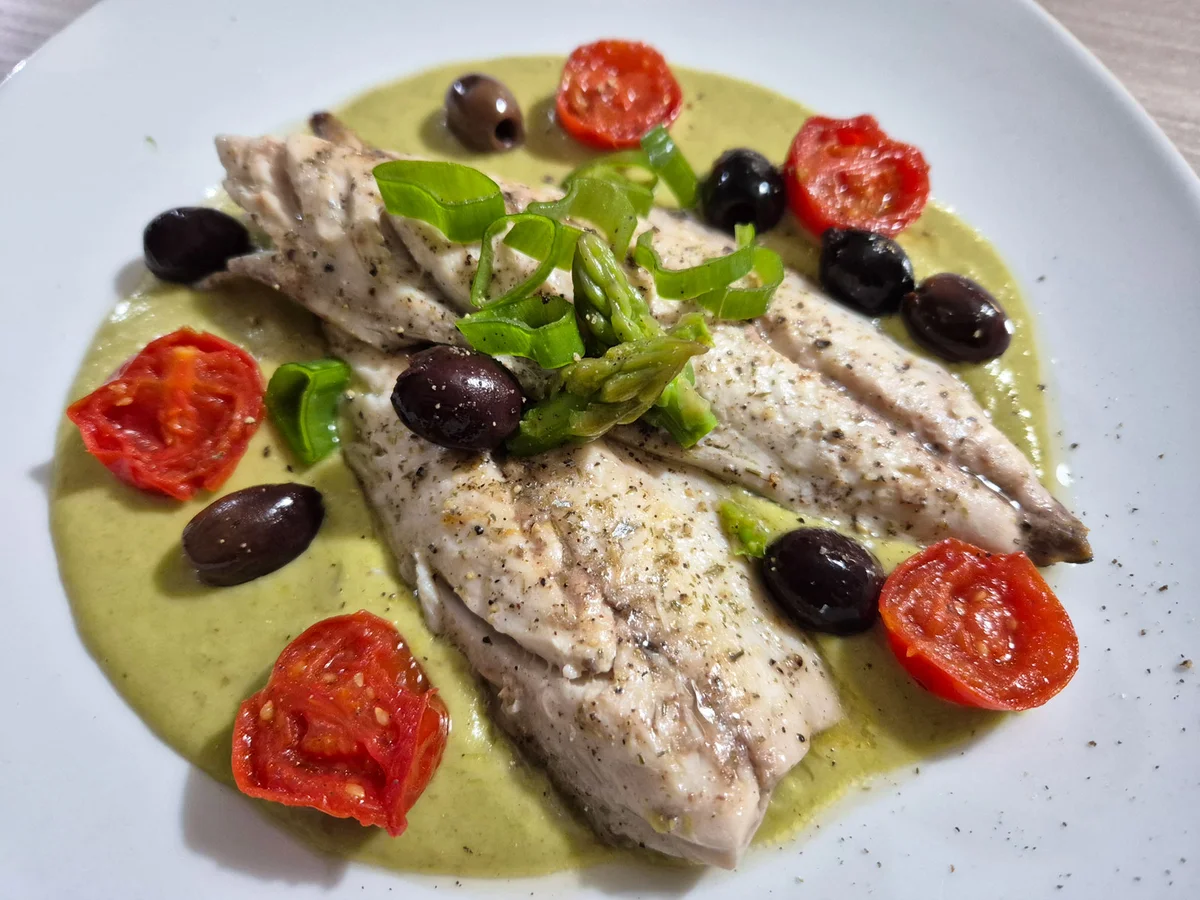
Mackerel fillets are marinated with lemon, orange and rosemary, then grilled and served with a smooth asparagus cream. Semi-dried tomatoes and Taggiasca olives add sweet, savoury and tangy notes for an elegant meal.
Ingredients
- 4, about 250 g eachfresh mackerel
- juice of 1lemon
- juice of 1orange
- 1unpeeled garlic clove
- 2 sprigsrosemary
- 30 ml (2 tbsp)extra-virgin olive oil
- to tastesalt
- to tastepepper
- 400 gtrimmed asparagus
- 1 smallshallot
- 100 gpotato, diced
- 500–600 mlvegetable stock, including stock made from a cube
- 30 ml (2 tbsp)extra-virgin olive oil
- to tastesalt
- to tastepepper
- 12cherry or datterino tomatoes
- 1 heaped tspsugar
- to tastedried oregano
- a drizzleextra-virgin olive oil
- to tastesalt
- to tastepepper
- 12semi-dried tomatoes
- 2 tbsppitted Taggiasca olives
Instructions
- 1
Prepare the tomatoes
Rinse and dry the cherry or datterino tomatoes, then halve them lengthways. Arrange them cut side up on a baking tray lined with baking paper. Sprinkle with salt, oregano and sugar, then drizzle with olive oil. Bake in a conventional oven at 120°C for about 2 hours.
- 2
Dry the tomatoes
While the tomatoes cook, keep the oven door slightly ajar by wedging it with a wooden spoon so moisture can escape. They should be slightly dehydrated but still soft in the centre. Leave them to cool completely.
- 3
Marinate the mackerel
Fillet the mackerel and remove any remaining bones with tweezers, then rinse and pat dry. Mix the lemon and orange juices with the sliced garlic, rosemary, a drizzle of olive oil, salt and pepper. Put the fillets in a container, cover with the marinade and refrigerate for 1 hour, turning them after 30 minutes.
- 4
Trim the asparagus
Scrape off any soil from the tough, pale parts of the asparagus and remove the woody ends. Peel the stalks from about 3 cm below the tips down to the base to remove the fibrous outer layer. Bend each stalk and break it where it naturally snaps.
- 5
Start the asparagus cream
Separate the tips from the stalks, cut the stalks into rounds and leave the tips whole. Rinse the asparagus in cold water. Soften the chopped shallot in a pan with a drizzle of olive oil, then add the diced potato and asparagus stalks. Add 400 ml of hot stock, just enough to cover.
- 6
Blend the vegetables
Add a little more stock during cooking if needed to achieve your preferred consistency. Cook for 15–20 minutes, until the vegetables are soft. Blend until smooth and creamy, then season with salt and pepper. If necessary, loosen with a little of the remaining stock and finish with a drizzle of raw olive oil.
- 7
Grill the mackerel
Drain the fillets and pat them dry. Heat a lightly oiled griddle until hot, then cook the fillets skin-side down for 2–3 minutes. Turn and cook for a further 1–2 minutes; the fish should remain juicy and the skin should be crisp.
- 8
Assemble the plates
Spoon a ladleful of hot asparagus cream into the centre of each plate and place 2 mackerel fillets on top. Finish with the semi-dried tomatoes, Taggiasca olives and asparagus tips, which have been blanched for 10–15 minutes. Add a drizzle of raw olive oil and black pepper.
What is mackerel with asparagus?
This is a composed fish dish built around grilled mackerel, a smooth asparagus cream and savoury-sweet toppings. It draws on Italian ingredients such as Taggiasca olives, olive oil and tomatoes, bringing them together in a contemporary-style plate.
The oily richness of mackerel suits the freshness of citrus and the gentle sweetness of asparagus. Semi-dried tomatoes and olives give the finished dish extra acidity and depth.
Nutrition and macros by portion
The nutrition label shows one serving as written: 500 calories, 34g protein, 19g carbs, 34g fat.
| Portion | Adjustment | kcal | Protein | Carbs | Fat |
|---|---|---|---|---|---|
| Lighter | Use less olive oil | 350 kcal | 24g | 13g | 24g |
| This serving | As written | 500 kcal | 34g | 19g | 34g |
| Hungry | Add more asparagus cream | 750 kcal | 51g | 29g | 51g |
Mackerel provides most of the protein and fat, while the potato and vegetables contribute carbohydrates and fibre; olive oil adds further fat. Pair a serving with a green salad or another non-starchy vegetable if you want a more substantial plate with extra vegetables.
Preparing the semi-dried tomatoes
Tomato halves: set them cut side up so their surfaces can lose moisture evenly while baking. A little sugar accentuates their sweetness, while oregano and olive oil add fragrance.
Oven door: the recipe calls for it to be held slightly ajar during the 2-hour bake. This helps moisture escape; the tomatoes are ready when they are less wet but still soft in the middle.
Getting the asparagus cream smooth
Stalks: peel the lower part to remove tough fibres and break off the woody ends before slicing. Keeping the tips whole gives you pieces to use as a garnish.
Stock: begin with 400 ml, adding more only if the vegetables need it or the blended cream is too thick. Blend once the potato and asparagus stalks are soft, then finish with a little raw olive oil for a silkier texture.
Marinating the fish
Citrus: lemon and orange bring brightness to the rich mackerel, while garlic and rosemary add aromatic flavour. Turn the fillets halfway through the 1-hour refrigeration so the marinade reaches both sides.
Before grilling: drain and pat the fish dry. Removing excess marinade helps the skin make good contact with the hot griddle.
Grilling for crisp skin
Heat: start with a properly hot, lightly oiled griddle and place the fish skin-side down. Leave the fillets undisturbed for 2–3 minutes so the skin can crisp.
Doneness: turn the fillets and cook for another 1–2 minutes. The recipe aims for juicy fish, so avoid extending the cooking time unnecessarily.
Timing the components
Tomatoes: the 120°C bake takes about 2 hours, so they are the longest component and can be prepared ahead. The mackerel needs a 1-hour marinade, while the asparagus vegetables cook for 15–20 minutes.
Asparagus tips: the method says to blanch them for 10–15 minutes for the final plating. Keep an eye on them and use the texture you prefer, as smaller tips can soften quickly.
Serving the dish
Plate the asparagus cream while it is hot, then set two mackerel fillets on top for each serving. Arrange the tomatoes, olives and asparagus tips around the fish so the toppings are distributed across the plate.
A simple green salad or plain bread can accompany the dish without competing with its citrus, herb and olive flavours.
Recipe notes & tips
- Ask your fishmonger to fillet the mackerel if you would rather not do it at home.
- Run your fingers over the fillets after removing the backbone to check for small pin bones.
- Keep the asparagus stalks and tips separate so the tips can be saved for the garnish.
- Use the stock gradually when blending, since the amount needed depends on how much liquid the vegetables release.
- Pat the marinated fillets thoroughly dry before they go on the griddle.
- Have the tomatoes and asparagus cream ready before grilling, as the fish cooks quickly.
Variations
- Use thyme: replace the rosemary with thyme for a different herbal note.
- Try another olive: use another pitted black olive if Taggiasca olives are unavailable.
- Add lemon zest: grate a little zest over the plated fish for a brighter citrus finish.
- Make it milder: use only lemon juice in the marinade for a sharper, less sweet citrus flavour.
- Serve extra vegetables: add blanched green beans alongside the asparagus cream.
Common mistakes to avoid
- Skipping the drying step: wet fish is less likely to brown well, so pat the fillets dry before grilling.
- Using a cool griddle: the skin can stick before it crisps, so heat the lightly oiled surface thoroughly first.
- Adding all the stock at once: the cream may become too loose, so begin with 400 ml and add more as needed.
- Leaving woody asparagus ends in place: they can make the cream stringy, so snap off the tough bases and peel fibrous stalks.
- Overcooking the fish: mackerel can become dry, so follow the short grilling times and check for juicy flesh.
- Forgetting to turn the fillets in the marinade: turn them after 30 minutes for more even exposure.
How to store
Refrigerate leftover cooked mackerel and asparagus cream separately in airtight containers and use within 1–2 days. Reheat the cream gently in a pan with a splash of stock; warm the fish briefly and gently, as reheating can soften its crisp skin. Store the semi-dried tomatoes separately and refrigerate them with their cooking oil.
Frequently asked questions
Can I prepare the tomatoes ahead?
Yes. Bake them as directed, let them cool completely and refrigerate them in a covered container. Bring them to room temperature before serving, or warm them gently.
Can I buy mackerel fillets instead of whole fish?
Yes. Use fillets and check carefully for any remaining pin bones. The recipe uses four fish and serves two fillets per person.
How do I know when the mackerel is cooked?
The flesh should be opaque and juicy, with crisp skin. The stated grilling time is 2–3 minutes skin-side down, then 1–2 minutes after turning.
Can I make the asparagus cream in advance?
Yes. Refrigerate it once cooled and reheat it gently, stirring in a little stock if it has thickened. Add the final drizzle of olive oil before serving.
What can I use instead of a griddle?
Use a heavy frying pan heated well and lightly oiled. Cook the fillets skin-side down first, following the same timings and checking that they stay juicy.
Why does the method use 400 ml of stock when the ingredients list 500–600 ml?
The method starts with 400 ml to cover the vegetables, then reserves the rest for adjusting the cream. Add it gradually if the pan needs more liquid or the blended mixture is too thick.
Cook it from the original
This recipe comes from fragolosi.it. Their page has the author’s own photos, notes and tips — the best place to cook it from.
Open the recipe on fragolosi.it