
Spicy Shrimp Pasta
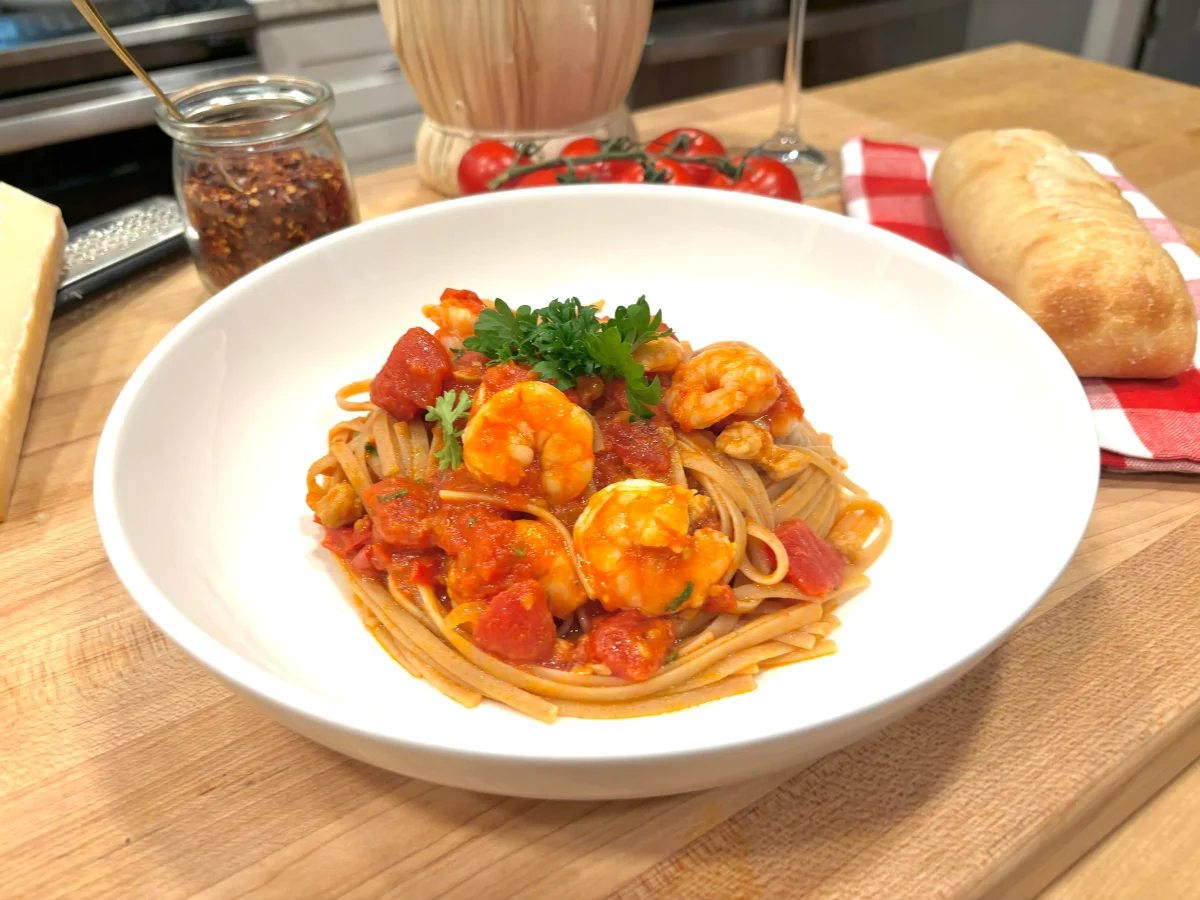
Spicy shrimp pasta pairs a slow-simmered tomato sauce with garlic, guanciale or pancetta, chilli flakes and tender shrimp. It makes a hearty meal for four, with the pasta finished directly in the sauce so it picks up plenty of flavour.
Ingredients
- 454 g (1 lb)peeled and deveined shrimp
- enough to coat the panextra-virgin olive oil
- 4 clovesgarlic, minced
- ¼ smallsweet onion, finely chopped
- to tastered pepper flakes
- about 50 g (⅓ cup)diced guanciale or pancetta
- 60 ml (¼ cup)white wine
- about 600 g (4 cups)diced tomatoes
- 2 tbsptomato paste
- 2 tbspItalian parsley, minced
- to tastekosher salt
- 227 g (½ lb)linguine
- to tastePecorino Romano, grated
Instructions
- 1
Heat the oil
Pour enough olive oil into a large pan to cover its base. Heat until hot.
- 2
Cook the garlic
Add the minced garlic and cook until golden.
- 3
Add chilli and meat
Stir in red pepper flakes to suit your spice preference and the guanciale or pancetta. Cook for 5 minutes.
- 4
Soften the onion
Add the chopped onion and cook for another 5 minutes, until translucent.
- 5
Stir in wine
Mix in the tomato paste and white wine.
- 6
Add tomatoes
When the mixture is simmering, add the diced tomatoes.
- 7
Simmer the sauce
Simmer for 30 minutes, gently pressing the tomatoes with a spoon as they soften.
- 8
Season the sauce
Add salt to taste.
- 9
Check the seasoning
Taste the sauce and add more salt if needed.
- 10
Boil pasta water
Start heating the water for the pasta. Once it boils, salt the water.
- 11
Cook the linguine
Cook the pasta according to the packet directions, stopping when it is al dente.
- 12
Add the shrimp
When the pasta is about 5 minutes from being al dente, add the shrimp to the tomato sauce.
- 13
Cook the shrimp
Cook for 5 minutes, stirring often so the shrimp cook evenly.
- 14
Toss with pasta
Turn off the heat. Add the cooked pasta to the shrimp and sauce, then toss with tongs. Add a little pasta water if needed.
- 15
Finish with parsley
Mix in the minced parsley and toss again.
- 16
Serve with cheese
Serve in pasta bowls, topped with freshly grated Pecorino Romano to taste and a little extra parsley for garnish.
What is spicy shrimp pasta?
This is a tomato-based pasta dish with shrimp, garlic, chilli and cured pork, finished with parsley and Pecorino Romano. It draws on familiar Italian-American pasta flavours, while the guanciale or pancetta adds a savoury, rich note.
The sauce simmers for 30 minutes before the shrimp and pasta join it. That gives the tomatoes time to soften and lets the pasta take on the sauce as everything is tossed together.
Nutrition and macros by portion
The nutrition label shows one serving as written: 450 calories, 36g protein, 49g carbs, 15g fat.
| Portion | Adjustment | kcal | Protein | Carbs | Fat |
|---|---|---|---|---|---|
| Lighter | Less oil and cheese | 315 kcal | 25g | 34g | 11g |
| This serving | As written | 450 kcal | 36g | 49g | 15g |
| Hungry | Larger pasta portion | 675 kcal | 54g | 74g | 23g |
The linguine supplies most of the carbohydrates, while shrimp provides much of the protein. Olive oil, guanciale or pancetta and Pecorino Romano contribute much of the fat; serve it with a green salad or vegetables for a more balanced plate.
Building the sauce
Garlic first: cook it just until golden, then add the chilli and guanciale or pancetta. Keep an eye on the garlic so it colours without turning bitter.
Tomatoes next: the paste and wine go in before the diced tomatoes. Press the tomatoes gently as they soften rather than trying to crush them all at once.
Choosing the shrimp
Peeled and deveined shrimp are ready to add straight to the sauce, which keeps the final cooking stage simple. If using frozen shrimp, thaw them before cooking so they heat evenly during the five-minute simmer.
Add them only when the pasta is close to al dente. Shrimp can become firm and dry if left cooking for much longer than the recipe’s five minutes.
Getting the pasta right
Cook the linguine in well-salted boiling water and follow the packet timing, stopping at al dente. It will be tossed with the hot sauce after cooking, so avoid taking it beyond that point.
Pasta water: add a small splash if the sauce seems too thick when you toss everything together. The pasta should be coated, not swimming in liquid.
Managing the timing
The sauce needs its full 30-minute simmer to soften the tomatoes, so start the pasta water as the sauce approaches the end of that time. Begin cooking the linguine in time to add the shrimp when the pasta has about 5 minutes left.
The shrimp and pasta finish close together, making the last stage quick. Have the parsley and serving bowls ready before turning off the heat.
Serving the dish
Serve straight away in pasta bowls, with Pecorino Romano and a little extra parsley on top. The cheese brings a salty, savoury finish, so taste the sauce before adding extra salt.
A crisp green salad or simply cooked green vegetables make a fresh side alongside the rich tomato sauce. Crusty bread is another option for mopping up any sauce left in the bowl.
Recipe notes & tips
- Adjust the red pepper flakes to your preferred level of heat.
- Use a large pan so the sauce has room to simmer and the pasta is easy to toss in.
- Keep the tomatoes at a gentle simmer and press them gradually as they soften.
- Save a little pasta water before draining in case the finished sauce needs loosening.
- Grate the Pecorino Romano just before serving for the best texture.
Variations
- Use pancetta: choose it instead of guanciale for the cured pork component.
- Adjust the heat: use fewer chilli flakes for a milder sauce or more for extra spice.
- Choose another pasta: use a similar long pasta shape if linguine is unavailable.
- Add fresh herbs: use extra parsley at the end for a greener finish.
- Make it without wine: leave out the white wine and continue with the tomato paste and tomatoes.
Common mistakes to avoid
- Burning the garlic: cook it only until golden, then move straight on to the next ingredients.
- Overcooking the shrimp: add them when the pasta has about 5 minutes left and cook for 5 minutes.
- Skipping the simmer: give the tomatoes the full 30 minutes to soften into the sauce.
- Cooking the pasta too far: stop at al dente so it holds its texture when tossed with the sauce.
- Adding too much pasta water: splash it in gradually, only if the sauce needs loosening.
How to store
Refrigerate leftovers in a covered container and use within 2 days. Reheat gently in a pan, adding a splash of water if the sauce has thickened; avoid prolonged heating, which can toughen the shrimp.
Frequently asked questions
How spicy is this pasta?
The heat depends on how many red pepper flakes you add. Start with a small amount and adjust to your taste.
Can I use frozen shrimp?
Yes. Thaw the shrimp before adding them to the sauce so they cook evenly during the five-minute cooking step.
Can I make the tomato sauce ahead?
You can prepare the sauce through its 30-minute simmer ahead of time and refrigerate it. Reheat it, then cook the shrimp and pasta shortly before serving.
How do I know when the shrimp are cooked?
Follow the recipe’s 5-minute cooking time and check that the shrimp have turned opaque. Stir regularly so they cook evenly in the sauce.
What can I use instead of guanciale?
Pancetta is the listed alternative and works in the same place in the method.
Can I use a different pasta shape?
Yes. Another pasta shape can be used, but follow its packet directions and cook it until al dente.
Cook it from the original
This recipe comes from appetitomagazine.com. Their page has the author’s own photos, notes and tips — the best place to cook it from.
Open the recipe on appetitomagazine.com