
Creamy pasta with bell pepper and prawns
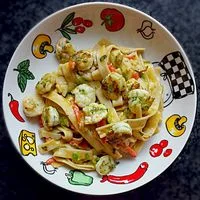
This pasta pairs spelt noodles and sweet peppers with a smooth avocado, basil and Parmesan sauce, topped with garlic prawns. It makes a colourful, quick-feeling dinner when you want creamy pasta without a cream-based sauce.
Ingredients
- 200 gspelt pasta
- 1ripe avocado
- ½lemon
- 1 handfulfresh basil
- about 2 handfulsgarlic prawns, such as frozen
- 2bell peppers in different colours
- 1 handfulpine nuts
- 50 gcheese, such as Parmesan
- 1 tspItalian seasoning
- about 3 tbspolive oil
- to tastesalt and pepper
Instructions
- 1
Cook the pasta
Cook the spelt pasta in plenty of water until al dente.
- 2
Blend the sauce
Halve the avocado, remove the stone and scoop the flesh into a food processor, or mash it finely. Add the basil, juice of half a lemon, grated cheese, Italian seasoning, salt and pepper, then blend until smooth and creamy. Pour in about 3 tbsp olive oil in a steady stream until the sauce reaches the thickness you want. Add the pine nuts and pulse briefly, leaving some pieces whole.
- 3
Slice the peppers
Wash the peppers and cut them into very thin strips.
- 4
Cook the prawns
Sauté the garlic prawns in a frying pan with a splash of oil.
- 5
Mix the pasta
When the pasta is cooked, drain it and stir in the avocado mixture. Mix through the pepper strips and taste, adding more Italian seasoning, salt or pepper if needed.
- 6
Serve the pasta
Spoon the pasta onto plates and arrange the prawns on top. Finish with a few basil leaves and extra cheese if you like.
What is creamy pasta with bell pepper and prawns?
This is an Italian-inspired pasta dish rather than a traditional regional recipe: its sauce takes a cue from basil pesto, with ripe avocado blended in for a creamy texture. Spelt pasta, colourful peppers and garlic prawns make it a substantial combination of savoury, sweet and fresh flavours.
The sauce is made while the pasta cooks, then mixed through the drained noodles. Keeping the prawns as a topping gives them a distinct flavour and makes the finished plates look inviting.
Nutrition and macros by portion
The nutrition label shows one serving as written: 880 calories, 36g protein, 88g carbs, 45g fat.
| Portion | Adjustment | kcal | Protein | Carbs | Fat |
|---|---|---|---|---|---|
| Lighter | Use less oil and cheese | 616 kcal | 25g | 62g | 31g |
| This serving | As written | 880 kcal | 36g | 88g | 45g |
| Hungry | Add more pasta | 1320 kcal | 54g | 132g | 68g |
The pasta supplies most of the carbohydrates, while olive oil, avocado, pine nuts and cheese contribute much of the fat. Prawns and cheese provide protein, with the prawns also adding some sodium. Pair a serving with a green salad or extra vegetables for a more balanced plate.
Choosing the ingredients
Avocado: Use one that yields gently when pressed so it blends smoothly. A firm avocado can leave the sauce lumpy and less creamy.
Prawns: Garlic prawns, including frozen ones, work here; cook them according to their state and ensure they are thoroughly heated. Peppers in two colours bring a mix of sweetness and colour.
Cheese and nuts: Parmesan gives the sauce a salty, savoury edge, while pine nuts add richness and a little bite. Pulse the nuts only briefly so some remain in pieces.
Getting the sauce smooth
Blend the avocado with the basil, lemon juice, grated cheese and seasoning before adding the oil. Pour the oil in gradually, stopping when the sauce is thick enough to coat the pasta.
A food processor makes a smooth sauce, but finely mashing the avocado is an option if you do not have one. Stir the other sauce ingredients in well, then fold in the pine nuts.
Keeping the peppers fresh
The recipe adds the very thin pepper strips to the pasta without cooking them separately, so they retain a crisp, fresh texture. Cut them as evenly and thinly as you can for easier mixing.
If you prefer softer peppers, the written method does not include that step; for the intended contrast, stir them through just before serving.
Cooking the pasta and prawns
Cook the pasta until al dente, using the packet timing as a guide, and drain it once it has the right bite. Preparing the sauce while it cooks helps the components come together without leaving the pasta waiting for long.
Sauté the prawns in a frying pan with a splash of oil. If they are frozen, follow the pack instructions for cooking and check they are hot through before serving.
Serving ideas
Serve straight away, with the prawns placed over the pasta and a few basil leaves and a little extra cheese on top if you like. A crisp green salad or simply dressed leaves make a fresh accompaniment.
The sauce is rich with avocado, olive oil, pine nuts and cheese, so a side of vegetables can balance the plate without competing with the peppers.
Recipe notes & tips
- Salt the pasta water to season the spelt pasta as it cooks.
- Grate the cheese finely so it blends into the avocado sauce more easily.
- Add the olive oil gradually and stop when the sauce is thick enough to coat the noodles.
- Slice the peppers thinly so they mix evenly through the pasta.
- Keep some pine nuts in pieces by pulsing the processor only briefly at the end.
- Serve soon after mixing, while the pasta is warm and the prawns are freshly cooked.
Variations
- Add chilli: Season the prawns with chilli flakes as they sauté for a little heat.
- Use another pasta: Swap in an equal amount of another pasta shape and cook it al dente.
- Change the herbs: Replace some or all of the basil with fresh parsley for a different herbal note.
- Add greens: Stir baby spinach through the drained pasta while it is still warm.
- Toast the pine nuts: Toast them in a dry pan before adding them for a deeper, nutty flavour.
Common mistakes to avoid
- Overripe avocado: Avoid fruit with very soft or brown flesh, which can make the sauce taste less fresh.
- Too much oil at once: Pour it in steadily so you can stop when the sauce reaches the right consistency.
- Over-blending the nuts: Pulse just briefly to keep some pine nuts whole.
- Thick pepper strips: Slice them thinly so they are easier to mix through the pasta.
- Leaving pasta to sit: Drain and combine it promptly so the sauce coats it while it is warm.
- Undercooked prawns: Follow the pack directions if using frozen prawns and check they are hot through before serving.
How to store
Store leftovers in an airtight container in the fridge and eat within 1 day; avocado sauce may darken over time. Reheat gently in a pan or microwave until hot, adding a small splash of water if the pasta seems dry. The prawns are best reheated only once.
Frequently asked questions
Can I use frozen garlic prawns?
Yes. Cook them according to the packet instructions, then check they are thoroughly heated before serving.
Can I make the avocado sauce ahead?
It is best made shortly before serving, as avocado can darken when exposed to air. If needed, keep it covered in the fridge and stir it well before mixing with the pasta.
How do I stop the sauce being too thick?
Add the olive oil gradually while blending and stop when the sauce reaches a coating consistency. You can also loosen it with a little pasta cooking water, though that is not specified in the recipe.
Should I cook the peppers?
The method adds the thinly sliced peppers raw, which keeps them crisp. Stir them through the pasta just before serving.
What can I use instead of spelt pasta?
Use another pasta you enjoy, cooking it according to its packet instructions until al dente.
Can I leave out the pine nuts?
Yes. The dish will still have its avocado and basil sauce, though it will lose the nuts' crunch and richness.
Cook it from the original
This recipe comes from cookinglife.eu. Their page has the author’s own photos, notes and tips — the best place to cook it from.
Open the recipe on cookinglife.eu