
Fig Crostata
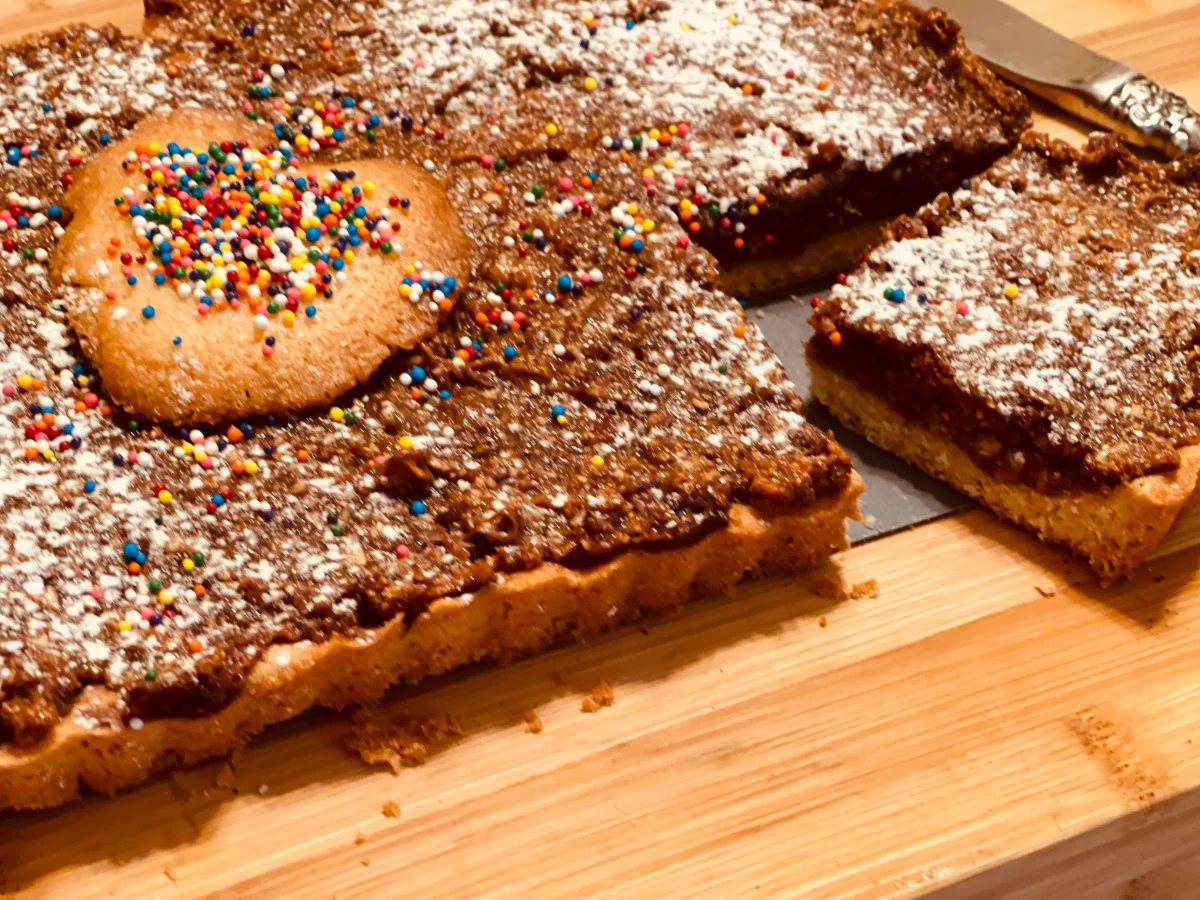
Fig crostata is a pastry tart filled with a thick mixture of rehydrated figs, nuts, chocolate and citrus. The dough and filling can be prepared ahead, making this a good choice when you want a dessert with a fragrant, fruit-rich centre.
Ingredients
- 188 g (1½ cups)plain flour
- 1 envelope, or 1½ tsplievito Paneangeli or baking powder
- 150 g (¾ cup)sugar
- A pinchsalt
- 85 g (¾ US stick), cold and cut into small piecesunsalted butter
- 1, beatenegg
- As neededreserved fig-soaking liquid or cold water
- A dropMarsala
- 1 packagedried figs
- 1orange, juice and peel
- Enough to cover the figswater
- A drop, optionalMarsala or Cointreau
- About 85 g (½ cup)dark chocolate, finely chopped
- About 105 g (¾ cup) totalalmonds and/or walnuts
- To taste, finely choppedcandied orange peel
- To tasteFiori di Sicilia
- To taste, optionalicing sugar and/or sprinkles, for decorating
Instructions
- 1
Soak the figs
Put the dried figs in a small bowl. Add the juice and peel of the orange, enough water to cover, and a drop of Marsala. Leave them to rehydrate for at least 30 minutes, or longer if they are very dry.
- 2
Drain and reserve
Lift the figs out of the soaking liquid and squeeze out the excess. Keep the liquid for the dough and filling.
- 3
Mix the dry ingredients
Put the flour, lievito Paneangeli or baking powder, sugar and salt in the bowl of a food processor.
- 4
Cut in butter
Add the cold butter a little at a time, pulsing until the mixture resembles small peas or gravel.
- 5
Form the dough
Add the beaten egg gradually. Add reserved soaking liquid and a drop of Marsala, then mix until the dough forms a ball.
- 6
Chill the dough
Refrigerate the dough until you are ready to use it; it can be left overnight.
- 7
Break up the figs
Put the drained figs in the food processor and pulse until they are in smaller pieces.
- 8
Make the filling
Add the nuts, chocolate, candied orange peel and Fiori di Sicilia. Process until the mixture is almost like a thick jam or paste, adding reserved liquid only if needed. It should be thick but spreadable.
- 9
Chill the filling
Refrigerate the filling until you are ready to use it, preferably overnight.
- 10
Prepare the oven
Heat the oven to 175°C (350°F). Grease and flour a tart pan; the recipe uses an 11 × 7-inch rectangular pan.
- 11
Shape the pastry
Roll out the dough to fit the pan. Keep any excess dough to decorate the tart, if you wish.
- 12
Pre-bake the shell
Prick the pastry with a fork and bake it for about 12 minutes. Remove it from the oven.
- 13
Fill and finish baking
Spread the fig mixture in a thick, even layer over the pastry. Add any reserved dough decorations, then return the tart to the oven for another 15–18 minutes, until done.
- 14
Decorate the tart
Remove the tart from the oven and finish with a sprinkle of icing sugar and/or sprinkles.
What is a fig crostata?
Crostata is an Italian-style tart, usually made with a pastry crust and a fruit filling. This version uses dried figs softened with orange and Marsala, then combines them with nuts and chocolate for a dense, jammy centre.
The method separates the work into dough, filling and baking, so both main components can be chilled ahead. That makes it easier to assemble the tart when you are ready to bake.
Nutrition and macros by portion
The nutrition label shows one serving as written: 375 calories, 6g protein, 59g carbs, 14g fat.
| Portion | Adjustment | kcal | Protein | Carbs | Fat |
|---|---|---|---|---|---|
| Lighter | Serve a smaller slice | 263 kcal | 4g | 41g | 10g |
| This serving | As written | 375 kcal | 6g | 59g | 14g |
| Hungry | Serve a larger slice | 563 kcal | 9g | 89g | 21g |
The dried figs and pastry flour provide much of the carbohydrate, while butter contributes most of the pastry fat. The nuts and egg add some protein, with additional fat from the nuts and chocolate. Pair a slice with plain yoghurt or fresh fruit for a more balanced plate.
Rehydrating the figs
Soaking liquid: Orange juice and peel bring citrus flavour to the figs, while water softens them. A little Marsala adds a fragrant note; Cointreau is offered as an optional alternative in the filling stage.
Texture check: Give especially dry figs more than the minimum 30 minutes if needed. Squeeze off excess liquid before processing so the filling does not become loose.
Building the pastry
Cold butter: Add it gradually and pulse until the pieces are small, like peas or coarse gravel. This gives the dough its crumbly starting texture without needing to knead it extensively.
Adding liquid: Mix in the beaten egg slowly, then add the reserved soaking liquid and Marsala until a ball forms. The recipe gives no fixed amount of liquid, so add it as needed rather than pouring it all in at once.
Getting the filling right
Fruit and nuts: Pulse the figs first, then add the almonds and/or walnuts, chocolate, candied peel and Fiori di Sicilia. Processing the figs before the other additions helps them break down.
Spreadable consistency: Aim for a thick paste that can still be spread over the pastry. Add reserved liquid only if the mixture needs help coming together.
Chilling and timing
Make ahead: The dough and filling can both be refrigerated until needed, and the recipe recommends chilling them preferably overnight. Allow time for the figs to soak for at least 30 minutes as well.
Bake in stages: The pastry shell gets about 12 minutes on its own, followed by another 15–18 minutes with the filling. The method does not give a separate cooling time, so let the tart settle before cutting.
Serving the tart
A light dusting of icing sugar or a few sprinkles is the suggested finish. The tart is rich with dried fruit, chocolate and nuts, so small slices work well alongside tea or coffee.
For a more balanced plate, serve a slice with plain yoghurt or fresh fruit rather than adding another rich topping.
Recipe notes & tips
- Chop the chocolate finely so it distributes evenly through the filling.
- Use the soaking liquid sparingly when forming the dough, adding only enough to bring it together.
- Squeeze excess liquid from the figs before processing them.
- Keep the dough you trim from the pan to make simple decorations for the top.
- Check the tart after 15 minutes of its second bake and continue up to 18 minutes as needed.
Variations
- Choose the nuts: Use almonds, walnuts or a mixture, keeping to about 105 g total.
- Swap the liqueur: Use the optional drop of Cointreau in place of Marsala for the filling.
- Add citrus: Include candied orange peel to taste for extra citrus flavour.
- Keep it simple: Finish with icing sugar alone instead of sprinkles.
- Use a different pan: Fit the pastry to another tart pan, adjusting the shape without changing the filling.
Common mistakes to avoid
- Wet figs: Excess soaking liquid can loosen the filling; squeeze the figs well before processing.
- Runny filling: Adding too much reserved liquid makes the paste difficult to spread; add it only if necessary.
- Overworking the dough: Mix just until a ball forms, rather than continuing to process it.
- Skipping the pre-bake: Bake the pastry shell for about 12 minutes before adding the filling.
- Uneven filling: Spread the fig mixture in a thick, even layer so the tart bakes consistently.
How to store
Store the cooled tart covered in the refrigerator and eat within 3–4 days. Bring slices to room temperature or warm them briefly in a low oven before serving.
Frequently asked questions
Can I make the dough and filling the day before?
Yes. The method recommends refrigerating both, preferably overnight, until you are ready to assemble the tart.
How long should I soak the dried figs?
Soak them for at least 30 minutes. Very dry figs may need longer to soften.
What can I use instead of lievito Paneangeli?
The ingredient list gives 1½ teaspoons of baking powder as the alternative.
How much soaking liquid should I add to the dough?
The recipe does not specify a quantity. Add it gradually with the Marsala, stopping once the dough forms a ball.
What should the filling look like?
It should resemble a thick jam or paste: firm enough to hold its shape, but soft enough to spread.
Can I leave out the liqueur?
The Marsala or Cointreau in the filling is marked optional. The dough instructions also call for a drop of Marsala; use cold water or reserved soaking liquid to bring the dough together.
Cook it from the original
This recipe comes from appetitomagazine.com. Their page has the author’s own photos, notes and tips — the best place to cook it from.
Open the recipe on appetitomagazine.com