
Cappellacci alla Mantovana
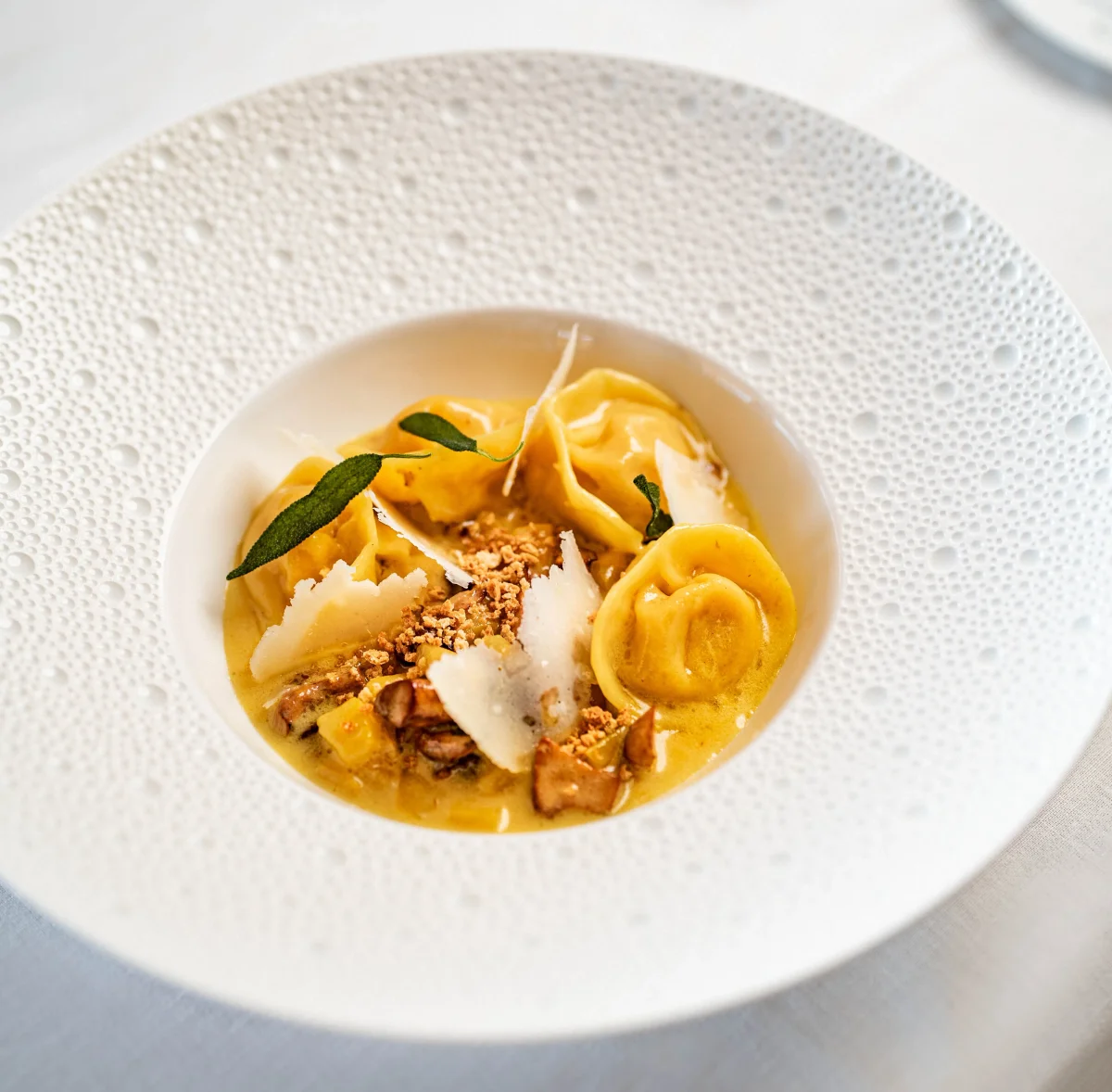
Cappellacci alla Mantovana are filled pasta parcels with a sweet-savoury squash centre, a speciality associated with Mantua in northern Italy. Roasted squash, aged cheese, amaretti and pear mostarda give the filling its distinctive balance.
Ingredients
- 220 g (1¾ cups)Italian pasta flour
- 80 g (½ cup)very fine semolina
- 5egg yolks
- A pinchsalt
- 15 ml (1 tbsp)white vinegar
- 30 ml (2 tbsp)extra-virgin olive oil
- 907 g (2 lb)butternut squash
- 227 g (8 oz)grated Parmigiano Reggiano
- To tastenutmeg
- 85 g (3 oz)amaretti biscuits
- 113 g (4 oz)Mantuan pear mostarda
- To tastesea salt and black pepper
Instructions
- 1
Mix the dough
Mix four eggs with the flour, a pinch of salt and the vinegar.
- 2
Cut the pasta
Roll the dough into a thin sheet, then cut it into squares about 3 inches (7.5 cm) on each side.
- 3
Oil and rest
Lightly coat the pasta squares all over with the extra-virgin olive oil. Cover with cling film and rest in the fridge for 30 minutes.
- 4
Prepare the squash
Halve the squash and place it in a roasting pan. Sprinkle with sea salt, cover the pan tightly with aluminium foil and make a few small holes in the foil.
- 5
Roast the squash
Roast at 160°C (320°F) for 2 hours.
- 6
Drain the flesh
Remove the squash from the oven, peel it and wrap the flesh in a kitchen towel. Set it in a strainer with something heavy on top, such as 3 or 4 plates, and leave it to drain overnight.
- 7
Mix the filling
Combine the drained squash with the grated Parmigiano Reggiano, hand-chopped pear mostarda, hand-crushed amaretti and freshly grated nutmeg.
- 8
Shape the parcels
Put the filling in the centre of the pasta squares that were lightly coated with oil, then fold them into tortellini shapes. Shape them on a wooden cutting board or table.
- 9
Store the pasta
Place the cappellacci on a perforated tray lined with parchment paper.
What are cappellacci alla Mantovana?
Cappellacci are filled pasta parcels; this version comes from Mantua, in Lombardy, where squash-filled pasta is a familiar speciality. The filling pairs the squash's sweetness with savoury cheese and the contrasting fruit and almond notes of mostarda and amaretti.
The recipe's defining feature is that sweet-savoury filling rather than a sauce or garnish. The instructions finish with storing the shaped pasta and do not give a cooking or serving method.
Nutrition and macros by portion
The nutrition label shows one serving as written: 430 calories, 18g protein, 50g carbs, 20g fat.
| Portion | Adjustment | kcal | Protein | Carbs | Fat |
|---|---|---|---|---|---|
| Lighter | Use less oil | 301 kcal | 13g | 35g | 14g |
| This serving | As written | 430 kcal | 18g | 50g | 20g |
| Hungry | Serve a larger portion | 645 kcal | 27g | 75g | 30g |
The flour and semolina provide most of the carbohydrates, while the cheese and egg yolks contribute much of the protein and fat. Squash adds carbohydrates and fibre, and the oil and amaretti also contribute energy. Pair a portion with green vegetables or salad for a more balanced plate.
Building the pasta dough
Eggs and flour: the method says to mix four eggs with the flour, while the ingredient list specifies five egg yolks. Those instructions do not match, so check the quantities before mixing rather than assuming they are interchangeable.
Vinegar and oil: the vinegar is included in the dough mixture, and the oil is brushed over the cut pasta squares. Keep the coating light so the squares do not become slick when you shape them.
Roasting the squash
Covered roasting: sealing the pan with foil helps the squash cook in its own moisture. The small holes in the foil are part of the stated method, and the squash roasts at 160°C for 2 hours.
Draining: squash can hold plenty of water, so the recipe presses it in a towel in a strainer overnight. This long drain is essential to the method's thick filling, but it means the listed 45-minute total time does not include all the elapsed preparation time.
Balancing the filling
Parmigiano: the grated cheese brings saltiness and savoury depth to the squash. Mix it in after the squash has drained so the filling does not take on unnecessary moisture.
Mostarda and amaretti: chop the pear mostarda by hand and crush the biscuits by hand, as directed. Add nutmeg to taste, then taste the mixture before adding any extra salt or pepper.
Shaping the cappellacci
Thin squares: roll the pasta into a thin sheet and cut it into squares of about 7.5 cm. Keep the filling in the centre, leaving enough edge free to fold and seal the parcel.
Wooden surface: the recipe specifically recommends shaping on a wooden board or table. Set the finished parcels on parchment on a perforated tray, as instructed.
Timing and doneness
The dough rests for 30 minutes, while the squash roasts for 2 hours and then drains overnight. Allow for those stages when planning: the 45-minute total time given does not account for the overnight drain.
The instructions do not state how long to cook the filled pasta or what doneness to look for. Follow a reliable cooking method for fresh stuffed pasta, checking that the pasta is tender and the filling is hot through.
Serving ideas
The source method does not specify a sauce or accompaniment. A simple, lightly dressed serving can let the squash, cheese, mostarda and amaretti remain the focus.
For a more complete plate, serve alongside a green salad or simply cooked vegetables. Keep added seasoning restrained at first, since the Parmigiano and mostarda already contribute pronounced flavours.
Recipe notes & tips
- Drain the roasted squash overnight as directed so the filling is not watery.
- Use a light hand when brushing oil over the pasta squares.
- Keep the filling in the middle of each square to leave the edges clear for shaping.
- Chop the mostarda and crush the amaretti by hand for the texture specified in the method.
- Check the egg quantity before starting because the ingredient list and dough instructions differ.
- Allow extra elapsed time for the roast and overnight drain, beyond the stated 45 minutes.
Variations
- Adjust the nutmeg: grate it in gradually to suit your preference.
- Change the mostarda: use another pear mostarda if Mantuan pear mostarda is unavailable.
- Use a different squash: choose a similarly sweet, firm-fleshed squash and roast until tender.
- Fine-tune the sweetness: use slightly less amaretti for a less sweet filling.
- Season at the end: add black pepper or sea salt to the filling only after tasting it.
Common mistakes to avoid
- Skipping the drain: excess squash moisture can loosen the filling; leave it weighted in the strainer overnight.
- Using the wrong egg amount: the list says five yolks but the method says four eggs; resolve this discrepancy before mixing.
- Overfilling the squares: a mound that reaches the edges makes folding harder; keep the filling centred.
- Making the oil coating heavy: too much oil can make the pasta slippery; brush on only a light layer.
- Rushing the schedule: the roast and overnight drain extend the process well beyond 45 minutes.
- Assuming a cooking time: none is provided in the method, so use a suitable fresh-pasta cooking guide and check the pasta.
How to store
The recipe says to place the shaped cappellacci on a parchment-lined perforated tray but gives no storage duration. Keep them covered in the fridge and cook promptly; for longer storage, freeze them on the tray before transferring to a sealed container.
Frequently asked questions
Why does the recipe say four eggs when the list gives five yolks?
The ingredient list specifies five egg yolks, but the dough method says four eggs. This is an unresolved discrepancy in the source, so confirm which quantity to use before making the dough.
Can I prepare the filling ahead?
The squash is already roasted and drained overnight before the filling is mixed. Once mixed, keep the filling covered and chilled if you are not shaping the pasta straight away.
How thin should I roll the pasta?
The method says to roll it into a thin sheet but gives no measurement. Aim for a sheet thin enough to fold around the filling without tearing.
How should I cook the cappellacci?
The supplied method does not include cooking instructions. Cook them as fresh stuffed pasta, checking that the pasta is tender and the filling is hot through.
Can I freeze the shaped pasta?
Yes. Freeze the parcels in a single layer on a tray first, then transfer them to a sealed container once firm so they are less likely to stick together.
What can I use instead of Mantuan pear mostarda?
The recipe does not name a substitute. Another pear mostarda is the closest match; alternatives may change the filling's characteristic fruit and mustard flavour.
Cook it from the original
This recipe comes from appetitomagazine.com. Their page has the author’s own photos, notes and tips — the best place to cook it from.
Open the recipe on appetitomagazine.com