
Honeynut Squash Lasagna
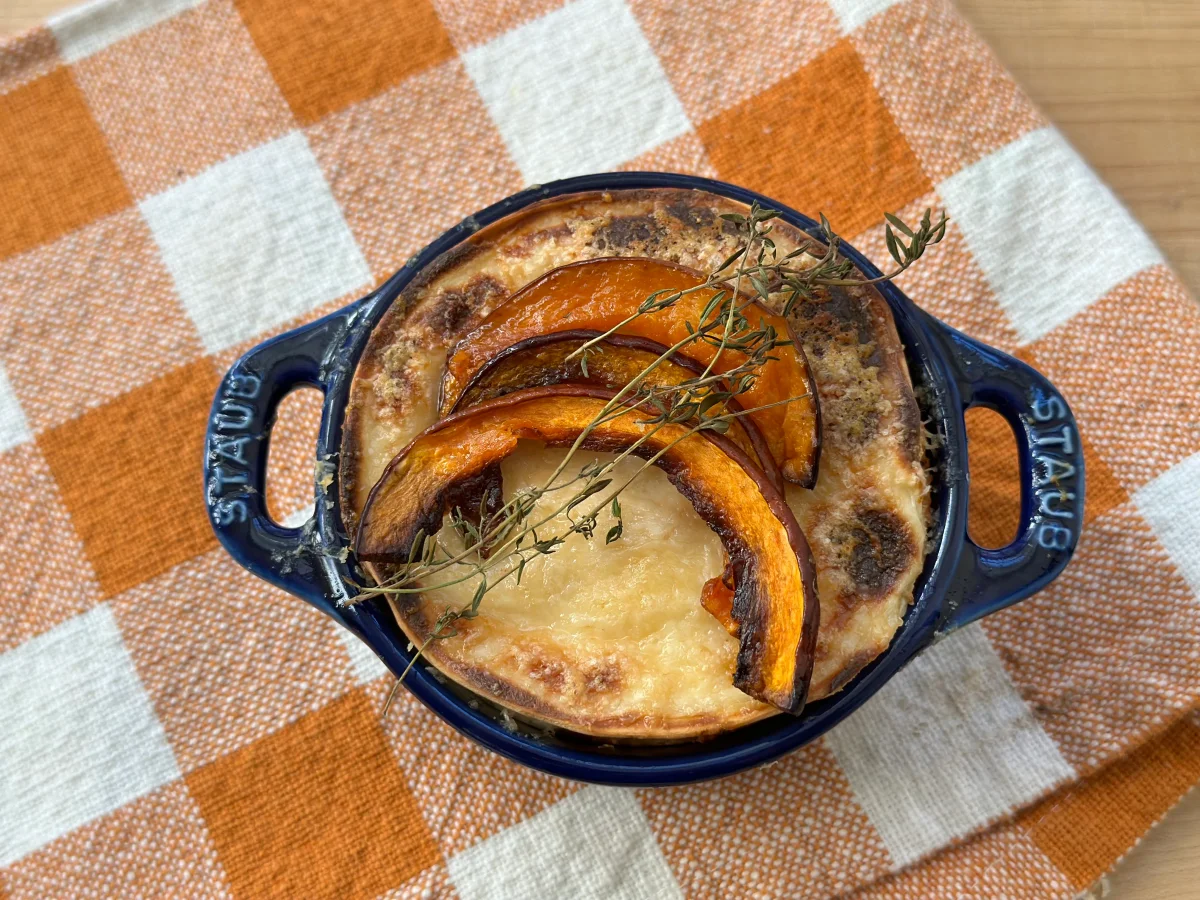
Honeynut squash lasagna layers fresh pasta, roasted squash and a creamy provolone béchamel in individual pots. It is a cosy, oven-baked meal with sweet squash and a browned, savoury top.
Ingredients
- ½ recipeegg pasta dough (see the basic dough recipe at Appetito)
- 60 ml (4 tablespoons)unsalted butter
- 1shallot, roughly chopped
- 2garlic cloves, crushed
- 2 sprigsthyme
- 1 tablespoonblack peppercorns
- 30 g (4 tablespoons)plain flour
- 360 ml (1½ cups)whole milk
- to tastefreshly grated nutmeg
- 2 slicesprovolone cheese
- 1honeynut squash, cut into 6 mm rounds, with the base seeded and cut into 6 mm half-moons
- 15 ml (1 tablespoon)extra-virgin olive oil
- to tastesalt and pepper
Instructions
- 1
Make the pasta
Prepare the egg pasta dough following the method for the basic pasta dough.
- 2
Cut the pasta
Once rolled out, cut the dough into 7.5 cm circles.
- 3
Boil the water
Bring a medium pan of water to the boil and season it with salt.
- 4
Cook the pasta
Add the pasta circles and cook for 1 minute.
- 5
Cool the pasta
Transfer the pasta to an ice bath, then drain and dry it.
- 6
Start the sauce
Melt the butter in a medium saucepan, then add the shallot, garlic, thyme and black peppercorns.
- 7
Cook the aromatics
Cook the mixture for 5 minutes.
- 8
Add the flour
Stir in the flour and cook for a further 3 minutes.
- 9
Whisk in milk
Slowly whisk in the milk. Cook over a low heat, stirring, until the sauce thickens.
- 10
Season the sauce
Season with salt, pepper and freshly grated nutmeg.
- 11
Add the cheese
Stir in the provolone and set the sauce aside.
- 12
Heat the oven
Preheat the oven to 180°C (350°F).
- 13
Season the squash
Toss the squash rounds and half-moons with the olive oil, then season with salt and pepper.
- 14
Prepare the pots
Grease 4 mini Dutch ovens.
- 15
Begin layering
Spoon béchamel into the bottom of each pot, then add 2 pieces of round squash and a sheet of round pasta.
- 16
Finish the layers
Repeat the layers until you reach the top of each pot, finishing with béchamel.
- 17
Cover the pots
Grease the lids and cover the Dutch ovens.
- 18
Bake the lasagnas
Put the remaining squash half-moons on a baking tray to roast alongside the lasagnas. Bake the covered lasagnas for about 20–25 minutes, then remove the lids and bake for a further 5 minutes until the tops are browned. You can use the grill to brown them more quickly.
- 19
Add the topping
Top each lasagna with thyme sprigs and the extra roasted squash pieces.
What is honeynut squash lasagna?
This is an individual-pot take on lasagna, using rounds of fresh pasta and honeynut squash in place of the familiar layered filling. Lasagna comes from the Italian tradition of layering pasta with sauce and other ingredients; this version pairs sweet squash with a rich cheese béchamel.
Small Dutch ovens keep the portions self-contained and help the layers bake together. The extra squash half-moons roast alongside the pots and become a finishing topping.
Nutrition and macros by portion
The nutrition label shows one serving as written: 650 calories, 23g protein, 67g carbs, 32g fat.
| Portion | Adjustment | kcal | Protein | Carbs | Fat |
|---|---|---|---|---|---|
| Lighter | Less béchamel per pot | 455 kcal | 16g | 47g | 22g |
| This serving | As written | 650 kcal | 23g | 67g | 32g |
| Hungry | Add a pasta layer | 975 kcal | 35g | 101g | 48g |
The pasta and flour provide most of the carbohydrates, while butter, whole milk, cheese and olive oil contribute much of the fat. The pasta, milk and provolone also provide protein; serving the pot with a green salad or extra vegetables balances its richness.
The pasta layers
Fresh dough: the recipe calls for half a batch of egg pasta dough, rolled out and cut into circles. Keep the circles covered while you work so they do not dry out.
Brief cooking: the pasta is boiled for just 1 minute, then cooled in an ice bath. Drain and dry it before layering so excess water does not thin the sauce.
Building the béchamel
Flavour base: butter, shallot, garlic, thyme and peppercorns give the sauce its savoury foundation. The flour cooks in the butter mixture for 3 minutes before the milk goes in.
Smooth sauce: add the milk gradually while whisking, then keep stirring over low heat until the béchamel thickens. Season it before stirring in the provolone.
Preparing the squash
Even slices: cut the squash into 6 mm rounds and half-moons so the pieces are suitable for layering and roasting. Season them with olive oil, salt and pepper as directed.
Separate pieces: use the rounds between pasta layers and reserve the remaining half-moons for the baking tray. They roast at the same time as the lasagnas.
Layering in mini Dutch ovens
Start with sauce: spread béchamel in the base of each greased pot, then add 2 squash pieces and a pasta sheet. Repeat the layers, finishing with béchamel.
Keep the lids greased: this helps the lids come off more easily after baking. The recipe also has you grease the lids before covering the pots.
Baking and browning
Covered bake: cook the lasagnas at 180°C (350°F) for about 20–25 minutes with the lids on. The squash pieces on the tray bake alongside them.
Browned top: remove the lids and bake for another 5 minutes until the tops colour. The recipe suggests using the grill to speed up this final browning.
What to serve alongside
The individual pots are rich and filling, so a crisp green salad or simply dressed leaves make a fresh contrast. Serve the roasted squash pieces on top as directed.
If you want a more substantial meal, add a side of steamed greens or other vegetables. Bring the pots to the table while the tops are still warm and browned.
Recipe notes & tips
- Drain and dry the pasta thoroughly after its ice bath before assembling.
- Whisk the milk in gradually to help the béchamel stay smooth.
- Keep the sauce over low heat while it thickens, stirring as directed.
- Grease all four mini Dutch ovens before adding the layers.
- Use the final 5 minutes without lids to brown the tops, watching closely if using the grill.
- Roast the reserved squash half-moons on a separate tray while the lasagnas bake.
Variations
- Use another squash: replace honeynut squash with a similar firm winter squash, cut to the same thickness.
- Change the cheese: use another good-melting cheese in place of provolone.
- Add greens: layer cooked, well-drained greens between the pasta and squash.
- Add herbs: use a little chopped sage in the béchamel for a different herbal note.
- Make one larger dish: assemble the same layers in a single ovenproof dish and check that the centre is hot before serving.
Common mistakes to avoid
- Adding milk too quickly: whisk it in gradually to help prevent lumps.
- Skipping the pasta ice bath: cool the cooked circles promptly, then drain and dry them before layering.
- Cutting squash unevenly: aim for 6 mm slices so the pieces cook at a similar rate.
- Leaving the lids on throughout: remove them for the final 5 minutes so the tops can brown.
- Using too much heat for the sauce: keep it low and stir until it thickens.
- Forgetting to grease the pots: grease all four before assembling to help with serving.
How to store
Refrigerate leftovers in covered containers and use within 3 days. Reheat in an ovenproof dish or pot until piping hot throughout; add a splash of milk if the béchamel has thickened in storage.
Frequently asked questions
Can I use shop-bought fresh pasta?
The recipe specifies egg pasta dough, rolled and cut into circles. If using ready-made fresh pasta, choose sheets that can be cut to fit the mini pots and briefly cook them as directed.
Can I make the béchamel ahead?
Yes. Make it ahead and chill it covered, then warm it gently while stirring before assembling so it is easy to layer.
Do I need mini Dutch ovens?
They are specified for four individual portions. The same layers can be assembled in one ovenproof dish, though the baking time may differ.
How do I know the lasagnas are ready?
Bake covered for about 20–25 minutes, then uncover for a further 5 minutes until the tops are browned.
Can I use a different squash?
A similar firm winter squash can be used, cut into rounds and half-moons about 6 mm thick. The flavour and exact cooking time may vary.
Can I freeze the leftovers?
The recipe does not give freezing instructions. For the best pasta and sauce texture, refrigerate leftovers and reheat them within 3 days.
Cook it from the original
This recipe comes from appetitomagazine.com. Their page has the author’s own photos, notes and tips — the best place to cook it from.
Open the recipe on appetitomagazine.com