
Cacio e Pepe Lasagna
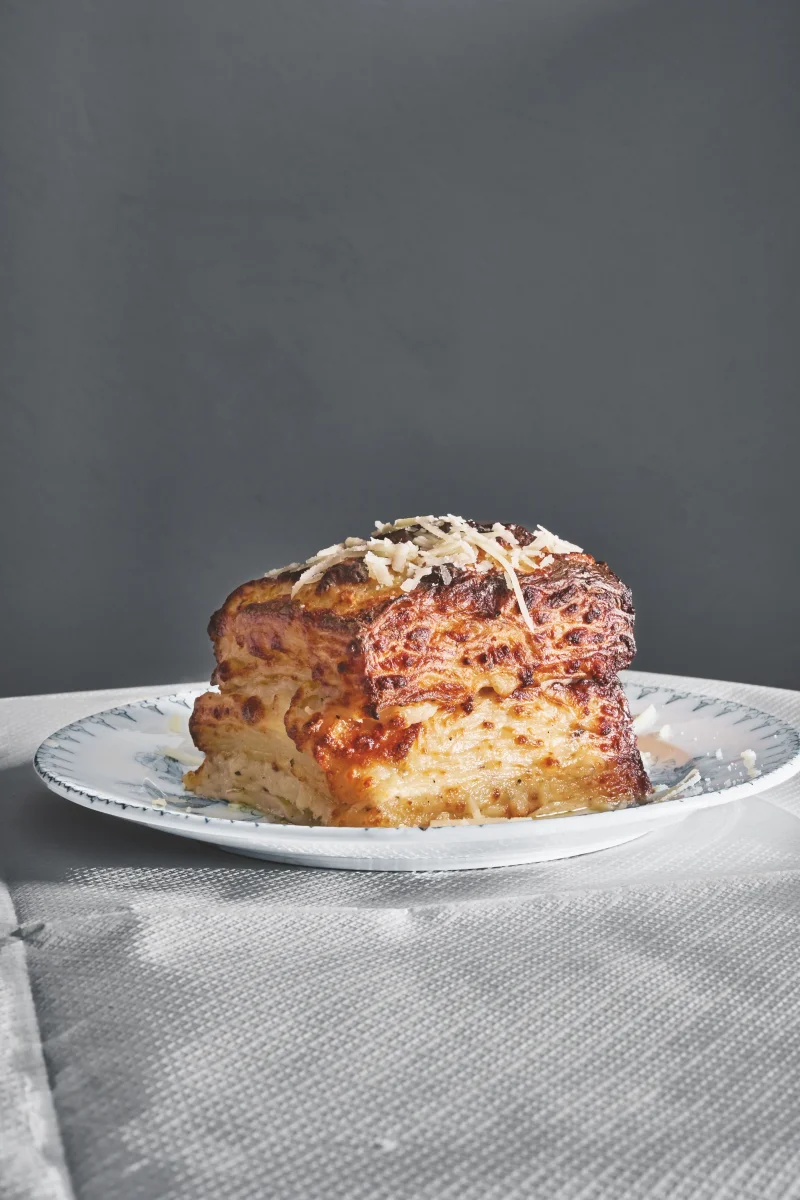
Cacio e pepe lasagna layers pasta with a creamy Pecorino béchamel and plenty of black pepper. It takes time to prepare, but the cheese-rind stock gives the sauce a savoury depth and the finished dish is made for sharing.
Ingredients
- 225 g (½ lb)Pecorino Romano rinds and scraps
- 3 litres (3 quarts)water
- 1 litre (1 quart)whole milk
- 113 g (8 tablespoons)unsalted butter
- 120 g (1 cup)plain flour
- 1 litre (1 quart)Pecorino stock
- About 20 g (2 tablespoons)coarsely ground black pepper
- As directed belowPecorino béchamel
- 32 strips, each about 10 × 23 cm (4 × 9 inches)pasta
- 225 g (8 oz), plus extra for servingfinely grated Pecorino Romano
- To tastesalt
Instructions
- 1
Clean the rinds
Scrub the Pecorino rinds with a stiff brush, remove any labels and rinse them.
- 2
Start the stock
Put the rinds and scraps in a medium pot. Cover with cold water by 5–7.5 cm and bring to the boil.
- 3
Simmer the stock
Lower the heat and simmer very gently for 30 minutes. Leave to stand for 15 minutes, then skim the fat and impurities from the surface.
- 4
Strain the stock
Strain the stock before using it.
- 5
Warm the milk
Heat the milk in a saucepan over a medium heat until steaming, then take it off the heat.
- 6
Make the roux
Melt the butter in a medium, heavy-based saucepan over a low heat. Whisk in the flour in a few additions; when the mixture becomes too thick to whisk, switch to a wooden spoon and stir the smooth paste over a low heat for 2 minutes.
- 7
Add the milk
Gradually pour in the hot milk, whisking until it is fully incorporated and the sauce has no lumps.
- 8
Add the stock
Heat the Pecorino stock in the empty saucepan, then whisk it into the sauce.
- 9
Season the sauce
Season with about 3 g salt and the pepper, then finely grate nutmeg into the pan.
- 10
Cook the béchamel
Cook over a low heat, occasionally stirring along the bottom, until the sauce is creamy and the consistency of thin pancake batter, about 15 minutes.
- 11
Cool the sauce
Leave the sauce to cool for at least 30 minutes while you cook the pasta sheets.
- 12
Prepare the dish
Bring a large pot of salted water to the boil. Meanwhile, lightly coat the bottom of a 23 × 33 cm ovenproof dish with Pecorino béchamel and set it near the stove.
- 13
Set out towels
Prepare a double layer of kitchen towels or a clean tablecloth.
- 14
Lower the heat
Reduce the heat under the pasta water until it is just below boiling.
- 15
Cook the pasta
Gently lower three pasta sheets into the water. Stir carefully so they do not stick and cook until they float, about 1 minute.
- 16
Dry the sheets
Lift out the pasta with a spider and lay it flat on the towels to dry. If any sheets have folded or stuck together, dip them back into the water.
- 17
Layer the base
Arrange pasta in the baking dish, using about two and a half sheets and trimming them to fit as needed. Save the trimmings.
- 18
Add sauce and cheese
Spread a thin layer of Pecorino béchamel over the pasta and sprinkle with grated Pecorino.
- 19
Repeat the layers
Cook three more sheets of pasta and repeat the layering, lightly covering each pasta layer with sauce and Pecorino. Once all the pasta is in the dish, spread a little sauce over the top and sprinkle with Pecorino.
- 20
Let it set
Leave the assembled lasagna to stand for about 30 minutes, or up to 2 hours, before baking.
- 21
Heat the oven
Preheat the oven to 200°C (400°F).
- 22
Bake the lasagna
Bake uncovered for 30–40 minutes, until golden and bubbling hot.
- 23
Finish and serve
Sprinkle grated Pecorino over the surface just before serving.
What is cacio e pepe lasagna?
Cacio e pepe, meaning cheese and pepper, is a Roman pasta preparation known for its simple, savoury combination. This lasagna carries those flavours into layers of pasta and Pecorino béchamel.
Here, a stock made from Pecorino rinds builds extra savouriness into the sauce, while generous pepper gives it the dish’s characteristic bite.
Nutrition and macros by portion
The nutrition label shows one serving as written: 650 calories, 30g protein, 57g carbs, 33g fat.
| Portion | Adjustment | kcal | Protein | Carbs | Fat |
|---|---|---|---|---|---|
| Lighter | Smaller lasagna portion | 455 kcal | 21g | 40g | 23g |
| This serving | As written | 650 kcal | 30g | 57g | 33g |
| Hungry | Larger lasagna portion | 975 kcal | 45g | 86g | 50g |
Pasta and flour provide most of the carbohydrates, while butter, whole milk and Pecorino contribute much of the fat. Pecorino and milk also supply protein, though the exact balance depends on the pasta and the amount of stock used. Pair a slice with a generous green salad or vegetables to add freshness and balance the plate.
Why make stock from cheese rinds?
Clean rinds: Scrubbing and rinsing them removes surface dirt and any labels before they go into the pot.
Gentle simmer: A slow 30-minute simmer draws flavour into the water without boiling the rinds vigorously. Skimming after the stock stands helps remove the surface fat and impurities.
Building a smooth béchamel
Roux: Adding the flour gradually to melted butter helps form a smooth paste. Stir it over a low heat for 2 minutes before adding liquid.
Warm milk: Pour the steaming milk in gradually while whisking to help prevent lumps. Whisking in the hot Pecorino stock afterwards makes the sauce looser and adds cheese-rind flavour.
Cooking the pasta sheets
Gentle water: Keep the water just shy of boiling and cook only three sheets at a time so they are easier to handle. Stir gently to stop them sticking together.
Ready to lift: The sheets should float after about 1 minute. Lay them flat on towels to dry; separate any folded or stuck sheets by dipping them back into the water.
Layering and resting
Thin layers: Use about two and a half sheets for each pasta layer, trimming them to fit the dish and saving the scraps. A thin coating of sauce and a sprinkling of cheese between layers keep the lasagna balanced rather than overly heavy.
Before baking: Rest the assembled dish for about 30 minutes, or up to 2 hours. This gives the layers time to settle before they go into the oven.
Baking until golden
Uncovered bake: At 200°C, the lasagna needs 30–40 minutes to become golden and hot throughout. Look for bubbling sauce as well as colour on top.
Final cheese: Add the last sprinkling of grated Pecorino just before serving, as directed, for a fresh hit of cheese.
What to serve alongside
Fresh contrast: A crisp green salad or simply dressed leaves make a light, fresh counterpoint to the rich cheese sauce.
At the table: Serve the lasagna hot, with extra grated Pecorino available for anyone who wants more.
Recipe notes & tips
- Use a stiff brush to clean the cheese rinds thoroughly before simmering them.
- Keep the stock at a very gentle simmer for the full 30 minutes.
- Add the flour to the butter in several additions and stir until the roux is smooth.
- Whisk the hot milk in gradually to help keep the béchamel lump-free.
- Cook only three pasta sheets at a time and separate them gently in the water.
- Keep the pasta sheets flat on the towels so they are easy to layer.
Variations
- More pepper: Increase the coarsely ground black pepper for a bolder cacio e pepe flavour.
- Extra Pecorino: Add more grated cheese between the layers for a stronger, saltier result.
- Fresh pasta: Use fresh pasta sheets cut to the stated dimensions, and cook them until they float as directed.
- Green side: Serve each portion with dressed salad leaves for a fresh contrast.
- Nutmeg note: Keep the finely grated nutmeg in the béchamel for a warm background flavour.
Common mistakes to avoid
- Boiling the stock hard: A vigorous boil is unnecessary; lower the heat and simmer it very gently.
- Lumpy béchamel: Pour the hot milk in gradually while whisking continuously.
- Overcooking the pasta: Lift the sheets when they float, after about 1 minute, so they remain manageable.
- Stuck sheets: Stir gently as the pasta cooks and dip any folded or stuck pieces back into the water.
- Skipping the rest: Leave the assembled lasagna for about 30 minutes, or up to 2 hours, before baking.
- Covering the dish: Bake it uncovered so the top can turn golden.
How to store
Cool leftovers promptly, cover and refrigerate for up to 3 days. Reheat portions in an ovenproof dish at 180°C until hot throughout, or microwave them until steaming.
Frequently asked questions
Can I make the Pecorino stock ahead?
Yes. Strain it before storing and keep it covered in the fridge until you make the béchamel.
Can I assemble the lasagna in advance?
The recipe allows it to stand for about 30 minutes or up to 2 hours before baking. Keep it covered and chilled if you need to hold it longer, then bake until golden and bubbling hot.
How do I stop the pasta sheets sticking?
Cook only three sheets at a time, stir them gently and lay them flat on the towels as soon as they are lifted from the water.
What should the béchamel look like?
It should be creamy and about as thick as thin pancake batter after roughly 15 minutes of cooking over a low heat.
How do I know when the lasagna is ready?
After 30–40 minutes at 200°C, the top should be golden and the lasagna bubbling hot.
Can I leave out the nutmeg?
The method calls for finely grating nutmeg into the sauce, although it is not listed with a quantity in the ingredients. You can omit it if you prefer.
Cook it from the original
This recipe comes from appetitomagazine.com. Their page has the author’s own photos, notes and tips — the best place to cook it from.
Open the recipe on appetitomagazine.com