
Ricotta Cavatelli
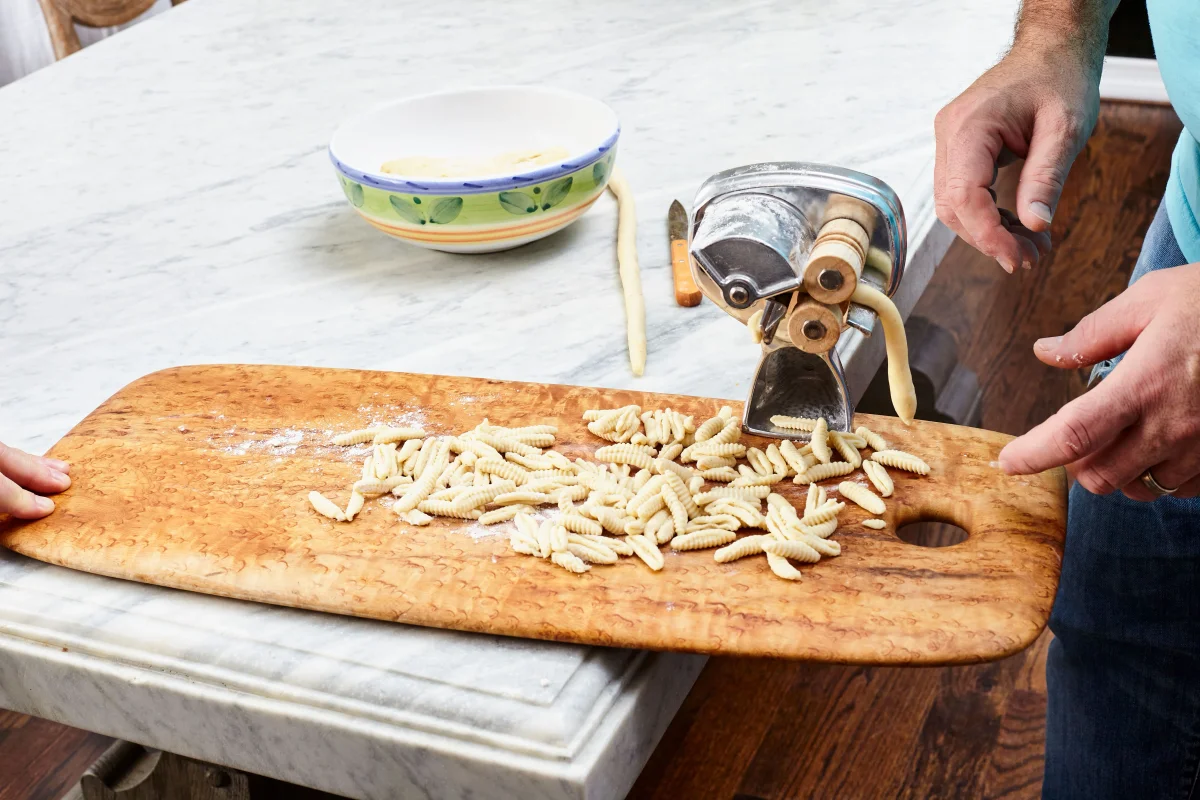
Ricotta cavatelli are small, chewy pasta shapes made from a simple dough of flour, ricotta and egg. This quick homemade version is ready to cook in minutes and works especially well tossed straight into warm sauce.
Ingredients
- 125 g (1 cup)plain flour
- 80 g (½ cup)durum flour (or 00 pasta flour)
- 227 g (½ pound), drainedricotta
- 1 tsp (about 5 g)salt
- 1egg
- ½ tspblack pepper
Instructions
- 1
Mix the ingredients
Put all the ingredients in a large bowl and mix them together.
- 2
Knead the dough
Knead the mixture briefly by hand until the dough feels firm and smooth.
- 3
Roll the dough
Cut off a piece of dough and roll it into a thin log.
- 4
Shape the cavatelli
Feed the dough through a cavatelli machine.
- 5
Boil the water
Bring salted water to a boil, then add the cavatelli.
- 6
Cook the pasta
Boil the cavatelli for 2–3 minutes.
- 7
Add to sauce
Lift the pasta out with a strainer and add it directly to warm sauce.
What is ricotta cavatelli?
Cavatelli are small, shaped pasta associated with southern Italy. This version uses ricotta in the dough, giving the pasta a tender, substantial texture.
The method keeps the dough simple: combine the ingredients, knead until smooth, shape with a machine and boil briefly. Adding the cooked pasta straight to warm sauce helps it take on the sauce rather than sitting and cooling.
Nutrition and macros by portion
The nutrition label shows one serving as written: 315 calories, 14g protein, 52g carbs, 7g fat.
| Portion | Adjustment | kcal | Protein | Carbs | Fat |
|---|---|---|---|---|---|
| Lighter | Smaller pasta portion | 221 kcal | 10g | 36g | 5g |
| This serving | As written | 315 kcal | 14g | 52g | 7g |
| Hungry | Larger pasta portion | 473 kcal | 21g | 78g | 11g |
The flour supplies most of the carbohydrates, while ricotta and egg contribute protein and much of the fat. Serve a moderate bowl with vegetables or salad to add freshness and balance the meal.
Choosing the flour
Plain flour: it forms the base of the dough and helps bind the ricotta and egg.
Durum flour: it adds a firmer character; the recipe allows 00 pasta flour as an alternative. The two flours may absorb moisture differently, so use the dough's firm, smooth feel as your guide.
Getting the dough right
Drained ricotta: removing excess moisture helps the dough become firm enough to roll and shape. If the cheese is very wet, it can make the mixture stickier.
Kneading: work the dough by hand only until it is smooth and cohesive. The recipe calls for brief kneading, so avoid adding extra flour unless the dough is difficult to handle.
Shaping with a machine
Thin logs: roll each piece of dough into a narrow, even log before feeding it through the cavatelli machine. Consistent pieces are easier to shape and cook evenly.
Small batches: cut off manageable portions rather than trying to roll the whole dough at once. Keep the remaining dough covered while you shape the rest so its surface does not dry out.
How to judge doneness
Timing: cook the shaped pasta in boiling, salted water for 2–3 minutes, as directed. Fresh pasta cooks quickly, so keep an eye on it rather than leaving it unattended.
Texture: taste a piece near the end of the cooking time; it should be cooked through while still holding its shape. Drain it with a strainer and move it straight into the warm sauce.
Sauces and serving
Warm sauce: have it ready before the pasta finishes cooking, since the cavatelli are meant to go directly into it. A tomato sauce or a simple butter-based sauce would pair naturally with the mild ricotta pasta.
On the plate: serve the pasta with vegetables or a crisp salad for contrast. A little grated cheese can be added at the table if it suits the sauce.
Recipe notes & tips
- Drain the ricotta well before measuring it into the dough.
- Mix the ingredients thoroughly before beginning to knead.
- Knead only until the dough is firm and smooth.
- Roll the dough into thin, even logs for easier shaping.
- Have the sauce warm before the pasta finishes boiling.
- Taste a piece after 2 minutes and continue cooking only as needed.
Variations
- Tomato sauce: toss the cooked cavatelli in a warm tomato sauce for a bright, familiar pairing.
- Butter and sage: coat the pasta in melted butter with sage leaves for a simple finish.
- Greens: stir cooked spinach or peas into the warm sauce for a vegetable addition.
- Cheesy finish: serve with a little grated hard cheese at the table.
- Peppery finish: add extra black pepper to the sauce just before serving.
Common mistakes to avoid
- Wet ricotta: excess moisture can make the dough sticky; drain the cheese before mixing.
- Overworking the dough: long kneading is unnecessary; stop once it is smooth and firm.
- Thick logs: they can be harder to shape evenly; roll the dough into thin logs.
- Unready sauce: the pasta should go straight from the strainer into warm sauce, so prepare the sauce first.
- Overcooking: fresh cavatelli need only 2–3 minutes; taste a piece as the cooking time ends.
How to store
Keep uncooked cavatelli covered in the refrigerator and cook them promptly, or freeze them in a single layer before transferring them to a freezer-safe container. Refrigerate cooked leftovers in a sealed container for up to 3 days and reheat gently with a little sauce or water.
Frequently asked questions
Can I use 00 pasta flour instead of durum flour?
Yes. The recipe lists 00 pasta flour as an alternative to durum flour. The dough may feel slightly different, so judge it by whether it becomes firm and smooth.
Why does the ricotta need to be drained?
Draining removes excess liquid, which helps the dough hold together and makes it easier to roll and shape.
How long do fresh cavatelli take to cook?
Boil them for 2–3 minutes. Taste one towards the end of that time to check the texture.
Do I need a cavatelli machine?
This method uses a cavatelli machine to shape the dough. If you do not have one, the recipe does not specify an alternative shaping method.
Can I freeze the cavatelli?
Yes. Freeze uncooked pieces in a single layer first, then move them to a freezer-safe container. Cook them from frozen, checking the texture as they cook.
Cook it from the original
This recipe comes from appetitomagazine.com. Their page has the author’s own photos, notes and tips — the best place to cook it from.
Open the recipe on appetitomagazine.com