
Pasta al Pomodoro
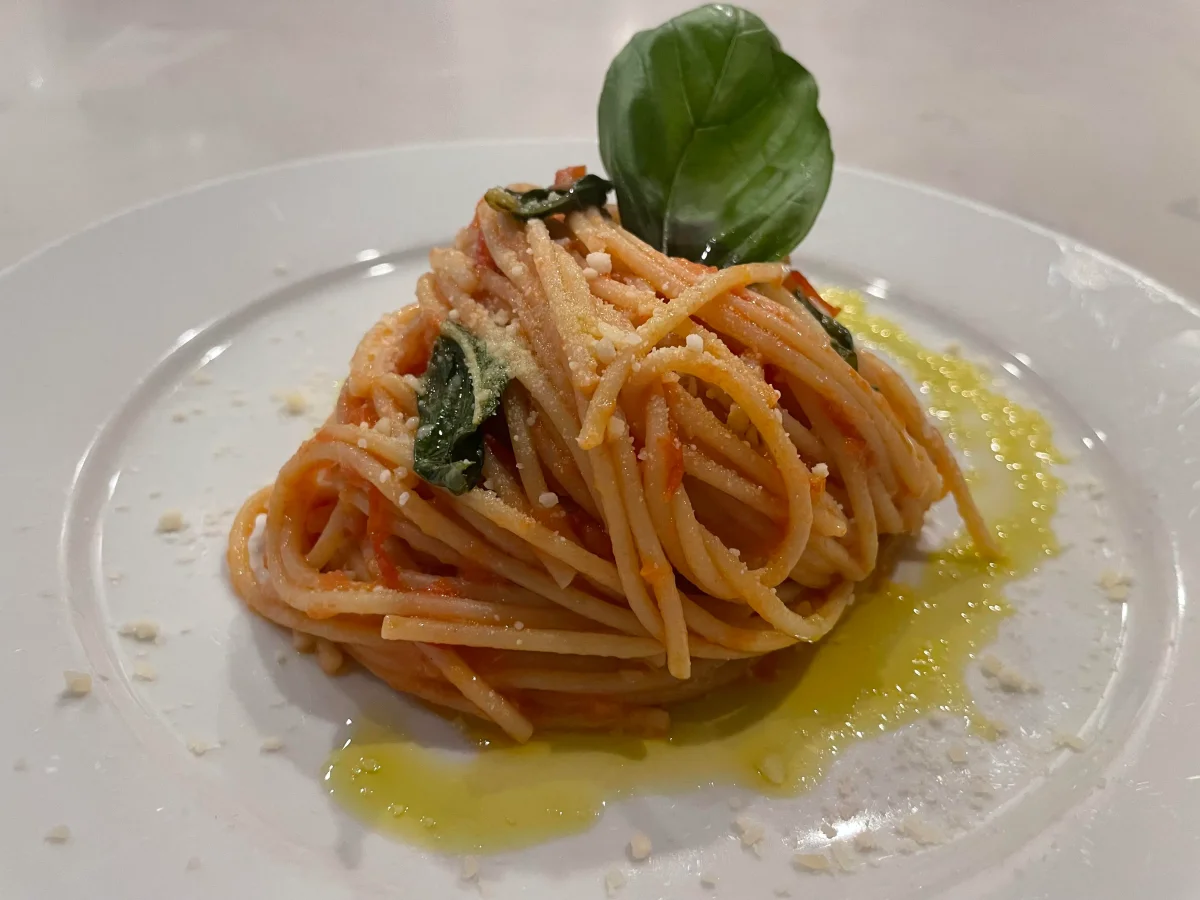
Pasta al pomodoro pairs spaghetti with a smooth sauce made from cherry tomatoes, garlic and basil. It is a simple Italian-style supper, with a little chilli for warmth and Parmigiano Reggiano to finish.
Ingredients
- 60 ml (4 tablespoons), plus more for finishingextra-virgin olive oil
- 3garlic cloves, smashed or roughly chopped
- 1, roughly chopped (optional)peperoncino calabrese (fresh Calabrian chilli; Fresno chilli or mild serrano will work)
- 567 g (1¼ pounds), halvedcherry tomatoes, the sweeter the better
- 6basil leaves
- 340 g (¾ pound)spaghetti
- 25 g (¼ cup)finely grated Parmigiano Reggiano
Instructions
- 1
Warm the saucepan
Set a large saucepan over medium-low heat and let it warm for 20 seconds.
- 2
Cook garlic
Add 2 tablespoons of the olive oil, 2 garlic cloves and the peperoncino, if using. Cook for 3 to 4 minutes, until the garlic is slightly blond.
- 3
Add tomatoes
Turn the heat up to high and add the tomatoes straight away.
- 4
Soften tomatoes
Lower the heat to medium and cover the pan. Cook for 15 to 20 minutes, stirring every 5 minutes, until the tomatoes break down into a sauce.
- 5
Blend the sauce
Take the pan off the heat and purée the tomatoes until smooth, using an immersion blender or a standard blender.
- 6
Reduce the sauce
Return the pan to the hob, add the basil and cook over low heat for 15 minutes, or until the sauce has reduced by one-fourth.
- 7
Warm a pan
Set a large pan over low heat and let it warm for 20 seconds.
- 8
Cook remaining garlic
Add the remaining 2 tablespoons of olive oil and the last garlic clove. Cook for 3 to 4 minutes, until slightly blond, then turn off the heat.
- 9
Boil the water
Meanwhile, bring a large pot of water to the boil.
- 10
Cook the spaghetti
When the water boils, salt it until it tastes salty, then add the spaghetti. Cook until it is 2 to 3 minutes short of al dente.
- 11
Add pasta water
As the pasta nears readiness, pour a ladle of pasta water into the pan with the garlic and bring it to the boil.
- 12
Transfer the pasta
Use tongs to move the spaghetti into the pan.
- 13
Cook for a minute
Cook for 1 minute, adding more pasta water if needed.
- 14
Finish in the sauce
Add the tomato sauce and cook for another 2 minutes, stirring continuously and adding pasta water as needed, until the spaghetti is to your liking.
- 15
Stir in cheese
Turn off the heat and stir in the Parmigiano Reggiano.
- 16
Serve the pasta
Divide the pasta among four plates straight away and drizzle each portion with a teaspoon of olive oil.
What is pasta al pomodoro?
Pasta al pomodoro is pasta served with a tomato sauce, a familiar Italian combination whose exact preparation varies from kitchen to kitchen. This version starts with cherry tomatoes, which soften into a sauce before being blended smooth.
Basil gives the tomatoes a fragrant finish, while garlic-infused oil helps the spaghetti and sauce come together in the pan.
Nutrition and macros by portion
The nutrition label shows one serving as written: 540 calories, 17g protein, 78g carbs, 18g fat.
| Portion | Adjustment | kcal | Protein | Carbs | Fat |
|---|---|---|---|---|---|
| Lighter | Less oil, extra tomatoes | 378 kcal | 12g | 55g | 13g |
| This serving | As written | 540 kcal | 17g | 78g | 18g |
| Hungry | Larger pasta portion | 810 kcal | 26g | 117g | 27g |
Most of the carbohydrates come from the spaghetti, while the olive oil supplies much of the fat. The pasta and Parmigiano Reggiano provide most of the protein, with tomatoes contributing some fibre. Pair a portion with salad or vegetables to add freshness and bulk to the plate.
Why use cherry tomatoes?
Sweetness: ripe cherry tomatoes bring a rounded flavour to the sauce. Halving them helps them soften evenly as they cook.
Texture: blending the cooked tomatoes makes a smooth sauce, while reducing it afterwards concentrates it so it clings more readily to the pasta.
Building the garlic flavour
First garlic: cook two cloves gently in some of the oil until slightly blond. Keep an eye on them; browned garlic can taste bitter.
Second garlic: the remaining clove is cooked separately, then paired with pasta water. This gives the spaghetti a garlicky base before the tomato sauce is added.
Getting the pasta texture right
Undercook it briefly: the spaghetti finishes cooking in the pan, so transfer it 2 to 3 minutes before it is al dente.
Starchy water: add it a little at a time while the pasta cooks with the garlic and tomato sauce. The sauce should coat the strands without turning watery.
Timing the sauce and pasta
Tomatoes first: cook them covered for 15 to 20 minutes, then blend and reduce the sauce for 15 minutes. This can be done while you prepare to boil the pasta water.
Final minutes: have the sauce ready before the spaghetti goes into the pan. The pasta then needs about 3 minutes of finishing time, with the cheese stirred in off the heat.
What to serve alongside
A crisp green salad or simply dressed leaves make a fresh contrast to the rich, smooth sauce. Crusty bread is handy for any sauce left on the plate.
For a more substantial meal, serve with grilled vegetables or a side of beans. Keep extra cheese and olive oil at the table for those who want them.
Recipe notes & tips
- Use ripe, sweet cherry tomatoes for a rounded-tasting sauce.
- Keep the garlic at a gentle heat and take it off the hob once it turns slightly blond.
- Save some pasta water before draining or transferring the spaghetti.
- Add pasta water gradually so you can control how loose the sauce becomes.
- Have the tomato sauce ready before the pasta finishes cooking, as the final stages move quickly.
- Serve immediately so the pasta stays glossy and the sauce coats it well.
Variations
- Adjust the heat: leave out the peperoncino for a mild sauce or use a little more for extra warmth.
- Use another tomato: ripe plum tomatoes can stand in for cherry tomatoes; chop them before cooking.
- Add vegetables: stir in cooked courgette or aubergine when combining the pasta and sauce.
- Change the herbs: add a little oregano with the tomatoes for a different flavour.
- Make it dairy-free: leave out the Parmigiano Reggiano and finish with olive oil.
- Try another pasta shape: use a similar amount of a short pasta and cook it according to its packet directions.
Common mistakes to avoid
- Browning the garlic: it can turn bitter; keep the heat gentle and stop when it is slightly blond.
- Skipping the reduction: watery sauce will not cling as well; cook it until reduced by one-fourth.
- Overcooking the spaghetti in the pot: it still needs to cook in the pan; transfer it 2 to 3 minutes before al dente.
- Adding too much pasta water: the sauce can become thin; pour it in gradually.
- Leaving out the stirring: sauce can catch as it reduces; stir the tomatoes every 5 minutes and keep stirring during the final pasta stage.
- Waiting to serve: the pasta is best straight from the pan; divide it among plates as soon as it is ready.
How to store
Refrigerate leftover pasta in an airtight container for up to 3 days. Reheat gently in a pan with a splash of water, stirring until hot; the sauce may be thicker after chilling.
Frequently asked questions
Can I make the tomato sauce ahead?
Yes. Make and reduce the sauce ahead, then refrigerate it in a covered container for up to 3 days. Reheat it before finishing the freshly cooked spaghetti in the pan.
Do I have to use an immersion blender?
No. A standard blender works too; blend the sauce carefully in batches if needed, taking care with the hot liquid.
What can I use instead of peperoncino calabrese?
The recipe suggests a Fresno chilli or a mild serrano. You can also leave it out for a sauce without chilli heat.
How do I know when the spaghetti is ready?
Transfer it from the pot when it is 2 to 3 minutes short of al dente. It should reach your preferred texture as it finishes cooking in the pan.
Can I use a different pasta shape?
Yes. Choose a shape that holds sauce well and cook it according to its packet directions, transferring it slightly before it is al dente so it can finish in the pan.
Why add pasta water to the sauce?
It helps loosen the sauce as the pasta finishes cooking and helps it coat the spaghetti. Add it in small amounts rather than all at once.
Cook it from the original
This recipe comes from appetitomagazine.com. Their page has the author’s own photos, notes and tips — the best place to cook it from.
Open the recipe on appetitomagazine.com