
Fish Puttanesca
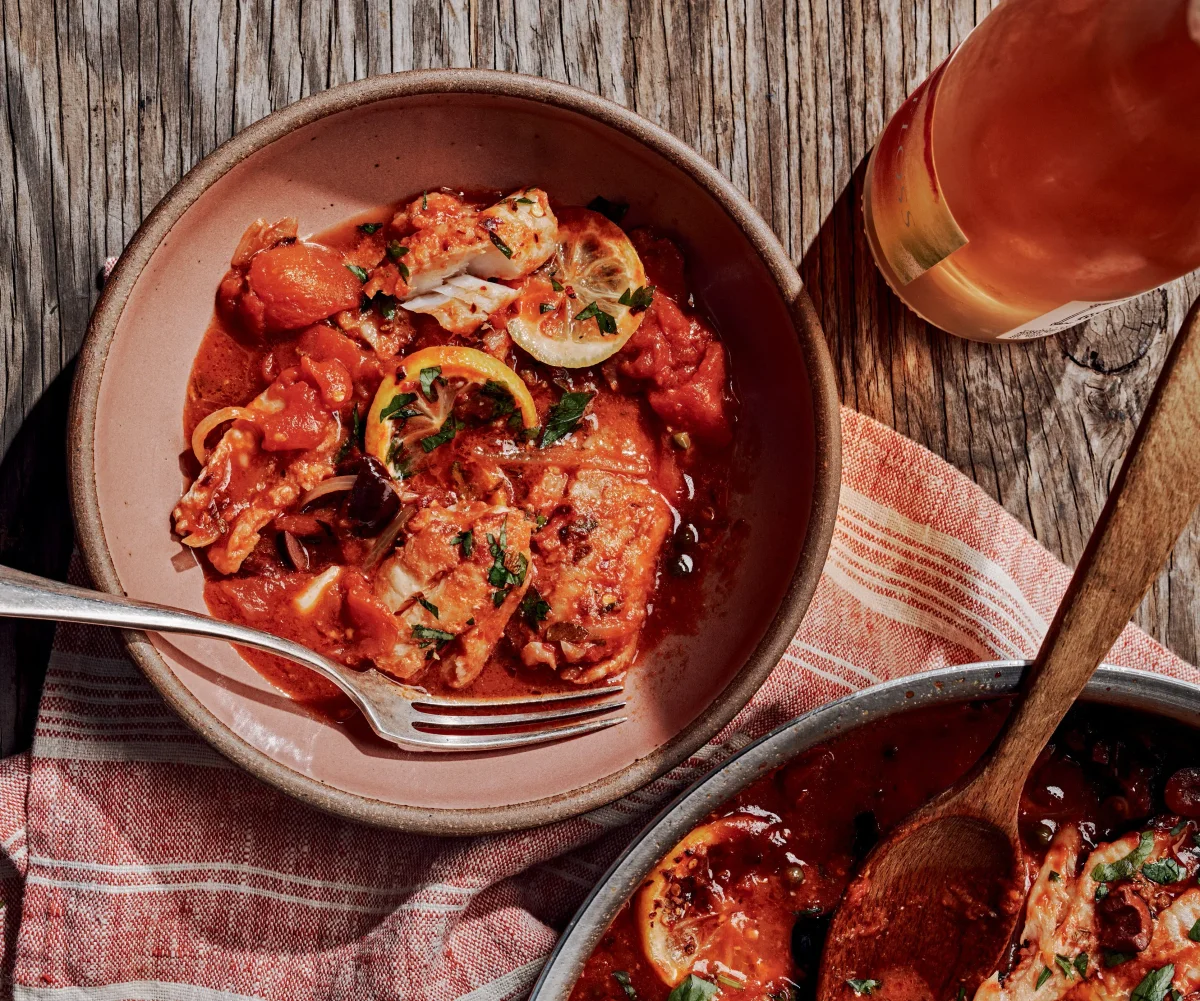
Fish puttanesca pairs white fish with a bold tomato sauce of anchovies, capers, olives, garlic and chilli. It is baked in one pan, making a flavour-packed dinner that needs little more than bread or a simple side to complete it.
Ingredients
- 4white fish fillets (any type)
- 30 ml (2 tablespoons)extra-virgin olive oil
- 4garlic cloves, sliced
- 2 teaspoonscrushed red pepper flakes
- 57 g (2 ounces)can of anchovy fillets
- 1shallot, sliced
- 30 ml (2 tablespoons)drained capers
- 75 g (½ cup)pitted Kalamata olives, roughly chopped
- 120 ml (½ cup)dry white wine
- 794 g (28 ounces)can of whole plum tomatoes
- 2 teaspoonssugar
- 1 handfulfresh oregano leaves
- 1lemon, thinly sliced
- 28 g (2 tablespoons)unsalted butter
- 1 handfulfresh flat-leaf parsley or basil leaves, roughly chopped, for garnish
Instructions
- 1
Preheat the oven
Heat the oven to 175°C (350°F).
- 2
Dry the fish
Pat the fish fillets dry with a paper towel.
- 3
Heat the oil
Set a medium ovenproof frying pan over medium-high heat and warm 15 ml (1 tablespoon) of the olive oil.
- 4
Fry the aromatics
Once the oil is lightly smoking, add the garlic, 1 teaspoon of the red pepper flakes, anchovies and shallot. Fry for about 5 minutes, until the garlic is golden and the anchovies have nearly dissolved.
- 5
Simmer the wine
Stir in the capers, olives and wine, then simmer for 5 minutes.
- 6
Cook the tomatoes
Add the tomatoes, sugar and oregano. Simmer for a further 10 minutes, gently breaking the tomatoes open with the back of a wooden spoon as they cook.
- 7
Bake the fish
Put the fish fillets in the pan and spoon the tomato sauce over them. Arrange the lemon slices on top and bake for 15 minutes, until the fish is fully cooked through.
- 8
Finish the sauce
Before serving, stir in the remaining 15 ml (1 tablespoon) olive oil, 1 teaspoon red pepper flakes and the butter until it melts.
- 9
Add the garnish
Sprinkle with the parsley or basil.
What is fish puttanesca?
Puttanesca is an Italian-style tomato sauce known for its punchy combination of olives, capers, anchovies and garlic. This version uses the sauce to cook white fish in the oven, with lemon, oregano and chilli adding extra fragrance and warmth.
Anchovies melt into the sauce as it simmers, bringing savouriness without leaving the finished dish tasting strongly of fish. Baking the fillets directly in the sauce keeps the method straightforward and lets the flavours come together in one pan.
Nutrition and macros by portion
The nutrition label shows one serving as written: 330 calories, 33g protein, 14g carbs, 16g fat.
| Portion | Adjustment | kcal | Protein | Carbs | Fat |
|---|---|---|---|---|---|
| Lighter | Use less finishing butter | 231 kcal | 23g | 10g | 11g |
| This serving | As written | 330 kcal | 33g | 14g | 16g |
| Hungry | Add bread or potatoes | 495 kcal | 50g | 21g | 24g |
The tomatoes and sugar contribute most of the carbohydrates, while the olive oil, butter and olives supply much of the fat. The fish provides most of the protein, with anchovies adding a smaller amount; serve with green vegetables or salad to round out the plate.
Why these ingredients work
Anchovies and capers: both contribute a salty, savoury edge, while Kalamata olives add a darker, fruity note. Taste the sauce before adding any extra salt, as these ingredients are already quite salty.
White fish: the recipe is flexible about the type, so choose fillets that are similar in thickness to help them cook evenly. The tomato sauce provides a bold backdrop for milder fish.
Building the sauce
Aromatics first: frying the garlic, chilli, anchovies and shallot gives the sauce a flavourful base. Keep an eye on the garlic; it should turn golden rather than dark brown.
Tomato simmer: break the plum tomatoes gently as they soften, leaving some texture rather than crushing them completely. The wine simmers with the capers and olives before the tomatoes go in.
How to tell the fish is done
Doneness: after 15 minutes in the oven, check the thickest part of a fillet. It should be opaque and flake easily with a fork; thicker pieces may need more time, so check before serving.
Gentle handling: use a spoon to cover the fish with sauce without breaking the fillets. Let the pan rest briefly if the sauce is bubbling vigorously when it comes out of the oven.
Balancing the finish
Butter and oil: stirring these in at the end softens the sharp, briny sauce and gives it a glossy finish. Add them once the fish has baked, as directed.
Fresh herbs: parsley or basil brings a fresh contrast to the rich tomato and olive flavours. Add it just before serving so its aroma stays lively.
What to serve alongside
Bread: crusty bread is useful for soaking up the tomato sauce. Serve it alongside rather than in the pan so the fish remains easy to portion.
Simple sides: boiled potatoes, rice or plain pasta make a more substantial plate. A green salad or steamed green vegetables add a fresh, mild contrast.
Recipe notes & tips
- Choose fillets of similar thickness so they are more likely to finish cooking at the same time.
- Drain the capers well before adding them to the pan.
- Keep the garlic moving in the pan and take care not to let it burn.
- Taste the sauce before seasoning, since the anchovies, capers and olives are all salty.
- Check the thickest fillet at 15 minutes and continue baking if it is not cooked through.
Variations
- Change the fish: use any white fish fillets, keeping their thickness as even as possible.
- Adjust the heat: reduce the chilli flakes for a milder sauce or add more at the table.
- Swap the herbs: finish with basil instead of parsley, or use parsley instead of basil.
- Add more vegetables: serve with steamed greens or a simple salad alongside.
- Make it more filling: bring crusty bread, potatoes or plain pasta to the table.
Common mistakes to avoid
- Burning the garlic: keep the pan over medium-high heat and watch for a golden colour rather than letting it turn dark.
- Skipping the drying step: pat the fillets dry before baking so excess surface moisture does not dilute the sauce.
- Leaving tomatoes whole: gently break them with the back of a wooden spoon as they simmer.
- Overcooking the fish: check the thickest part after 15 minutes and bake only until it is opaque and flakes easily.
- Adding salt too soon: taste after the capers, anchovies and olives have gone in before deciding whether more seasoning is needed.
How to store
Refrigerate leftovers in a covered container for up to 2 days. Reheat gently in a covered pan over low heat until hot throughout, taking care not to overcook the fish.
Frequently asked questions
Can I use frozen fish?
Yes, thaw it fully and pat it dry before cooking. Follow the same doneness cues, as the fillets' thickness affects how quickly they cook.
Which white fish works best?
Any white fish fillet can work, as the recipe allows for different types. Fillets of similar thickness are easiest to cook evenly.
Can I make the sauce ahead?
You can prepare the tomato sauce through its simmering stage, then cool and refrigerate it. Reheat it before adding the fish and baking.
How can I tell when the fish is fully cooked?
Check the thickest part: it should be opaque and flake easily with a fork. If it is not ready after 15 minutes, return it to the oven and check again.
What can I serve with fish puttanesca?
Crusty bread, potatoes or plain pasta all work well with the sauce. Green vegetables or salad offer a fresh contrast.
Can I reduce the chilli?
Yes. Use less of the red pepper flakes if you prefer a milder sauce, and add more at the table if wanted.
Cook it from the original
This recipe comes from appetitomagazine.com. Their page has the author’s own photos, notes and tips — the best place to cook it from.
Open the recipe on appetitomagazine.com