
Bolognese al Coltello
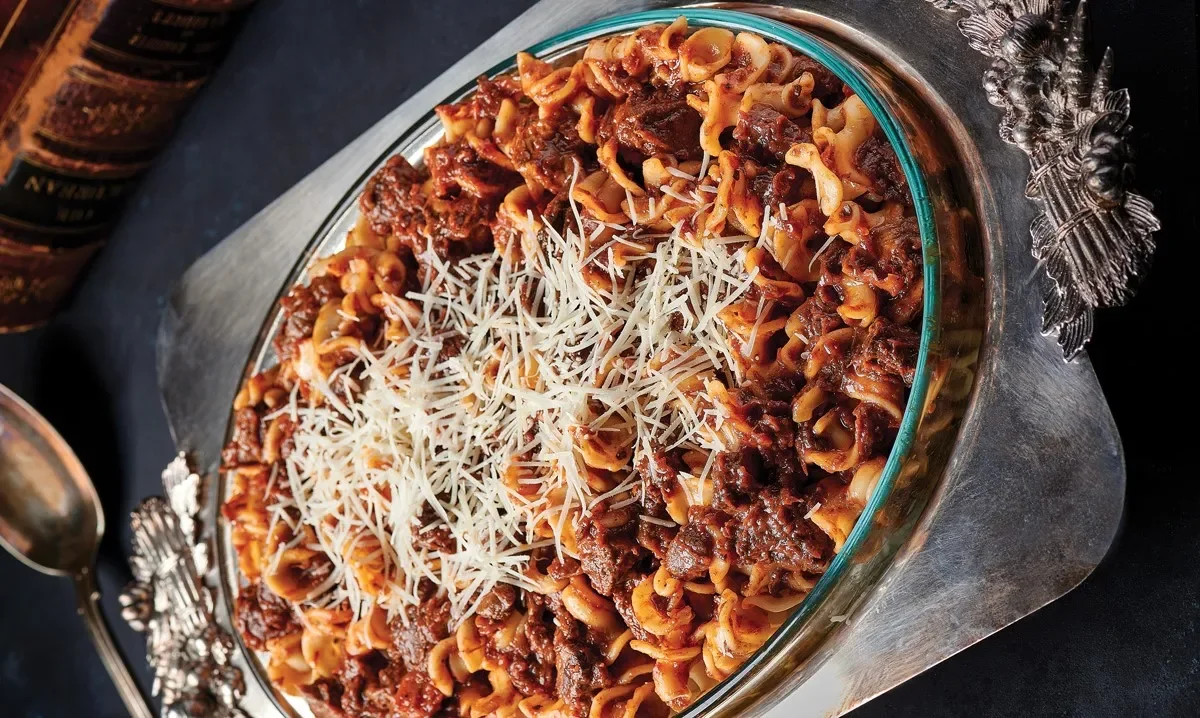
Bolognese al Coltello is a slow-cooked meat sauce made with hand-diced beef, pork and veal, enriched with porcini, pancetta and red wine. Its long, gentle simmer brings the chunky ingredients together into a rich sauce for pasta or polenta.
Ingredients
- 25 g (1 cup)dried porcini mushrooms
- 75 ml (¼ cup plus 1 tablespoon)extra virgin olive oil
- 170 g (6 oz), cut into 1.25 cm (½-inch) dicepancetta
- 1, casing removed and crumbledsweet Italian sausage
- 2 medium, finely choppedcarrots
- 2 ribs, finely choppedcelery
- 2 medium, finely choppedyellow onions
- 907 g (2 lb), cut into 1.25 cm (½-inch) dicebeef skirt or chuck
- 340 g (12 oz), cut into 1.25 cm (½-inch) dicepork shoulder
- 340 g (12 oz), cut into 1.25 cm (½-inch) diceveal shoulder
- 600 ml (2½ cups), warmwater
- to tastesalt
- 475 ml (2 cups)dry red wine
- 2 cans, 794 g (28 oz) eachcrushed tomatoes
- to tastefreshly ground black pepper
Instructions
- 1
Soak the porcini
Soak the dried mushrooms in 600 ml (2½ cups) of warm water until pliable.
- 2
Warm the pot
Set a large, heavy pot over medium-low heat.
- 3
Brown the cured meat
Add the olive oil, pancetta and crumbled sausage. Cook until just golden.
- 4
Cook the vegetables
Add the carrots, celery and onions. Cook, stirring occasionally, until the onion is translucent.
- 5
Add the diced meat
Add the beef, pork and veal. Cook over medium heat, stirring occasionally, for 5 to 10 minutes, until the meat begins to stick to the bottom of the pot.
- 6
Drain the mushrooms
Drain the soaked porcini.
- 7
Strain the soaking liquid
Strain the mushroom liquid to remove any grit.
- 8
Chop the porcini
Cut the mushrooms into 1.25 cm (½-inch) dice.
- 9
Add mushrooms and liquid
Add the chopped mushrooms and their strained liquid to the pot, then season generously with salt.
- 10
Cook the mixture
Cook for 10 minutes, stirring occasionally.
- 11
Reduce the wine
Add the wine and cook, stirring occasionally, until it has reduced completely, about 10 additional minutes.
- 12
Add the tomatoes
Stir in the crushed tomatoes.
- 13
Season and boil
Adjust the salt, add black pepper and bring the sauce to a boil.
- 14
Lower the heat
Turn the heat as low as possible, so the sauce barely simmers, with an occasional bubble breaking the surface.
- 15
Simmer until rich
Cook uncovered for at least 2 hours, stirring occasionally, until the sauce is rich and dense.
What is Bolognese al Coltello?
The name refers to a Bolognese-style meat sauce made with meat cut by hand with a knife rather than minced. It draws on the slow-cooked ragù tradition of Bologna, where patient cooking gives the meat and vegetables time to form a cohesive sauce.
This version combines beef, pork and veal with pancetta, sausage and porcini. The hand-cut pieces keep the finished sauce substantial and textured.
Nutrition and macros by portion
The nutrition label shows one serving as written: 570 calories, 39g protein, 14g carbs, 39g fat.
| Portion | Adjustment | kcal | Protein | Carbs | Fat |
|---|---|---|---|---|---|
| Lighter | Less oil and pancetta | 399 kcal | 27g | 10g | 27g |
| This serving | As written | 570 kcal | 39g | 14g | 39g |
| Hungry | Larger sauce serving | 855 kcal | 59g | 21g | 59g |
The meat, pancetta and olive oil provide most of the fat and protein, while the tomatoes and vegetables contribute carbohydrates. Pasta or polenta served alongside adds more carbohydrates; balance the plate with a generous serving of green vegetables.
The hand-cut meat
Even dice: Cutting the beef, pork and veal into similarly sized 1.25 cm pieces helps them cook at a similar pace. A sharp knife makes the shoulder cuts easier to portion neatly.
Three meats: Beef brings a robust base, while pork and veal add their own savoury character. Pancetta and sausage contribute further seasoning as they cook in the oil.
Building the base
Pancetta and sausage: Let them turn just golden in the oil before adding the vegetables. This starts the sauce with rendered fat and savoury flavour.
Soffritto: Cook the finely chopped carrots, celery and onions until the onion is translucent. Stir now and then so the vegetables soften without catching.
Making the most of porcini
Soaking liquid: Straining the mushroom water removes grit while keeping its flavour for the sauce. Pour it through a fine sieve or a clean, fine cloth.
Mushroom pieces: Dice the softened porcini to match the meat's approximate size. Their texture sits naturally among the larger pieces of beef, pork and veal.
Why the wine reduces first
After adding the porcini and their liquid, cook the mixture for 10 minutes, then add the wine. Give it about 10 additional minutes to reduce completely before adding the tomatoes.
A full reduction is the cue to move on: the wine should no longer look like a separate pool around the meat. Stir occasionally as it cooks.
A very gentle simmer
Bare bubbles: Once the tomatoes have come to a boil, lower the heat until only an occasional bubble breaks the surface. A stronger boil can make the sauce reduce too quickly at the edges.
Time and texture: Simmer uncovered for at least 2 hours, stirring occasionally. The finished sauce should look rich and dense rather than watery.
Serving the sauce
Pasta: Toss the sauce with a sturdy pasta shape that can hold its chunky pieces, or spoon it over fresh pasta. Keep a little of the cooking water handy when mixing if the sauce needs loosening.
Other pairings: Soft polenta or a simple bed of mashed potato can also make a satisfying base. A lightly dressed green salad offers a fresh contrast to the rich ragù.
Recipe notes & tips
- Cut the meat into even pieces so it cooks at a similar rate.
- Use a fine sieve to strain the porcini soaking liquid thoroughly.
- Let the wine reduce completely before stirring in the tomatoes.
- Keep the sauce at a barely perceptible simmer during its long cook.
- Stir from the bottom occasionally to prevent the sauce catching.
- Allow enough time for the sauce to become dense and rich before serving.
Variations
- Use chuck: Choose beef chuck instead of skirt for the beef portion, as the recipe allows either cut.
- Change the wine: Use another dry red wine in place of the one specified.
- Serve with polenta: Spoon the sauce over soft polenta for an alternative to pasta.
- Add a green side: Pair it with steamed or sautéed greens for a fresh contrast.
- Make it ahead: Cook the sauce in advance and reheat gently before serving.
Common mistakes to avoid
- Skipping the straining: Grit can remain in porcini water; strain it before adding it to the pot.
- Boiling too hard: A vigorous simmer can reduce the sauce unevenly; lower the heat until bubbles appear only occasionally.
- Adding tomatoes too soon: The wine needs to reduce completely first; wait about 10 minutes after adding it.
- Cutting uneven pieces: Meat of very different sizes cooks inconsistently; aim for 1.25 cm dice.
- Leaving the base unstirred: Ingredients can catch on the bottom; stir occasionally during cooking.
- Stopping early: The sauce may remain thin before it has simmered for at least 2 hours; continue until rich and dense.
How to store
Cool the sauce and refrigerate it in a covered container for up to 3 days. Reheat gently in a saucepan, stirring occasionally, until steaming hot; loosen with a little water if it has thickened too much.
Frequently asked questions
Can I make this sauce ahead?
Yes. Cook it through, cool it and refrigerate it in a covered container. Reheat gently on the hob before serving.
How can I tell when the sauce is done?
After at least 2 hours of uncovered simmering, it should look rich and dense, with no watery layer around the meat.
Can I use just one type of beef?
The recipe specifies skirt or chuck for the beef portion. Keep the pork and veal as listed for the intended mix of meats.
Why strain the porcini liquid?
Dried mushrooms can leave grit in their soaking water. Straining removes it while allowing you to add the liquid's flavour to the sauce.
What should I serve with it?
Serve it with pasta or polenta, and add green vegetables or a simple salad alongside.
Can I freeze the sauce?
Yes. Freeze it in a well-sealed, freezer-safe container, then thaw it in the fridge and reheat gently until steaming hot.
Cook it from the original
This recipe comes from appetitomagazine.com. Their page has the author’s own photos, notes and tips — the best place to cook it from.
Open the recipe on appetitomagazine.com