
Rigatoni Cacio e Pepe, e Limone
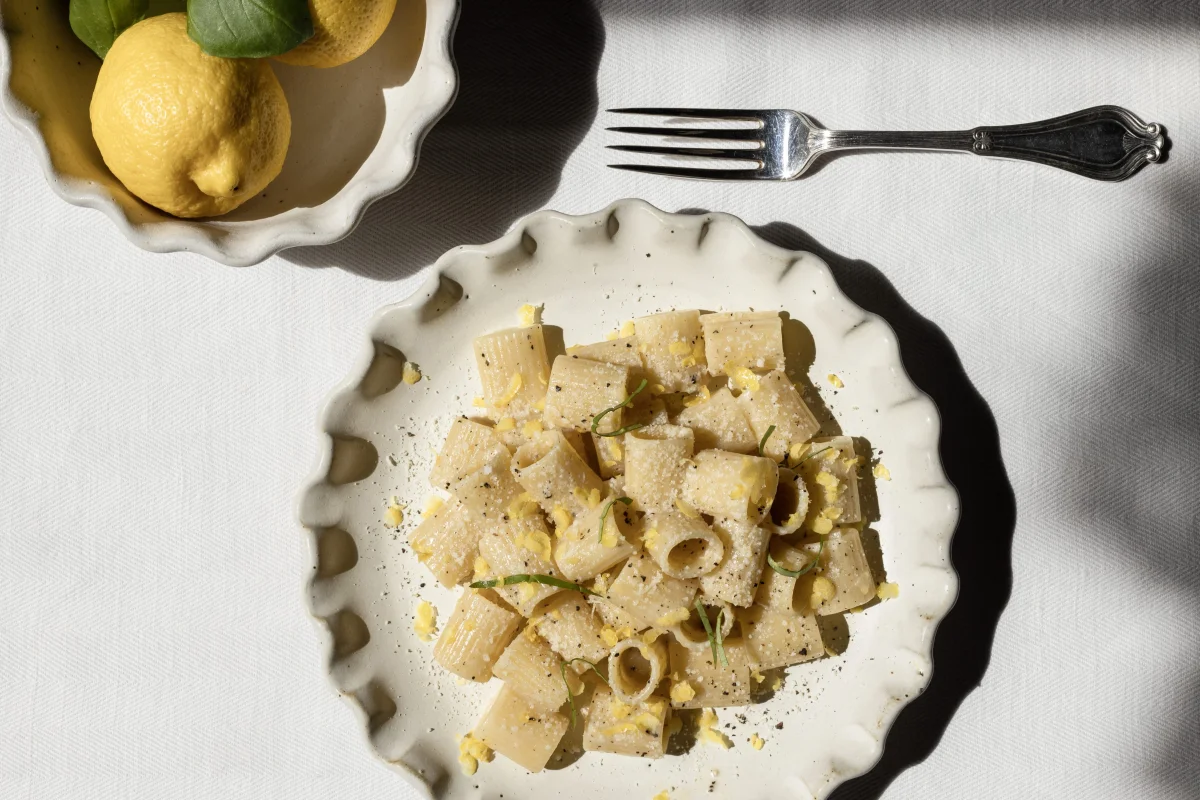
Rigatoni cacio e pepe, e limone pairs pasta with Parmigiano-Reggiano, black pepper, butter and fresh lemon. It is a quick, tangy twist on a Roman-inspired classic, with a glossy sauce made right in the pan.
Ingredients
- 454 g (1 lb)rigatoni or another dried pasta of your choice
- 100 g (1 cup), plus 50 g (½ cup) for finishinggrated Parmigiano-Reggiano
- 1 largelemon, preferably organic
- 43 g (3 tablespoons)unsalted butter
- About 20 turns of a pepper millfreshly cracked black pepper
- 30 g (2 tablespoons), plus more to tastekosher or sea salt for the pasta water
Instructions
- 1
Boil the water
Bring a large stock pot of water to the boil.
- 2
Salt the water
Stir 2 tablespoons of salt into the water, aiming for a salty taste like the sea.
- 3
Cook the pasta
Add the pasta to the boiling water.
- 4
Zest the lemon
Finely zest the lemon with a microplane or fine grater.
- 5
Juice the lemon
Squeeze the lemon and strain the juice to remove any seeds or pulp.
- 6
Heat the pan
When the pasta has about 5 minutes left to cook, place a large sauté pan over medium heat.
- 7
Crack in pepper
Grind the black pepper directly into the pan, using about 20 turns of a pepper mill.
- 8
Toast the pepper
Heat the pepper in the dry pan until it just begins to smoke.
- 9
Add pasta water
Pour in one ladleful of pasta water to stop the pepper cooking.
- 10
Add butter and zest
Add the butter and three-quarters of the lemon zest.
- 11
Combine pasta and lemon
When the pasta is al dente, about 1 minute before the packet instructions say it will be ready, add the lemon juice to the pan. Transfer the pasta straight from its cooking water into the pan.
- 12
Toss the pasta
Gently toss or stir with a wooden spoon until the pasta is coated.
- 13
Turn off the heat
Take the pan off the heat.
- 14
Mix in cheese
Add 1 cup of Parmigiano-Reggiano and stir until the pasta is coated.
- 15
Finish and serve
Divide the pasta between plates and top with the remaining cheese, a couple of grinds of black pepper and the remaining lemon zest.
- 16
Serve immediately
Enjoy the pasta while it is hot.
What is cacio e pepe?
Cacio e pepe means cheese and pepper, and the Roman pasta dish is known for turning a few ingredients into a savoury, peppery coating. This version adds lemon for a bright, fragrant note alongside the Parmigiano-Reggiano.
Rigatoni’s ridges and wide tubes catch the sauce, while pasta water helps bring the butter and cheese together. The result is rich but lively rather than heavy.
Nutrition and macros by portion
The nutrition label shows one serving as written: 650 calories, 29g protein, 82g carbs, 20g fat.
| Portion | Adjustment | kcal | Protein | Carbs | Fat |
|---|---|---|---|---|---|
| Lighter | Smaller pasta portion | 455 kcal | 20g | 57g | 14g |
| This serving | As written | 650 kcal | 29g | 82g | 20g |
| Hungry | Larger pasta portion | 975 kcal | 44g | 123g | 30g |
Most of the carbohydrates come from the rigatoni, while Parmigiano-Reggiano contributes protein and fat; butter adds further fat. Pair a portion with a generous salad or vegetables for a more balanced plate.
The ingredients that matter
Cheese: Finely grated Parmigiano-Reggiano is easier to mix through the hot pasta than thick shavings. Keep the finishing portion separate for serving.
Lemon: Zest brings aromatic oils, while the juice adds acidity. Zesting before juicing makes the whole fruit easier to handle.
Pepper: Freshly cracked black pepper gives the dish its defining warmth. Toast it briefly in the dry pan to bring out its aroma.
Build the sauce in the pan
Pasta water: The ladleful added to the pan helps stop the pepper from toasting further and gives the butter a liquid base. Reserve the water as you cook the pasta so it is ready when needed.
Butter and cheese: Add the butter and zest first, then bring in the lemon juice and pasta. Stir in the grated cheese only after turning off the heat to help it coat the pasta smoothly.
Get the pasta texture right
Al dente: Start checking the rigatoni about a minute before the packet’s suggested time. It should still have a little firmness, as it will be tossed with the sauce.
Glossy coating: Toss gently until the pasta is evenly covered. If the mixture looks tight, a small splash of pasta water can loosen it.
Keep an eye on the timing
The pan work begins when the pasta has about 5 minutes left, so have the lemon, butter and cheese ready beforehand. The pepper should only toast until it just starts to smoke, then the pasta water stops it cooking further.
Once the cheese is mixed in, serve promptly. The sauce is at its loosest and glossiest straight from the pan.
What to serve alongside
A crisp green salad with a simple vinaigrette complements the buttery cheese sauce and lemon. Steamed or lightly cooked greens also make an easy side.
For a more substantial meal, serve with roasted vegetables. Keep accompaniments simply seasoned so they do not compete with the pepper and citrus.
Recipe notes & tips
- Grate the cheese finely so it incorporates readily into the hot pasta.
- Set aside the finishing cheese before adding the rest to the pan.
- Use a ladle to transfer pasta water, rather than draining it all away.
- Grind the pepper into the pan just before toasting so its aroma stays fresh.
- Have the lemon juice and butter ready before the pasta reaches its final minute.
- Serve as soon as the cheese has coated the pasta.
Variations
- Use another pasta: Choose a different dried shape that can hold the sauce.
- Add extra lemon: Increase the zest for a more pronounced citrus aroma.
- Adjust the pepper: Use fewer or more grinds to suit your preference.
- Add greens: Toss in cooked spinach just before serving.
- Try Pecorino: Replace some of the Parmigiano-Reggiano with finely grated Pecorino Romano for a sharper, saltier flavour.
Common mistakes to avoid
- Overtoasting the pepper: Remove it from the heat with pasta water as soon as it just begins to smoke.
- Adding cheese over high heat: Turn the heat off before stirring in the Parmigiano-Reggiano.
- Draining away the pasta water: Keep a ladleful ready to help form the sauce.
- Cooking the pasta too soft: Begin checking about 1 minute before the packet time.
- Adding all the zest at once: Reserve one-quarter to finish the plates with fresh lemon aroma.
How to store
Store leftovers in an airtight container in the fridge for up to 3 days. Reheat gently in a pan with a splash of water, stirring until warmed through; the sauce may be less glossy after chilling.
Frequently asked questions
Can I use a different pasta shape?
Yes. Use another dried pasta shape you enjoy, ideally one with ridges or curves that can catch the sauce.
Can I prepare any parts ahead?
You can zest and juice the lemon and grate the cheese ahead of time. Cook and combine the pasta just before serving for the best texture.
How do I know when the pepper is toasted enough?
It is ready when it just begins to smoke. Add the ladleful of pasta water at that point to stop it cooking further.
Why add the cheese after turning off the heat?
The residual heat is enough to melt and coat the pasta, while switching off the heat helps prevent the cheese from clumping.
What if the sauce seems too thick?
Stir in a little pasta water until the coating loosens. Add it gradually so the sauce does not become watery.
Cook it from the original
This recipe comes from appetitomagazine.com. Their page has the author’s own photos, notes and tips — the best place to cook it from.
Open the recipe on appetitomagazine.com