
Pasta alla Normau003cbru003e
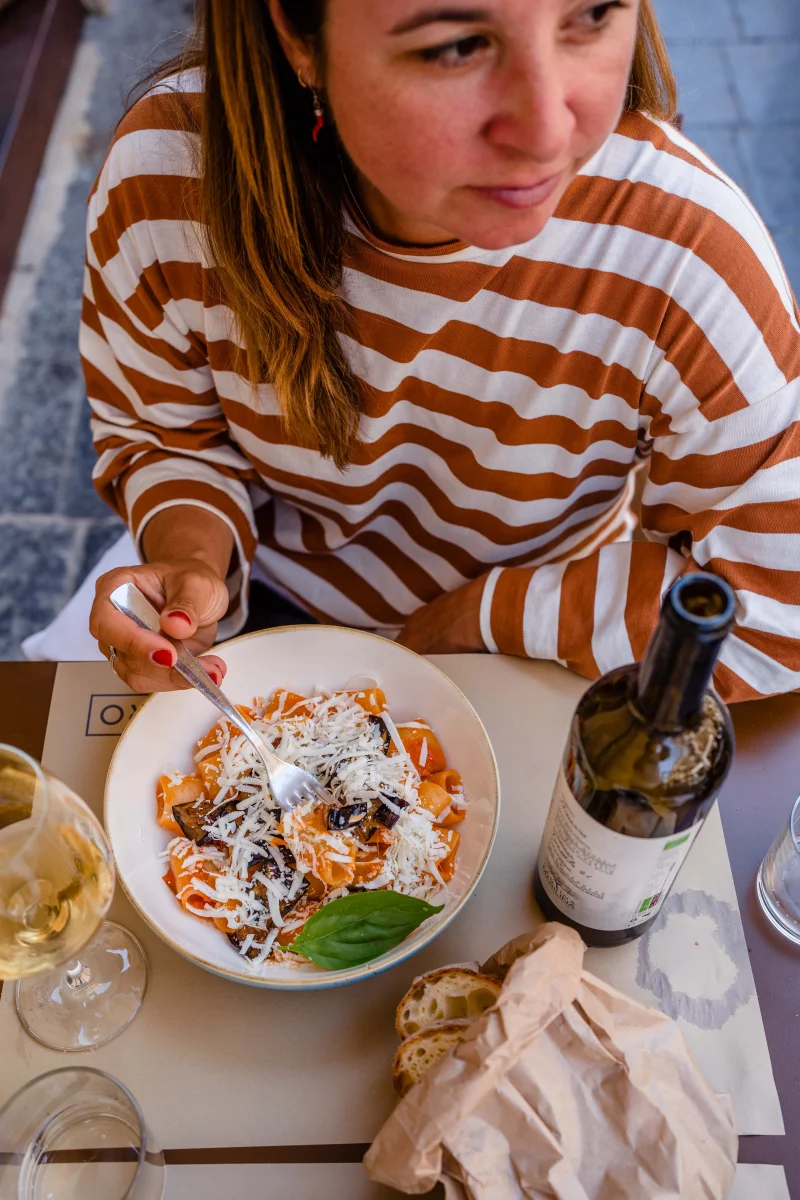
Pasta alla Norma pairs pasta with fried aubergine, a simple tomato and basil sauce, and salty ricotta salata. It takes a little time, but the aubergine’s rich, golden texture makes this a satisfying meal for sharing.
Ingredients
- 907 g (2 pounds)aubergine, about 2 medium globe aubergines, cut into 2 cm cubes
- Abundant, plus more to tastesea salt
- 177 ml (¾ cup), plus more as neededextra-virgin olive oil
- 1garlic clove, smashed and peeled
- 6 leaves, plus a few leaves per person for garnishfresh basil
- 1 × 411 g (14.5-ounce) canwhole peeled tomatoes, crushed by hand
- 454 g (1 pound)dried paccheri or rigatoni
- 85 g (3 ounces), about 180 ml (¾ cup)ricotta salata, coarsely grated
Instructions
- 1
Salt the aubergine
Put the aubergine in a colander and sprinkle it generously all over with salt to draw out moisture.
- 2
Leave to drain
Set the salted aubergine aside to drain for 1 hour.
- 3
Rinse and dry
Rinse the aubergine, then pat it dry with paper towels.
- 4
Heat the oil
Pour 118 ml (½ cup) of the olive oil into a 25–30 cm (10–12-inch) frying pan or cast-iron skillet. Heat over medium-high until the oil reaches 190°C (375°F).
- 5
Adjust the heat
The oil temperature will fall slightly when the aubergine goes in. Adjust the heat to keep it at 175°C (350°F) for frying.
- 6
Fry in batches
Fry the aubergine in batches, without crowding the pan, turning it for even browning, until deep golden, about 10 minutes. Add more oil as needed.
- 7
Drain the aubergine
Transfer the fried aubergine to paper towels to drain, then set it aside.
- 8
Clean the pan
Discard any oil left in the pan and wipe the pan clean.
- 9
Cook the garlic
Heat the remaining 59 ml (¼ cup) of olive oil in the same pan over medium-low heat. When it shimmers, add the garlic and cook until it just begins to colour, about 3 minutes.
- 10
Add basil and tomatoes
Add the basil and cook until fragrant, about 30 seconds. Add the tomatoes and season with salt.
- 11
Simmer the tomatoes
Cook the tomatoes for about 10 minutes, until their raw flavour has gone.
- 12
Return the aubergine
Stir in the aubergine and cook for 1 minute more.
- 13
Boil salted water
Meanwhile, bring a large pot of water to a rolling boil over high heat. Salt it until it tastes like a well-seasoned soup.
- 14
Cook the pasta
Add the paccheri and cook until al dente.
- 15
Drain and reserve
Drain the pasta, saving some of its cooking water.
- 16
Coat with sauce
Add the pasta to the sauce and stir until coated.
- 17
Loosen the sauce
Stir in a little pasta cooking water if needed to loosen the sauce.
- 18
Finish and serve
Plate the pasta and top with ricotta salata and a basil garnish.
What is pasta alla Norma?
Pasta alla Norma is a Sicilian pasta dish associated with Catania, traditionally made with tomato, aubergine, basil and ricotta salata. Its name is often linked to the opera Norma by composer Vincenzo Bellini, who was born in Catania.
This version builds flavour by frying the aubergine separately before folding it into the tomato sauce. That keeps the pieces distinct while giving the sauce a savoury, rounded finish.
Nutrition and macros by portion
The nutrition label shows one serving as written: 885 calories, 21g protein, 99g carbs, 44g fat.
| Portion | Adjustment | kcal | Protein | Carbs | Fat |
|---|---|---|---|---|---|
| Lighter | Use less olive oil | 620 kcal | 15g | 69g | 31g |
| This serving | As written | 885 kcal | 21g | 99g | 44g |
| Hungry | Serve a larger portion | 1328 kcal | 32g | 149g | 66g |
Most of the carbohydrates come from the pasta, while olive oil carries much of the fat and the pasta and ricotta salata contribute protein. Aubergine and tomatoes add some fibre and bulk. For a balanced plate, serve with a simple green salad or steamed vegetables.
Why salt the aubergine?
Drawing out moisture: Salting the cubes and leaving them to drain for an hour helps prepare them for frying. Rinse away the surface salt afterwards and dry the pieces thoroughly.
Drying well: Patting the aubergine dry reduces water on its surface, which can make hot oil spit and can hinder browning.
Frying the aubergine
Oil temperature: Heat the oil to 190°C, then bring it back to about 175°C once the aubergine is added. Keep an eye on the temperature as each batch goes in.
Room to brown: Fry in batches rather than packing the pan. Turn the cubes so they colour evenly, and look for a deep golden exterior after about 10 minutes.
Building the tomato sauce
Garlic first: Cook the garlic gently in the remaining olive oil until it just starts to colour. Add the basil briefly, stopping when it smells fragrant.
Tomato time: Simmer the crushed tomatoes for about 10 minutes to cook away their raw flavour. The aubergine needs only a minute in the sauce, so it keeps its shape.
Getting the pasta texture right
Al dente pasta: Cook the paccheri or rigatoni until tender but still firm to the bite, following the packet guidance as a reference. Drain it while keeping some cooking water.
A little starchy water: Toss the pasta with the sauce, then add cooking water gradually if it seems too thick. Stop once the sauce clings to the pasta rather than pooling at the bottom.
Serving and timing
Finish at the table: Sprinkle the ricotta salata over the plated pasta and add fresh basil leaves. The cheese’s salty, firm texture contrasts with the soft aubergine and tomato.
Plan ahead: The aubergine needs an hour to drain, followed by frying in batches and cooking the sauce. Have the ingredients ready before you start boiling the pasta so it can be combined with the sauce while hot.
Recipe notes & tips
- Cut the aubergine into pieces of similar size so they fry at the same rate.
- Dry the rinsed aubergine well before adding it to the hot oil.
- Use a thermometer to help keep the frying oil near 175°C.
- Keep batches small enough that the aubergine can brown rather than crowding the pan.
- Save pasta water before draining, as it is useful for adjusting the sauce.
- Grate the ricotta salata coarsely so it stays visible on top of the pasta.
Variations
- Choose rigatoni: Use it in place of paccheri if that is easier to find.
- Use smaller aubergines: Cut them into similar-sized cubes and follow the same frying cues.
- Add chilli: Add a little chilli to the oil with the garlic for gentle heat.
- Make it more basil-forward: Add extra fresh basil leaves when serving.
- Adjust the cheese: Add ricotta salata gradually at the table to suit its saltiness.
Common mistakes to avoid
- Crowding the pan: The aubergine may steam instead of browning; fry it in batches.
- Wet aubergine: Excess moisture can cause oil to spit and slow browning; pat the cubes dry.
- Oil too cool: The aubergine can absorb more oil; let the temperature recover between batches.
- Garlic too dark: It can turn bitter; cook only until it just begins to colour.
- Overcooked pasta: It can soften further when tossed with the sauce; drain it while still al dente.
- Sauce too thick: It may not coat the pasta evenly; add reserved pasta water a little at a time.
How to store
Refrigerate leftovers in an airtight container for up to 3 days. Reheat gently in a pan with a splash of water, stirring until hot; add fresh basil and cheese when serving if available.
Frequently asked questions
Can I use rigatoni instead of paccheri?
Yes. Rigatoni is listed as an alternative and holds the tomato sauce well.
Do I need to salt the aubergine for an hour?
That is the draining time specified here. It also gives you time to prepare the other ingredients before frying.
How do I know when the aubergine is done?
Look for deeply golden cubes after about 10 minutes of frying, turning them for even colour.
What can I use instead of ricotta salata?
Ricotta salata gives the dish its characteristic salty finish. If you substitute another cheese, choose a firm cheese that can be grated, and season the dish to taste.
Can I prepare the sauce ahead?
You can make the tomato and aubergine sauce ahead and refrigerate it. Reheat it gently, then toss with freshly cooked pasta and a little pasta water.
How much pasta water should I add?
Add it a little at a time until the sauce loosens and clings to the pasta. You may not need all the water you reserved.
Cook it from the original
This recipe comes from appetitomagazine.com. Their page has the author’s own photos, notes and tips — the best place to cook it from.
Open the recipe on appetitomagazine.com