
Ossobuco alla Milanese with Risotto alla Milanese and Gremolata
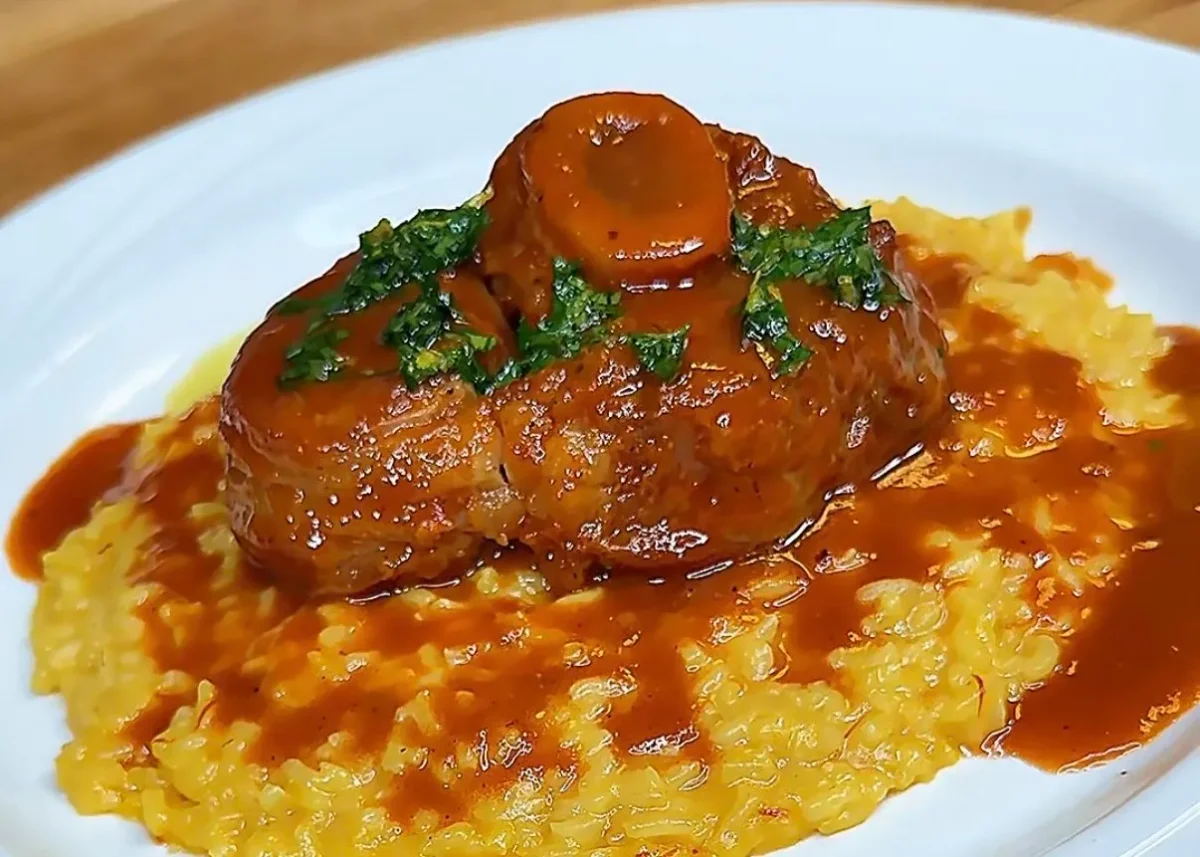
Ossobuco alla Milanese pairs slowly braised veal shanks with saffron risotto and a bright parsley, lemon and garlic gremolata. It is a generous, layered dish for a relaxed meal, with the risotto and braise cooked separately and brought together just before serving.
Ingredients
- 2thick-cut veal shanks (4–5 cm thick)
- 60 g (½ cup)plain flour, for dredging
- 45 ml (3 tbsp)olive oil
- 1 smallonion, finely diced
- 1 smallcarrot, finely diced
- 1celery stick, finely diced
- 2 clovesgarlic, minced
- 30 ml (2 tbsp)tomato purée
- 120 ml (½ cup)dry white wine
- 480–720 ml (2–3 cups)hot chicken or veal stock, enough to come three-quarters of the way up the shanks
- 1 sprigthyme
- 1bay leaf
- 1 sprigrosemary
- to tastesalt and pepper
- as neededbaking parchment, for the cartoccio
- 30 ml (2 tbsp)olive oil
- ½ smallonion, finely diced
- 200 g (1 cup)Carnaroli or Arborio rice
- 120 ml (½ cup)dry white wine
- 960–1,200 ml (4–5 cups)hot chicken stock
- 43 g (3 tbsp)unsalted butter, for finishing
- 50 g (½ cup)freshly grated Parmigiano Reggiano
- 1 large pinchsaffron threads
- a pinchsalt, to taste
- 15 g (¼ cup)fresh parsley, finely chopped
- zest of 1lemon
- 1 small clovegarlic, finely grated
- 15–30 ml (1–2 tbsp)high-quality extra-virgin olive oil
- a pinchsalt and pepper
Instructions
- 1
Heat the oven
Preheat the oven to 165°C (325°F).
- 2
Season the shanks
Pat the veal shanks dry, then season them generously with salt and pepper.
- 3
Dredge the veal
Coat the shanks lightly in flour and shake off any excess.
- 4
Sear the shanks
Heat the olive oil in a heavy Dutch oven over medium-high heat. Brown the shanks deeply on both sides, for about 3–4 minutes per side, then remove and set aside.
- 5
Soften the vegetables
Add the onion, carrot and celery to the same pot. Cook for about 5–7 minutes until softened, seasoning lightly with salt and pepper.
- 6
Cook the garlic
Add the garlic and cook for 30 seconds, until fragrant.
- 7
Cook the tomato
Stir in the tomato purée and cook for 2–3 minutes, until it darkens slightly.
- 8
Reduce the wine
Pour in the white wine to deglaze the pot and let it reduce by half.
- 9
Add the shanks
Return the shanks to the pot. Pour in hot stock until it reaches about three-quarters of the way up the meat; do not cover the shanks completely.
- 10
Add the herbs
Add the thyme, rosemary and bay leaf.
- 11
Cover the braise
Lay a sheet of baking parchment directly on the surface of the braising liquid, then cover the pot with its lid.
- 12
Braise the veal
Transfer the pot to the oven and braise for 2½–3 hours, until the meat is fork-tender.
- 13
Set aside the meat
Carefully lift the shanks from the pot and set them aside.
- 14
Strain the liquid
Strain the braising liquid into a saucepan.
- 15
Reduce the sauce
Simmer the liquid over medium heat until glossy and slightly thickened.
- 16
Coat the shanks
Return the shanks to the reduced sauce and baste them until coated.
- 17
Start the risotto
In a separate pot, heat the olive oil over medium heat.
- 18
Soften the onion
Add the onion and cook until translucent.
- 19
Toast the rice
Stir in the rice and toast it for 1–2 minutes.
- 20
Add the wine
Pour in the white wine and cook until it is mostly absorbed.
- 21
Cook the risotto
Add the hot stock one ladle at a time, stirring frequently and letting each addition absorb before adding more.
- 22
Check the rice
Continue adding stock until the rice is creamy yet al dente, about 20 minutes.
- 23
Add the saffron
Bloom the saffron in a small spoonful of hot stock. Stir it into the rice when about 5 minutes of cooking time remain.
- 24
Finish the risotto
Take the pot off the heat and stir in the butter and Parmigiano.
- 25
Mix the gremolata
In a small bowl, gently mix the parsley, lemon zest, garlic, salt, pepper and olive oil.
- 26
Plate the risotto
Spoon the risotto onto a plate and tap the plate gently to spread it.
- 27
Add the veal
Place an ossobuco shank on top of the risotto.
- 28
Spoon over sauce
Spoon some of the reduced sauce over the meat.
- 29
Finish with gremolata
Scatter the fresh gremolata over the dish to finish.
What is ossobuco alla Milanese?
Ossobuco means “bone with a hole”, referring to the marrow-filled centre of the veal shank. The dish is associated with Milan in northern Italy, where it is traditionally served with saffron risotto and gremolata.
This version braises the shanks in a covered pot with vegetables, wine and herbs, then serves them over a creamy rice. The sharp, fresh gremolata contrasts with the rich meat and sauce.
Nutrition and macros by portion
The nutrition label shows one serving as written: 1250 calories, 57g protein, 94g carbs, 66g fat.
| Portion | Adjustment | kcal | Protein | Carbs | Fat |
|---|---|---|---|---|---|
| Lighter | Less butter and cheese | 875 kcal | 40g | 66g | 46g |
| This serving | As written | 1250 kcal | 57g | 94g | 66g |
| Hungry | Add more risotto | 1875 kcal | 86g | 141g | 99g |
The rice supplies most of the carbohydrates, while olive oil, butter and cheese contribute much of the fat; veal and Parmigiano provide most of the protein. For a more balanced plate, add a serving of green vegetables or salad alongside the risotto and shank.
Build flavour before braising
Sear first: pat the shanks thoroughly dry and brown them on both sides before adding the vegetables. A good sear gives the braising liquid a deeper, savoury base.
Cook the tomato: give the tomato purée its full 2–3 minutes in the pot before pouring in the wine. This lets it darken slightly and blend into the cooking base.
Keep the braise gentle
Stock level: add enough hot stock to reach about three-quarters of the way up the shanks, rather than submerging them. The parchment laid on the liquid helps keep the surface covered as the pot cooks.
Tenderness: start checking near the end of the stated 2½–3 hours. The meat is ready when a fork slips in easily; handle it carefully when lifting it from the pot.
Make a glossy sauce
Strain and reduce: removing the vegetables and herbs gives you a smooth liquid to reduce. Simmer until it looks glossy and slightly thickened, then baste the shanks so the sauce clings to them.
Avoid rushing the reduction: let it simmer steadily over medium heat and watch its consistency. It should coat the meat without becoming dry or overly thick.
Get the risotto texture right
Add stock gradually: frequent stirring and ladle-by-ladle additions help the rice cook evenly while releasing starch. Wait until each addition is mostly absorbed before adding the next.
Check the centre: after about 20 minutes, the rice should be creamy around the grains but still have a slight bite. Add the saffron about 5 minutes before the rice is done, as directed.
Finish with contrast
Off the heat: stir the butter and Parmigiano into the risotto after removing it from the hob. This gives the rice its rich, cohesive finish.
Fresh topping: mix the parsley, lemon zest, garlic and olive oil gently, then add the gremolata just before serving. Its citrusy, aromatic flavour lifts the braise.
Serve it straight away
Plate the risotto first and tap the plate gently to spread it, then sit a shank on top and spoon over the reduced sauce. Finish with gremolata so its fresh flavour stays distinct.
The recipe already includes rice alongside the veal. If you want something extra, serve a simply dressed green salad or steamed greens on the side.
Recipe notes & tips
- Use hot stock for both the braise and the risotto so each pot keeps cooking steadily.
- Tie kitchen string around the shanks before searing if you want them to hold their shape.
- Keep the risotto stock warm in a nearby pan and add it gradually.
- Grate the lemon zest finely and avoid including the bitter white pith.
- Prepare the gremolata while the braise cooks, then keep it covered until serving.
Variations
- Use veal stock: Choose it for a deeper, more concentrated braising flavour.
- Swap the wine: Use extra stock in place of the white wine if you prefer not to cook with alcohol.
- Adjust the gremolata: Add more lemon zest for a brighter finish, keeping the listed ingredients.
- Try another rice: Use Arborio if Carnaroli is unavailable, as the recipe allows either.
- Serve with greens: Add steamed greens or a simple salad alongside the meat and risotto.
Common mistakes to avoid
- Wet shanks: Pat the meat dry before dredging so it can brown properly.
- Too much flour: Shake off the excess coating to avoid a pasty layer in the pot.
- Crowded stock: Do not fully submerge the shanks; keep the liquid about three-quarters of the way up.
- Rushing the rice: Add stock a ladle at a time and allow it to absorb before adding more.
- Overcooking the rice: Begin checking around 20 minutes and stop when it is creamy but still al dente.
- Gremolata too early: Add it at the end so its fresh parsley and lemon flavour remain vivid.
How to store
Refrigerate the veal and sauce in a covered container for up to 3 days; store the risotto separately and eat it within 2 days. Reheat the veal gently with its sauce until piping hot, and warm the risotto in a pan with a splash of stock, stirring until hot. Add gremolata fresh when serving.
Frequently asked questions
Can I make the veal ahead?
Yes. Cook the shanks and sauce ahead, refrigerate them promptly, then reheat gently in the sauce until piping hot. Make the risotto and gremolata close to serving.
How do I know when the shanks are tender?
The meat should yield easily when tested with a fork after the 2½–3-hour braise. If it is still firm, continue cooking and check again.
Can I use Arborio rice?
Yes. The recipe specifies either Carnaroli or Arborio; cook it with warm stock a ladle at a time until creamy and al dente.
What is the parchment for?
It sits directly on the surface of the braising liquid beneath the lid, helping cover the meat and limit evaporation during cooking.
Can I omit the wine?
The wine is used in both the braise and risotto. For a version without it, replace each amount with stock, though the flavour will differ.
What can I serve with ossobuco?
The recipe pairs it with saffron risotto. Green vegetables or a simple salad make a fresh extra side.
Cook it from the original
This recipe comes from appetitomagazine.com. Their page has the author’s own photos, notes and tips — the best place to cook it from.
Open the recipe on appetitomagazine.com