
Normandy-style monkfish with cider
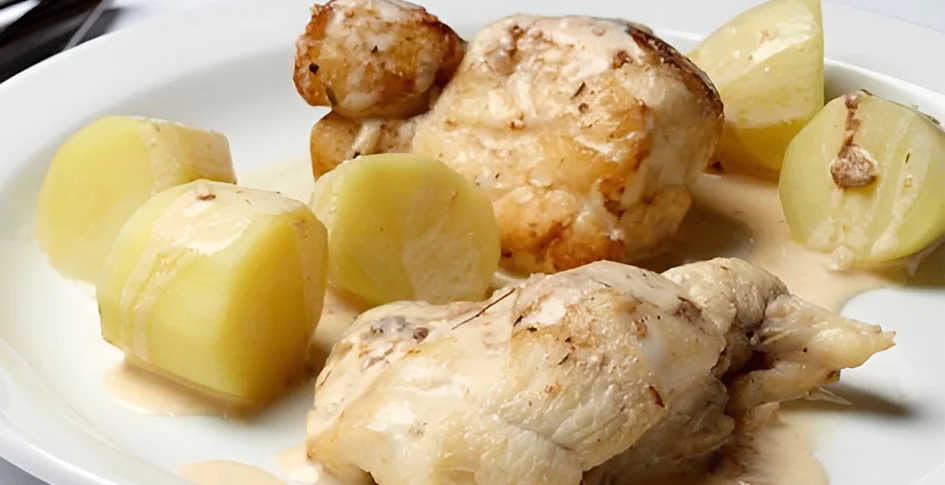
Monkfish is simmered with dry cider, onion and garlic, then served with tender Charlotte potatoes. It is a warming Normandy-style meal that brings together firm, delicate fish and the cider’s tart fruitiness.
Ingredients
- 1 kgmonkfish tail
- 1 kgCharlotte potatoes
- 500 mldry bottled cider
- 2 mediumRoscoff onions
- 1 cloveLautrec garlic
- 1juicy lemon
- 1 tbspolive oil
- 1 level tbspchopped curly parsley
- 30 gsalted churned butter
- to tasteEspelette pepper
Instructions
- 1
Prepare the monkfish
Trim the monkfish tail, remove the central bone and cut the fish into 3 cm pieces.
- 2
Add lemon juice
Squeeze the lemon and pour its juice over the monkfish pieces.
- 3
Prepare the aromatics
Finely slice the onions and crush the garlic.
- 4
Soften the onions
Heat the olive oil and butter together in a casserole, then cook the garlic and onions in the fat.
- 5
Brown the fish
Add the monkfish pieces and brown them.
- 6
Simmer in cider
Pour in the cider, add a little salt and the Espelette pepper, then simmer for 20 minutes.
- 7
Cook the potatoes
Meanwhile, cook the potatoes in water.
- 8
Strain the sauce
Remove the fish and strain the sauce. Return the fish and potatoes to the casserole and warm through.
- 9
Serve the dish
Serve hot with fresh parsley.
What is Normandy-style monkfish with cider?
This dish pairs monkfish, a firm-fleshed fish often called the poor man’s lobster, with cider and potatoes. Normandy is known for cooking with apples and cider, while the ingredients here also nod to Brittany and the French Atlantic coast.
In this version, the monkfish is browned with Roscoff onion and garlic, then simmered in dry cider. Charlotte potatoes make it a complete, hearty plate and give the cider sauce something to soak into.
Nutrition and macros by portion
The nutrition label shows one serving as written: 350 calories, 0g protein, 0g carbs, 0g fat.
| Portion | Adjustment | kcal | Protein | Carbs | Fat |
|---|---|---|---|---|---|
| Lighter | Less butter, extra greens | 245 kcal | 0g | 0g | 0g |
| This serving | As written | 350 kcal | 0g | 0g | 0g |
| Hungry | Larger portion of potatoes | 525 kcal | 0g | 0g | 0g |
The potatoes provide most of the carbohydrate, while the olive oil and butter contribute fat. Monkfish supplies the protein, and the cider adds flavour to the sauce. Balance the plate with a side of green vegetables or salad.
Choosing the ingredients
Monkfish: Ask for the central bone to be removed if you prefer, but keep the cut pieces around 3 cm as directed. The fish’s firm texture makes it suitable for simmering.
Cider: Use a dry, bottled cider rather than a sweet one so the sauce retains the tart edge described in the recipe. The cider is the cooking liquid, so its flavour will be prominent.
Potatoes: Charlotte potatoes hold their shape well when boiled. Cook them separately, as the method directs, and add them to the strained sauce at the end.
Getting the browning right
Aromatics: Cook the thinly sliced onion and crushed garlic in the oil and butter before adding the fish. Stir them as they cook so the garlic does not catch.
Fish: Add the monkfish once the onion mixture is softened and brown the pieces. Avoid stirring roughly, which can break up the chunks.
How to tell when it is ready
Simmer: Keep the cider at a gentle simmer for the stated 20 minutes rather than letting it boil vigorously. The fish should be opaque and firm when cooked through.
Potatoes: The recipe gives no cooking time for the potatoes, so check them with a knife; it should pass through without resistance. Drain them before returning them to the casserole.
Straining and reheating the sauce
Strain: Lift out the fish before filtering the sauce, then return both the fish and the cooked potatoes to the casserole. This removes the cooked onion and garlic solids from the sauce while keeping their flavour in the liquid.
Warm through: Reheat gently once everything is back in the casserole. Take care not to boil the fish hard, as that can make it less tender.
Serving suggestions
Serve the monkfish and potatoes hot with the cider sauce spooned over them and fresh parsley scattered on top. A simple green salad or steamed green vegetables can add freshness alongside the rich sauce.
If you have bread on the table, it is handy for mopping up any sauce left on the plate.
Recipe notes & tips
- Ask the fishmonger to remove the monkfish’s central bone if you want to make preparation easier.
- Cut the fish into evenly sized 3 cm pieces so they cook at a similar rate.
- Use a gentle simmer during the 20-minute cooking time to help the fish stay in intact pieces.
- Check the potatoes with a knife rather than relying on an unstated cooking time.
- Add the fresh parsley just before serving for a bright finish.
Variations
- Use another firm fish: Replace monkfish with a firm white fish, adjusting the cooking time to suit the pieces.
- Add leeks: Cook sliced leeks with the onions for a sweeter allium flavour.
- Try fresh thyme: Add a small amount while the cider simmers for an herbal note.
- Adjust the pepper: Use less Espelette pepper for a gentler dish or add more for extra warmth.
- Finish with lemon: Serve with extra lemon wedges for those who would like a sharper finish.
Common mistakes to avoid
- Cutting uneven pieces: Keep the monkfish pieces around 3 cm so they cook more evenly.
- Boiling the cider hard: Keep it at a gentle simmer to avoid rough cooking of the fish.
- Overcooking the fish: Check for opaque, firm flesh and avoid prolonged reheating.
- Skipping the potato check: Test with a knife and cook until tender before draining.
- Roughly stirring the fish: Handle the pieces gently so they remain whole.
How to store
Refrigerate leftovers in a covered container and eat within 2 days. Reheat gently in a pan until hot throughout, adding a splash of water if the sauce has thickened; avoid repeated reheating.
Frequently asked questions
Can I use another type of cider?
A dry cider is the closest match for the recipe. A sweet cider will make the sauce noticeably sweeter.
How do I know when monkfish is cooked?
The pieces should look opaque and feel firm. Simmer for the recipe’s stated 20 minutes, then avoid boiling them again while reheating.
Do I cook the potatoes in the cider sauce?
No. The method says to cook them in water while the fish simmers, then add them to the strained sauce to warm through.
Can I prepare this ahead?
It is best served freshly cooked, but you can prepare the onions and garlic in advance. If reheating the finished dish, do so gently so the fish does not break apart.
What can I serve with the dish?
The potatoes make it a substantial meal. Green vegetables or a simple salad provide a fresh contrast.
Cook it from the original
This recipe comes from fruitsdelamer.com. Their page has the author’s own photos, notes and tips — the best place to cook it from.
Open the recipe on fruitsdelamer.com