
Italian Street Kitchen’s “Nonna Approved” Cacio e Pepe
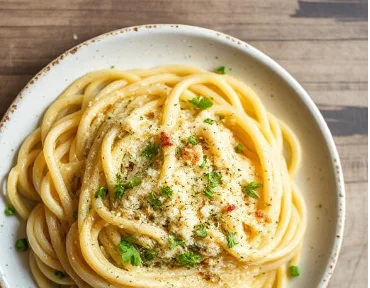
Bucatini is coated in a creamy, peppery cheese sauce, then finished with lemon and crisp thyme panko. It makes a comforting pasta supper with a bright finish and a little crunch.
Ingredients
- 198 g (7 oz)bucatini
- About 65 g (⅔ cup)Pecorino Romano, finely grated
- About 50 g (½ cup)Parmesan, finely grated
- 1½ tsp, to tastefreshly cracked black pepper
- ½ tsptruffle salt (optional; reduce regular salt if using)
- 1 tbspunsalted butter
- 1 tsplemon juice (optional)
- ½ tsp (about half a lemon)lemon zest
- 1 tbspolive oil
- 1 tspfresh thyme leaves (optional, for garnish)
- 2 tbsppanko breadcrumbs (optional topping)
Instructions
- 1
Cook the pasta
Bring a large pot of salted water to the boil. Cook the bucatini until al dente.
- 2
Make the emulsion
Melt the butter with the cracked black pepper in a wide pan until fragrant. Add a splash of hot pasta water and the truffle salt, then stir to form an emulsion.
- 3
Add the cheeses
Drain the pasta and toss it in the pan. Take the pan off the heat, then gradually fold in the Pecorino Romano and Parmesan until the sauce is smooth and creamy.
- 4
Add the lemon
Finish the pasta with the lemon zest and a squeeze of lemon juice.
- 5
Toast the topping
Toast the panko in olive oil with the thyme and a little Pecorino until golden. Scatter it over the pasta before serving.
- 6
Serve straight away
Serve immediately with more cracked black pepper and extra Pecorino, if you like.
What is cacio e pepe?
Cacio e pepe is a Roman pasta dish built around cheese and black pepper, with pasta water helping create a sauce that clings to each strand. This version uses bucatini, a thick pasta with a hollow centre, and adds lemon and a crisp panko topping.
The key is to combine the cheese off the heat so it melts into the pasta rather than turning grainy. Butter gives the pepper a fragrant base, while the lemon lifts the rich finish.
Nutrition and macros by portion
The nutrition label shows one serving as written: 370 calories, 17g protein, 47g carbs, 14g fat.
| Portion | Adjustment | kcal | Protein | Carbs | Fat |
|---|---|---|---|---|---|
| Lighter | Use less cheese and oil | 259 kcal | 12g | 33g | 10g |
| This serving | As written | 370 kcal | 17g | 47g | 14g |
| Hungry | Serve a larger portion | 555 kcal | 26g | 71g | 21g |
The bucatini supplies most of the carbohydrates, while the cheeses contribute much of the protein and fat; butter and olive oil add further fat. A crisp salad or a serving of vegetables alongside gives the meal a fresh, lighter counterpoint.
Choosing the cheese
Pecorino Romano: Its salty, savoury flavour is central to the sauce, so grate it finely to help it melt evenly.
Parmesan: This adds a rounded, nutty note alongside the sharper Pecorino. Finely grated cheese blends more readily than larger shreds.
Building a smooth sauce
Pepper and butter: Warm them together until the pepper smells fragrant, without letting the butter brown. The hot pasta water helps the butter and cheese come together into a coating sauce.
Off the heat: Add the cheeses gradually after moving the pan away from the hob. This gentler heat helps keep the sauce smooth.
Getting the pasta right
Al dente: Cook the bucatini until it is tender but still has a slight bite. It will be tossed in the pan with the sauce, so avoid cooking it until soft.
Pasta water: Use a splash of the hot cooking water for the emulsion. The method does not specify an exact amount, so add just enough to help the butter and pepper combine.
Balancing the flavours
Lemon: Zest and juice add a fresh, sharp contrast to the salty cheese. The juice is optional, so add it to taste.
Truffle salt: It is optional and adds its own seasoning, so reduce the regular salt in the cooking water if you use it.
Making the crunchy topping
Panko: Toast the breadcrumbs in olive oil until golden for a contrast to the creamy pasta. Stir them as they toast so they colour evenly.
Thyme: Fresh leaves bring a fragrant note to the topping. Add a little Pecorino as directed, then scatter the topping over the pasta just before serving.
What to serve alongside
The pasta is rich and filling, so a crisp green salad or simply dressed vegetables make a good accompaniment. Serve the pasta as soon as it is coated, with extra pepper and Pecorino at the table.
Recipe notes & tips
- Grate both cheeses finely so they are easier to fold into the pasta.
- Have the cheeses and lemon ready before draining the bucatini, as the sauce comes together quickly.
- Take the pan off the heat before adding the cheeses to help keep the sauce creamy.
- Use a splash of pasta water to help the butter and pepper form an emulsion.
- Toast the panko until golden, then add it just before serving to keep it crisp.
- Taste before adding extra salt, especially if using truffle salt and Pecorino.
Variations
- Skip the truffle salt: Season with regular salt instead, adjusting it to taste.
- Leave out the panko: Serve the pasta without the crunchy topping.
- Use the lemon juice: Add the optional squeeze for a brighter finish.
- Adjust the pepper: Use less or more freshly cracked pepper to suit your taste.
- Change the pasta shape: Use another pasta that holds the cheese sauce well.
Common mistakes to avoid
- Adding cheese over high heat: The sauce can turn grainy; take the pan off the heat first.
- Adding all the cheese at once: It may not blend smoothly; fold it in gradually.
- Overcooking the bucatini: Soft pasta loses its bite; cook it only until al dente.
- Using too much salt: The cheeses and truffle salt are already salty; taste before seasoning further.
- Leaving the topping until later: Panko can lose its crunch on the pasta; scatter it over just before serving.
How to store
This pasta is best eaten immediately, while the sauce is creamy and the topping is crisp. If needed, refrigerate leftovers in a covered container for up to 2 days and reheat gently with a splash of water; the sauce may not be as smooth and the panko will soften.
Frequently asked questions
Can I make this without truffle salt?
Yes. It is optional; use regular salt to season the cooking water and taste the finished pasta before adding more.
Is the lemon juice essential?
No, it is optional. The zest still brings a citrus note, while the juice adds extra brightness.
How do I stop the cheese sauce becoming grainy?
Take the pan off the heat before adding the finely grated cheeses, and fold them in gradually.
Can I leave out the panko topping?
Yes. The panko is optional, so the pasta can be served without it.
Can I prepare this ahead?
It is best made just before serving, as the sauce and toasted topping are at their best fresh. You can grate the cheeses and zest the lemon ahead of time.
What does al dente mean?
It means the pasta is cooked through but still has a slight firmness when bitten. Follow the packet timing as a guide and check the bucatini as it cooks.
Cook it from the original
This recipe comes from appetitomagazine.com. Their page has the author’s own photos, notes and tips — the best place to cook it from.
Open the recipe on appetitomagazine.com