
Figs and cured ham
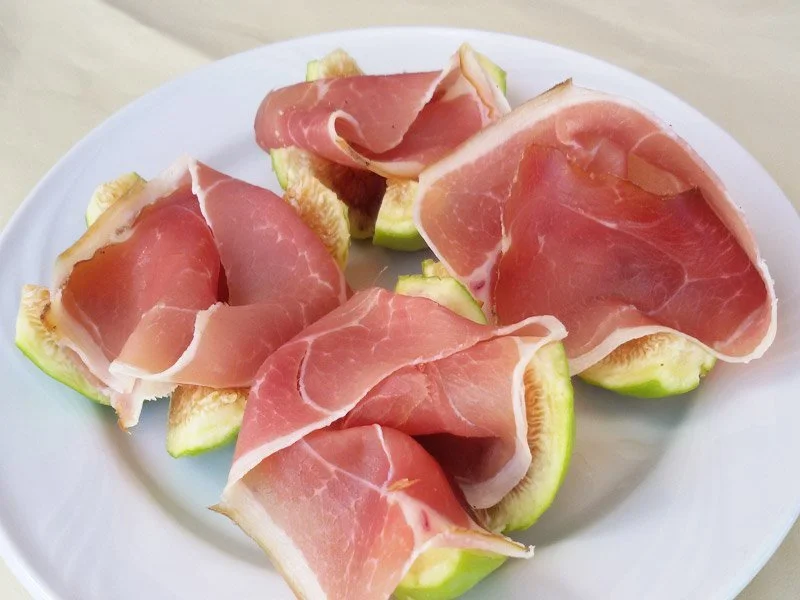
Ripe figs and slices of cured ham make a simple Italian-style summer starter, ready in about 10 minutes. The figs’ sweetness and the ham’s savoury richness come together with very little preparation.
Ingredients
- 12very fresh, medium-sized green figs
- 200 gsliced cured ham
Instructions
- 1
Choose quality ingredients
Use ingredients of the very best quality for this starter.
- 2
Select ripe figs
Pick or buy fragrant, ripe figs that are intact and, if possible, similar in size.
- 3
Wipe the figs
If you are sure they have not been treated with pesticides, gently clean them with a damp cloth.
- 4
Rinse if needed
Alternatively, rinse them quickly under cold running water and dry them straight away with an absorbent cloth or kitchen paper.
- 5
Remove the stalks
Twist each stalk gently to remove it.
- 6
Make an incision
With a sharp knife, cut into each fig from the stalk end, taking care not to cut all the way through.
- 7
Open the figs
Gently open each fig to reveal four sections, then arrange them on a serving plate.
- 8
Add the ham
Place a slice of cured ham on each fig, leaving its fatty edge in place to complement the fruit’s sweetness and flavour.
- 9
Serve straight away
Prepare the figs and cured ham just before eating and serve at room temperature.
- 10
Pour a white wine
Serve the starter with a dry white wine, sparkling if you like.
What are figs and cured ham?
This is a no-cook Italian-style starter pairing fresh figs with prosciutto crudo, or cured ham. It belongs to the familiar tradition of combining sweet seasonal fruit with savoury cured meat; melon is another well-known partner for ham.
The version here keeps the pairing straightforward: ripe green figs, sliced ham and careful assembly. Its success depends on good-quality ingredients rather than a dressing or elaborate preparation.
Nutrition and macros by portion
The nutrition label shows one serving as written: 220 calories, 13g protein, 19g carbs, 9g fat.
| Portion | Adjustment | kcal | Protein | Carbs | Fat |
|---|---|---|---|---|---|
| Lighter | Use less cured ham | 154 kcal | 9g | 13g | 6g |
| This serving | As written | 220 kcal | 13g | 19g | 9g |
| Hungry | Add another fig | 330 kcal | 20g | 29g | 14g |
The figs provide most of the carbohydrates and natural sugars, while the cured ham contributes most of the protein and fat. The ham also accounts for most of the sodium. For a more balanced plate, serve a modest portion alongside vegetables or a leafy salad.
Choose ripe, intact figs
Ripeness: Look for fragrant figs that yield slightly to gentle pressure but are not split or collapsing. Similar-sized fruit makes the portions look more even on the plate.
Freshness: Handle the figs gently, as their skins can bruise. The recipe calls for green figs, but the important cues are fragrance, ripeness and intact fruit.
Clean and prepare them gently
Cleaning: If you are confident the figs are pesticide-free, the method suggests wiping them with a damp cloth. Otherwise, rinse them briefly in cold water and dry them immediately so they are ready to serve.
Stalks: Remove each stalk with a light twist. A sharp knife helps make a controlled cut from the top without dividing the fig completely.
Open without cutting through
The cut: Start at the stalk end and stop before the knife reaches the base. This keeps the fig together while allowing it to open into four visible sections.
The texture: Open the fruit carefully rather than pressing it flat. It should hold its shape on the serving plate and be easy to top with ham.
Keep the ham’s fatty edge
Fat: The method specifically says not to trim the fatty part of the ham. Its savoury richness balances the sweetness of the figs.
Assembly: Set a slice of ham on each opened fig shortly before serving. Keeping the components simple lets their contrasting flavours stand out.
Timing and serving
Timing: The preparation takes about 10 minutes, and the recipe recommends assembling the starter just before eating. This avoids leaving the cut figs sitting for longer than needed.
Temperature: Serve at room temperature, as directed. A dry white wine, still or sparkling, is suggested alongside it.
What to serve alongside
For a light first course, serve the figs and ham as they are, with the suggested dry white wine. Their sweet-savoury contrast makes a small plate feel complete without adding another preparation step.
For a fuller spread, they can sit alongside other simple starters, but keep any additions separate so the figs and ham remain the focus.
Recipe notes & tips
- Choose figs with a noticeable fragrance and no damaged spots.
- If rinsing the figs, dry them promptly before cutting.
- Use a sharp knife and stop the cut before reaching the base.
- Open the figs gently so they keep their shape on the plate.
- Leave the ham’s fatty edge in place, as the recipe directs.
- Assemble the starter shortly before serving and bring it to room temperature.
Variations
- Use purple figs: Choose ripe, intact figs of a similar size.
- Fold the ham: Loosely fold each slice before placing it on the opened fruit.
- Make smaller bites: Cut the figs into halves or quarters and top each piece with ham.
- Serve as a board: Arrange the figs and ham together on a platter for guests to assemble.
- Pair with sparkling wine: Follow the recipe’s suggestion of a dry white wine served sparkling.
Common mistakes to avoid
- Overripe figs: Choose fruit that is fragrant and ripe but still intact.
- Cutting right through: Stop the incision before the knife reaches the base so the fig stays joined.
- Rough handling: Open the fruit gently to avoid crushing it.
- Leaving wet figs: Dry them straight after rinsing so they are ready to serve.
- Trimming the ham: Keep the fatty edge, as the recipe uses it to complement the figs.
- Preparing too early: Assemble just before eating and serve at room temperature.
How to store
This starter is best assembled just before serving. If necessary, keep the figs and ham covered separately in the refrigerator and assemble shortly before eating; the assembled dish is not suited to reheating.
Frequently asked questions
Can I use a different colour of fig?
Yes. The recipe specifies green figs, but ripe, intact figs of another colour can also be used.
Do I need to peel the figs?
No peeling is included in the method. Clean the skins gently, then remove the stalks and make the cuts.
Can I prepare this starter ahead?
The recipe recommends preparing it just before eating. You can have the ingredients ready, then cut, open and top the figs shortly before serving.
Should the ham’s fatty edge be removed?
No. The method says to leave it on, as it complements the sweetness and flavour of the figs.
What should I serve with figs and cured ham?
The recipe suggests a dry white wine, either still or sparkling. The starter is also simple to serve on its own as a first course.
Cook it from the original
This recipe comes from fragolosi.it. Their page has the author’s own photos, notes and tips — the best place to cook it from.
Open the recipe on fragolosi.it