
Pho Bowls
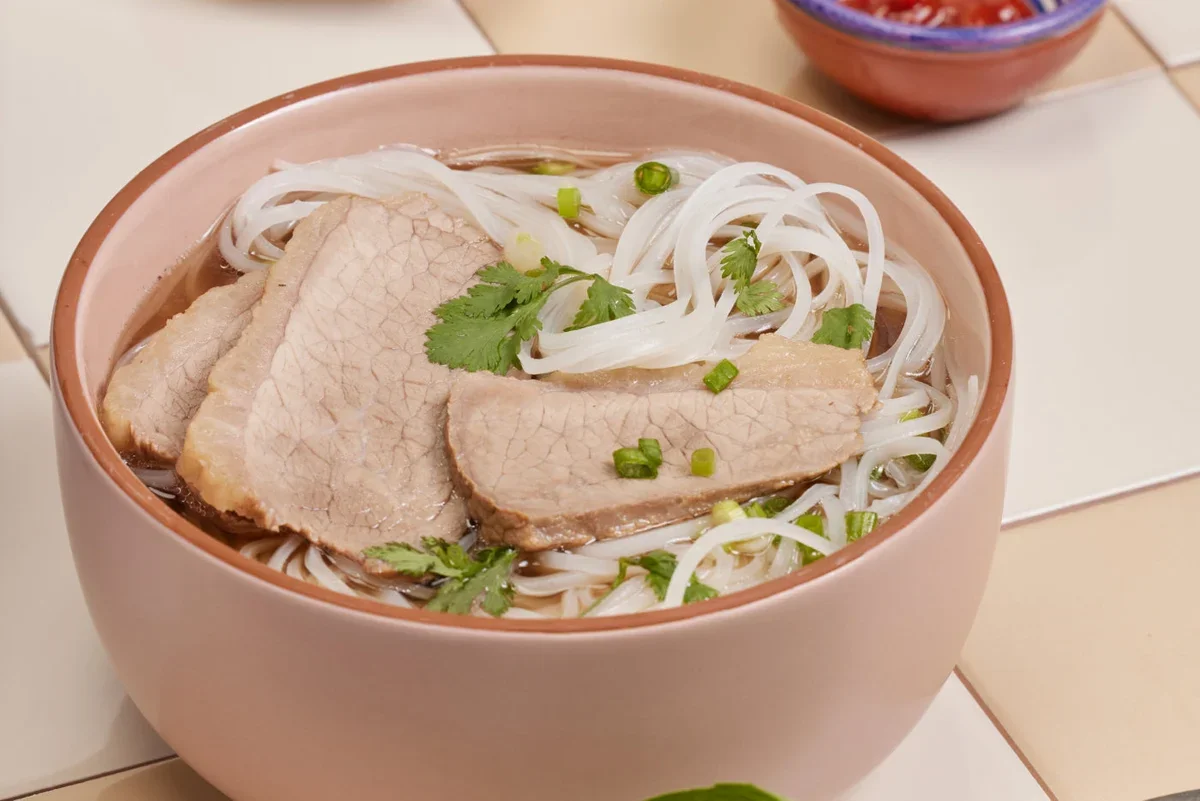
These pho bowls combine rice noodles and cooked beef with hot pho broth, then let everyone add fresh herbs, sprouts, lime and sauces to taste. They are a quick way to serve a customisable noodle soup when the broth and beef are already prepared.
Ingredients
- as neededPho broth
- to tasteCooked beef from the broth, chopped
- 340 g (12 oz)Dried flat rice noodles
- 115 g (4 oz)Bean sprouts
- 4 sprigsThai basil, stems removed
- 8 sprigsCoriander, stems removed
- 2 to 3Limes, quartered
- 3 to 4Thai chillies, stems removed and minced
- 1 bunchSpring onions, thinly sliced on an angle
- to tasteHoisin sauce
- to tasteChilli garlic crisp
- to tasteSriracha
- to tasteFish sauce
Instructions
- 1
Prepare the noodles
Rehydrate the rice noodles according to the instructions on the packet. Divide them between 4 large soup bowls and add the chopped cooked beef.
- 2
Add the broth
Pour in enough pho broth to cover the noodles.
- 3
Serve with garnishes
Set out the garnishes and sauces so everyone can build their own bowl. Add them to taste; each one brings its own flavour.
What are pho bowls?
Pho is a Vietnamese noodle soup, commonly served with broth, rice noodles and beef or other toppings. These bowls follow that familiar format, with the broth and cooked beef served over noodles.
The finishing ingredients are brought to the table, so each person can adjust the herbs, citrus, heat and savoury sauces to suit their taste.
Nutrition and macros by portion
The nutrition label shows one serving as written: 480 calories, 23g protein, 73g carbs, 9g fat.
| Portion | Adjustment | kcal | Protein | Carbs | Fat |
|---|---|---|---|---|---|
| Lighter | More sprouts, fewer noodles | 336 kcal | 16g | 51g | 6g |
| This serving | As written | 480 kcal | 23g | 73g | 9g |
| Hungry | Extra noodles and beef | 720 kcal | 35g | 110g | 14g |
Most of the carbohydrates come from the rice noodles, while the beef contributes protein and some fat; the broth and sauces can contribute additional fat and sodium. Balance the bowl with plenty of bean sprouts and herbs, and add the sauces in measured amounts if you want to keep their saltiness in check.
Start with the noodles
Rice noodles: follow the packet directions for rehydrating them, as thickness and brands can differ. Drain them well before dividing them between the bowls so excess water does not dilute the broth.
Build each bowl
Beef and broth: put the cooked beef in with the noodles, then add enough broth to cover them. The recipe relies on broth and beef that have already been prepared.
Keep the garnishes fresh
Herbs and sprouts: serve the bean sprouts, Thai basil and coriander separately so they can be added just before eating. This keeps their fresh texture and aroma distinct from the hot broth.
Lime and chillies: offer the lime wedges and minced Thai chillies at the table, letting each diner choose how much brightness and heat to add.
Adjust the seasoning
Sauces: hoisin, chilli garlic crisp, sriracha and fish sauce each bring a different kind of savouriness or heat. Add them gradually, tasting as you go, especially if combining several.
Serve while hot
Timing: have the garnishes ready before filling the bowls, then serve as soon as the broth is added. This gives the noodles and beef a hot base while leaving the fresh toppings for each person to add.
Make it a meal
Serve the bowls on their own or alongside a simple vegetable side. Keep extra lime and herbs at the table for anyone who wants a fresher, brighter finish.
Recipe notes & tips
- Prepare all the garnishes before adding broth so the bowls can be served promptly.
- Slice the spring onions thinly so they are easy to pick up with noodles.
- Keep the Thai chillies separate and let diners choose how much to add.
- Add fish sauce and the other condiments a little at a time, tasting between additions.
- Serve lime wedges alongside the bowls so everyone can adjust the acidity.
Variations
- More greens: Add extra bean sprouts and herbs at the table.
- Milder bowl: Leave out the minced Thai chillies and offer chilli sauces separately.
- Citrus-forward: Squeeze in extra lime just before eating.
- Extra heat: Add more Thai chilli or chilli garlic crisp to individual bowls.
- Sauce choice: Let each diner choose between hoisin, sriracha and fish sauce rather than mixing them all in.
Common mistakes to avoid
- Guessing the noodle time: Follow the packet directions so the noodles do not become too soft.
- Adding too much sauce at once: Start with a little and taste before adding more.
- Putting all the toppings in the bowls early: Serve them separately so the herbs and sprouts stay fresh.
- Using too little broth: Pour in enough to cover the noodles as directed.
- Adding every chilli at once: Keep the heat adjustable by serving chillies and spicy sauces at the table.
How to store
For best texture, store leftover broth, beef, noodles and garnishes separately in covered containers in the fridge and use within 3 days. Reheat the broth and beef until hot, then assemble with the noodles and fresh garnishes; cooked noodles may soften during storage.
Frequently asked questions
Can I use a different type of rice noodle?
Yes, but follow the packet directions for that noodle's thickness and preparation. The recipe specifies dried flat rice noodles.
Do I add the garnishes before serving?
The recipe suggests letting everyone build their own bowl at the table. Keep the garnishes separate until then so people can customise their bowls.
How much broth should I use?
Add enough broth to cover the noodles in each bowl.
Can I make the bowls less spicy?
Yes. Serve the minced Thai chillies, chilli garlic crisp and sriracha separately, and leave them out or add only a little.
Can I prepare the ingredients ahead?
You can prepare and arrange the garnishes in advance. Keep the components separate and assemble the bowls when ready to serve.
Cook it from the original
This recipe comes from fromourplace.ca. Their page has the author’s own photos, notes and tips — the best place to cook it from.
Open the recipe on fromourplace.ca