
Pho Broth
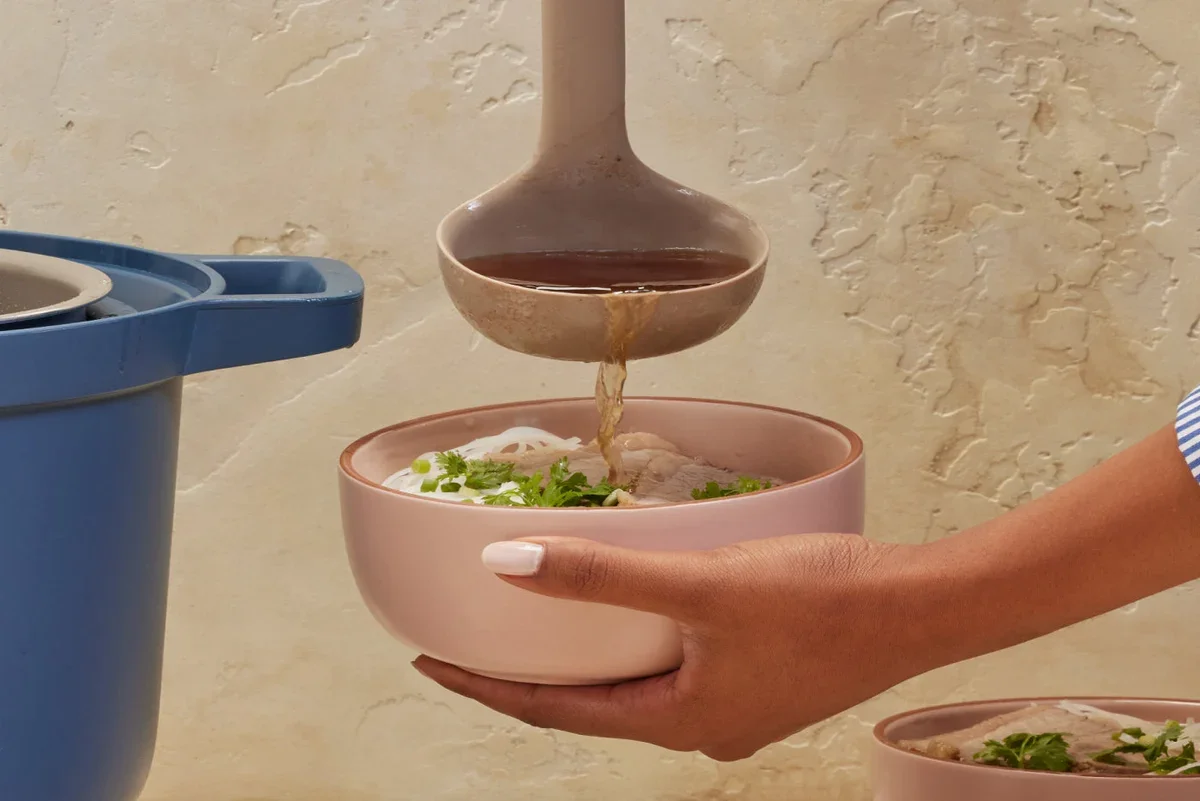
This pressure-cooker pho broth combines beef bones and brisket with ginger, lemongrass and toasted spices. Make a batch to use as a fragrant base for pho or other noodle soups.
Ingredients
- 907 g–1.36 kg (2–3 lb)beef bones
- 454 g (1 lb)boneless beef brisket or chuck steak
- 2 bunchesgreen onions, chopped
- 1 stalklemongrass, chopped
- 1 headgarlic, halved
- 1 piece, 5 cm (2 in)ginger, peeled and bruised
- 2whole star anise
- 1 tablespooncoriander seeds
- 2whole cloves
- 60 ml (¼ cup)fish sauce
- 1 tablespoonbrown sugar
Instructions
- 1
Toast the spices
Put the star anise, coriander seeds and cloves in a small frying pan over medium heat. Toast lightly until fragrant.
- 2
Fill the cooker
Rinse the bones to remove any blood or residue on the surface. Put all the ingredients in the Dream Cooker pot and cover with water. Secure the lid, select Pressure Cook on High Pressure and set the timer for 1 hour.
- 3
Release pressure
When cooking is complete, let the pressure release naturally. The Steam Release Indicator will show that pressure is releasing.
- 4
Strain the broth
Open the cooker carefully, as steam may still be present. Set the meat aside, then carefully strain the broth through a fine-mesh sieve and discard the solids.
- 5
Cool and chill
Let the broth cool to room temperature; stirring will help it cool faster. Cover and refrigerate.
- 6
Store the stock
Keep refrigerated for up to 1 week or freeze for up to 1 year. Bring the stock back to a full boil whenever you use it.
What is pho broth?
Pho is a Vietnamese noodle soup, often served with a deeply flavoured broth, rice noodles and toppings. This version uses beef bones and brisket, with aromatics and whole spices to build a savoury, gently fragrant base.
Pressure cooking makes it possible to prepare the broth in about an hour of cooking time. Toasting the spices first helps bring out their aroma.
Nutrition and macros by portion
The nutrition label shows one serving as written: 125 calories, 12g protein, 3g carbs, 7g fat.
| Portion | Adjustment | kcal | Protein | Carbs | Fat |
|---|---|---|---|---|---|
| Lighter | Skim the chilled broth | 88 kcal | 8g | 2g | 5g |
| This serving | As written | 125 kcal | 12g | 3g | 7g |
| Hungry | Add more brisket | 188 kcal | 18g | 5g | 11g |
The beef contributes most of the protein and some of the fat, while the brown sugar and aromatics contribute a small amount of carbohydrate. Fish sauce is the main source of sodium; the exact nutrition will vary with the bones and how much fat is retained. Serve with rice noodles and vegetables for a more balanced bowl.
Build the flavour
Toasted spices: Star anise, coriander seeds and cloves give the broth its warm, aromatic character. Toast them just until fragrant so they do not scorch.
Fresh aromatics: Ginger, lemongrass, garlic and green onions simmer with the beef. Bruising the ginger helps expose more of its surface to the broth.
Choose the beef
Bones: The beef bones form the broth’s savoury base. Rinsing them first removes surface blood or residue, as directed in the method.
Brisket or chuck: Either cut can be cooked in the pot and reserved after straining. Slice or shred the cooked meat to serve with the broth.
Strain with care
Pressure release: Let the cooker release pressure naturally after cooking, and take care when opening it because hot steam may remain. Follow the cooker’s indicator rather than rushing to open the lid.
Fine sieve: Strain the hot broth carefully to separate it from the bones, spices and aromatics. Set the meat aside before discarding the remaining solids.
Cool and store
Cooling: The recipe calls for cooling the broth to room temperature before covering and refrigerating it. Stirring helps it cool more quickly.
Keeping: Refrigerate for up to 1 week or freeze for up to 1 year, as specified in the recipe. Bring the stock to a full boil when using it.
How to serve it
For a bowl of pho, serve the hot broth with cooked rice noodles and the reserved beef. Fresh herbs, sliced green onions or a squeeze of lime can be added at the table.
The broth can also be used as a base for other noodle soups. Add noodles and toppings when serving rather than storing them in the broth.
Recipe notes & tips
- Toast the whole spices over medium heat and take them off the pan as soon as they smell fragrant.
- Rinse the bones before adding them to the cooker, as the method directs.
- Keep the ginger peeled and bruised so its flavour can infuse the broth.
- Use a fine-mesh sieve to catch small spice and aromatic pieces.
- Reserve the cooked beef before straining so it does not get lost with the solids.
- Bring the broth to a full boil when you use it.
Variations
- Use chuck: Choose boneless chuck steak instead of brisket, as allowed in the recipe.
- Adjust the bones: Use the lower or higher end of the stated range to suit what you have.
- Serve with noodles: Add cooked rice noodles to each bowl when serving.
- Add fresh herbs: Finish bowls with herbs at the table for a fresh contrast.
- Add lime: Offer lime wedges alongside the broth for a bright finishing note.
Common mistakes to avoid
- Scorched spices: Toast only until fragrant, since burnt spices can taste bitter.
- Skipped rinse: Rinse the bones first to remove surface blood or residue.
- Rushed release: Let pressure release naturally after the cooking cycle finishes.
- Careless opening: Open the cooker cautiously because steam may still be present.
- Lost brisket: Reserve the meat before straining the broth.
- Warm storage: Cool the stock to room temperature, then cover and refrigerate it.
How to store
Cool the broth to room temperature, cover and refrigerate for up to 1 week, or freeze for up to 1 year. Bring it back to a full boil whenever you use it.
Frequently asked questions
Can I use brisket or chuck steak?
Yes. The recipe lists boneless beef brisket or chuck steak as alternatives.
Do I need to toast the spices?
The method calls for lightly toasting the star anise, coriander seeds and cloves until fragrant. Keep them moving and remove them from the heat before they scorch.
How long does the broth cook under pressure?
Set the Dream Cooker to High Pressure for 1 hour. Allow the pressure to release naturally when the cooking cycle ends.
Should I keep the meat after straining?
Yes. The method says to reserve the meat before straining the broth. Serve it with the broth or use it in another dish.
How long can I keep the broth?
Refrigerate it for up to 1 week or freeze it for up to 1 year. Bring it to a full boil when using.
Cook it from the original
This recipe comes from fromourplace.ca. Their page has the author’s own photos, notes and tips — the best place to cook it from.
Open the recipe on fromourplace.ca