
Duck Fat Fried Chicken
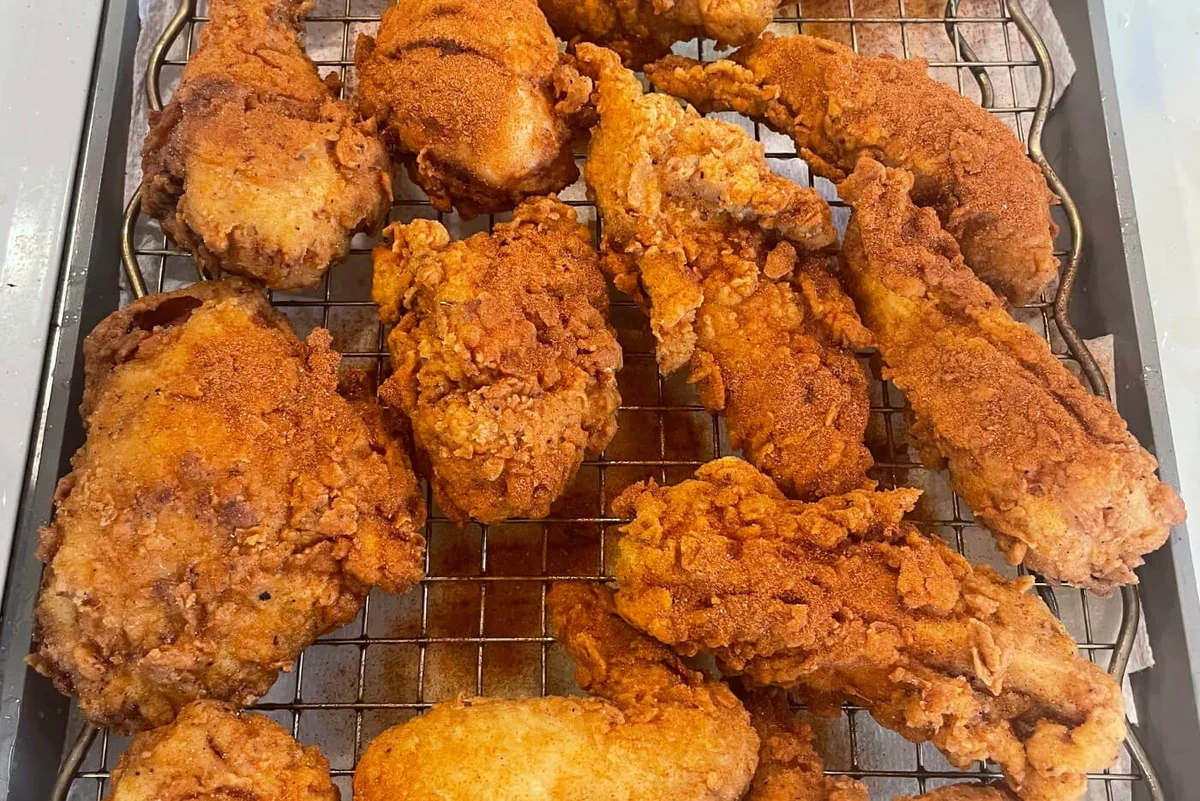
This is crisp, boldly seasoned fried chicken brined with citrus and smoked chilli, then cooked in a blend of canola oil and duck fat. It takes planning for the brining and chilling, but the hands-on frying is done in batches and the chicken is finished with a smoky spice dust and jalapeño-vinegar sauce.
Ingredients
- 1 chicken, cut into 8 piecesChicken
- 180 ml (¾ cup)Kosher salt
- 100 g (½ cup)Sugar
- 15 ml (1 tbsp)Smoked chilli flakes
- Peel of 1Lemon
- Peel of 1Orange
- 3.8 litres (1 gallon)Water
- 440 g (3½ cups)Plain flour
- 80 g (½ cup)Rice flour
- 7 g (1 tbsp)Freshly ground black pepper
- 9 g (1 tbsp)Garlic powder
- 7 g (1 tbsp)Sweet smoked pimentón
- 15 ml (1 tbsp)Kosher salt
- 3 g (1 tbsp)Dried oregano
- 1 g (1 tsp)Dried basil
- 1–2 tspCayenne pepper
- 1 g (½ tsp)Onion powder
- 1 g (½ tsp)Ground cumin
- 1 g (½ tsp)Ground coriander
- 4 g (1 tsp)Baking powder
- All of the brined chickenBrined chicken
- All of the prepared dredgePrepared dredge
- 950 ml (1 qt)Buttermilk
- 1.4 litres (1.5 qt)Canola oil
- 454 g (16 oz)Duck fat
- 14 g (2 tbsp)Sweet smoked pimentón
- 15 ml (1 tbsp)Kosher salt
- 3Jalapeño peppers
- 2 clovesGarlic
- 355 ml (12 oz)Unseasoned rice vinegar
- 30 ml (2 tbsp)Kosher salt
- 12 g (1 tbsp)Sugar
- ½ tspXanthan gum powder
Instructions
- 1
Make the brine
Combine the water, salt, sugar, smoked chilli flakes, lemon peel and orange peel in a pot. Heat over medium heat until the salt and sugar dissolve, then chill overnight. Once cold, submerge the chicken in the brine for 12–24 hours. Remove it and pat away excess moisture.
- 2
Mix the dredge
Whisk all the dredge ingredients together in a bowl until evenly combined.
- 3
Coat and fry
Divide the dredge between two medium bowls and pour the buttermilk into a third. Coat each chicken piece lightly in the first bowl of dredge, dip it in the buttermilk and let excess drip away, then coat it evenly in the second bowl of dredge. Set the pieces on a parchment-lined sheet pan and repeat with the remaining chicken. Refrigerate for 3–4 hours to help the coating adhere, then take the chicken out 30 minutes before frying. Put the canola oil and duck fat in a cast-iron pot and heat to 340°F (171°C). Fry in batches, adjusting the heat to keep the oil at 315–320°F (157–160°C) as its temperature drops when chicken is added. The method gives an internal temperature of 150–155°F (66–68°C); for food safety, cook poultry until it reaches 165°F (74°C) at its thickest point. Transfer to a paper-towel-lined tray with a wire rack. Just before serving, dust with the finishing dust and add the hot sauce.
- 4
Make the spice dust
Grind the salt and pimentón together in a spice grinder to a fine dust. Pass it through a fine-mesh sieve over the chicken just before serving.
- 5
Blend the hot sauce
Char the jalapeños completely on a hob or grill. Put them in a bowl, cover with cling film and leave for 10 minutes. Remove excess charred skin and the stems, then blend the peppers with the remaining ingredients on high for 2 minutes. Adjust the seasoning, pour into a bottle and refrigerate.
What is duck fat fried chicken?
It is a Southern-style take on fried chicken, with pieces soaked in a seasoned brine before being coated and fried. This version layers citrus and smoked chilli into the brine, then uses a flour-and-rice-flour crust and duck fat for a rich, savoury finish.
The long brine and chilled coating need advance planning, while the spice dust and jalapeño sauce bring a final hit of smoke, salt and acidity.
Nutrition and macros by portion
The nutrition label shows one serving as written: 850 calories, 52g protein, 50g carbs, 48g fat.
| Portion | Adjustment | kcal | Protein | Carbs | Fat |
|---|---|---|---|---|---|
| Lighter | Smaller chicken portion | 595 kcal | 36g | 35g | 34g |
| This serving | As written | 850 kcal | 52g | 50g | 48g |
| Hungry | Add a larger piece | 1275 kcal | 78g | 75g | 72g |
Chicken supplies most of the protein, while the flour coating and sugar contribute carbohydrates; the frying fat, duck fat and buttermilk contribute most of the fat. The quantities of oil and duck fat listed are for frying, so the amount absorbed by each portion varies. Balance the plate with a generous serving of vegetables or slaw.
The brine sets the flavour
Citrus peel: lemon and orange add fragrance to the salty, sweet brine; use strips of peel without too much bitter white pith.
Cold brine: chill it fully before adding the chicken, and keep the chicken submerged in the refrigerator for 12–24 hours.
Build an even crust
Two dredge bowls: the first gives the chicken a light coating, and the second stays cleaner for the final layer after the buttermilk dip.
Resting time: refrigerating the coated pieces for 3–4 hours helps the coating set. Let them stand out of the fridge for 30 minutes before frying, as directed.
Frying temperature and doneness
Steady heat: the oil starts at 340°F (171°C), then is kept at 315–320°F (157–160°C) as the chicken goes in. Fry in batches so the pot is not crowded, and adjust the hob to bring the temperature back into range.
Safe centre: the supplied method lists 150–155°F (66–68°C), but poultry should reach 165°F (74°C) at its thickest point for food safety. Check each piece with a thermometer without touching the bone.
The finishing touches
Spice dust: grinding the salt and pimentón finely makes it easier to distribute a light, even layer over the hot chicken.
Jalapeño sauce: fully charring the peppers adds a smoky edge, while rice vinegar cuts through the richness. Blend thoroughly and taste before bottling.
How to serve it
Serve the chicken straight from the rack while the crust is crisp, with the sauce on the side or spooned over just before eating.
A crunchy slaw, green salad or steamed vegetables make a fresh contrast; bread, rice or potatoes turn it into a more substantial plate.
Recipe notes & tips
- Use a container large enough to keep all the chicken covered by the brine.
- Dry the brined chicken well so the coating is not diluted by surface moisture.
- Keep one dredge bowl for the first light coating and the other for the final coating.
- Use a thermometer to monitor both the frying fat and the thickest part of each chicken piece.
- Fry similar-sized pieces together where possible so they cook at a similar pace.
- Let the fried chicken drain on a wire rack rather than leaving it sitting in pooled oil.
Variations
- More heat: use the higher amount of cayenne and serve extra jalapeño sauce at the table.
- Milder sauce: remove the jalapeño seeds before blending for a less fiery result.
- Herb swap: replace the dried basil with the same amount of dried thyme.
- Citrus change: use extra lemon peel instead of orange for a sharper brine aroma.
- Boneless pieces: use boneless chicken portions and check their centres carefully, as they may cook faster.
Common mistakes to avoid
- Adding chicken to warm brine: chill the brine completely first so it does not warm the chicken.
- Skipping the coated rest: refrigerate the dredged pieces for 3–4 hours so the crust has time to set.
- Crowding the pot: fry in batches to avoid a sharp temperature drop and uneven cooking.
- Letting the oil run too hot: keep it within the specified 315–320°F (157–160°C) frying range.
- Relying on colour alone: check the centre with a thermometer and make sure it reaches 165°F (74°C).
How to store
Refrigerate leftover chicken in a covered container for up to 3 days, and keep the sauce in a separate sealed bottle. Reheat the chicken on a wire rack in an oven until piping hot; the coating may be less crisp than when freshly fried.
Frequently asked questions
Can I brine the chicken for 24 hours?
Yes. The method gives a brining window of 12–24 hours; keep the chicken refrigerated throughout.
Can I prepare the sauce in advance?
Yes. Blend it, bottle it and keep it refrigerated as directed. Shake or stir it before serving if it separates.
Why does the chicken need to rest after coating?
The 3–4-hour chilled rest helps the flour coating stick to the chicken during frying.
How do I know when the chicken is cooked?
Use a food thermometer at the thickest part, avoiding the bone. Cook poultry to 165°F (74°C), rather than relying on the lower temperature stated in the method.
Can I reuse the frying fat?
Strain cooled fat to remove crumbs, then refrigerate it in a clean, sealed container if it has not overheated or become strongly darkened. Discard it if it smells rancid or shows signs of deterioration.
Cook it from the original
This recipe comes from fromourplace.ca. Their page has the author’s own photos, notes and tips — the best place to cook it from.
Open the recipe on fromourplace.ca