
Maddy’s Dduk Guk for Lunar New Year
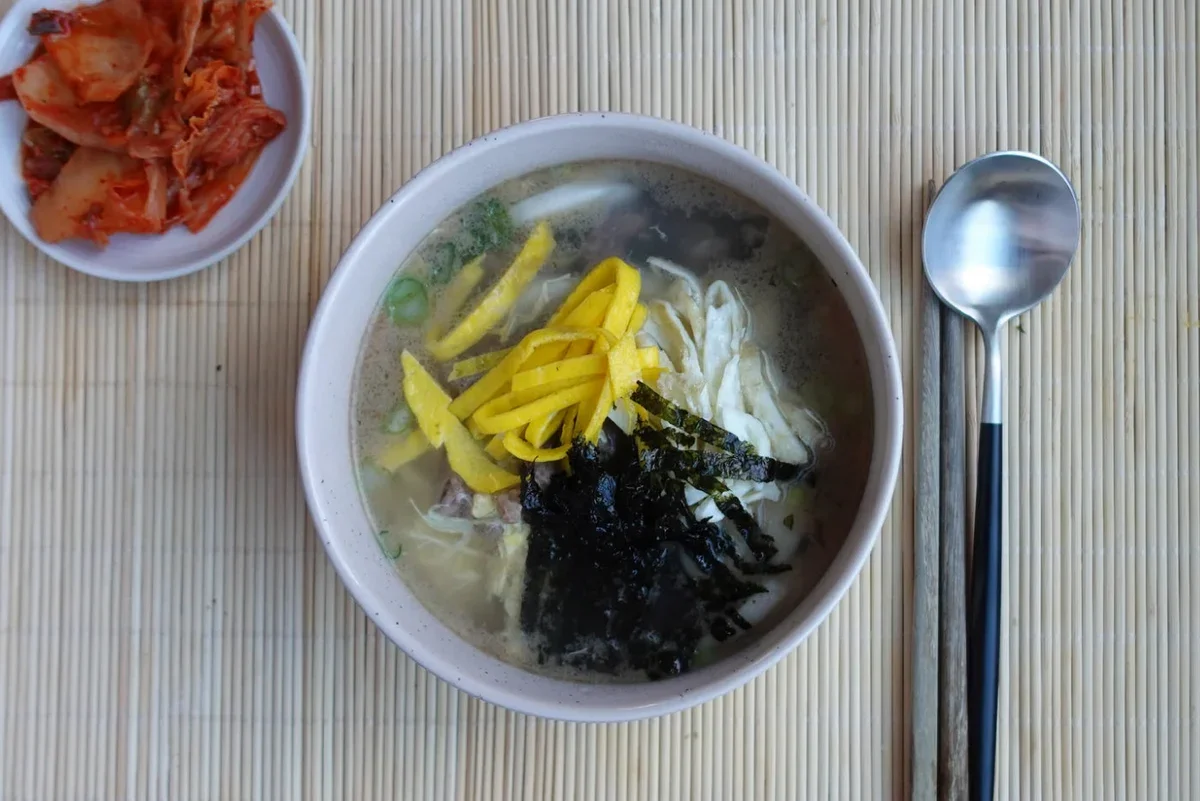
Maddy Park’s dduk guk is a Korean rice-cake soup made for Seollal, Lunar New Year. A savoury broth, tender rice cakes and ribbons of egg make it a comforting bowl to share as part of the celebration.
Ingredients
- 2eggs
- 2–3anchovies
- 1 piecekombu, for the broth
- 590 ml (2½ cups)water
- 85 g (3 oz)stewing beef
- 2 clovesgarlic, minced
- 1spring onion
- 240 ml (1 cup)frozen flat dduk (rice cakes for dduk guk)
- 15 ml (1 tbsp)sesame oil
- 15 ml (1 tbsp)vegetable oil
- 15 ml (1 tbsp)soy sauce
- 5 ml (1 tsp)fish sauce
- A pinch, plus more to tastesalt
- To tasteblack pepper
- To tastethinly sliced seaweed, to garnish
Instructions
- 1
Make the broth
Bring 590 ml (2½ cups) of water to the boil with the anchovies and kombu while you prepare the other ingredients.
- 2
Cook the egg
Beat one egg with a pinch of salt. Spread it in a thin layer in a heated pan and cook it like a thin crêpe.
- 3
Prepare the garnish
Mince the garlic and chop the spring onion. Fold the cooked egg crêpe and cut it into thin strips.
- 4
Brown the beef
Cut the beef into strips or bite-sized pieces. Heat 15 ml (1 tbsp) each of sesame oil and vegetable oil in a pot, then stir-fry the beef.
- 5
Add the broth
When the beef is mostly browned, stir in 15 ml (1 tbsp) of soy sauce. Add half the broth, bring it to the boil, then pour in the remaining broth.
- 6
Season the soup
Stir in 5 ml (1 tsp) of fish sauce and the minced garlic. Taste and add salt and pepper as needed.
- 7
Cook the rice cakes
Add the rice cakes and boil the soup for 3–4 minutes.
- 8
Finish with egg
Beat the remaining egg and carefully pour it into the pot after the 3–4 minutes. Gently swirl the soup, cover and simmer for 2 minutes.
- 9
Serve the soup
Ladle the soup and rice cakes into bowls. Garnish with chopped spring onion, egg strips and thinly sliced seaweed, and serve with kimchi.
What is dduk guk?
Dduk guk, also written tteokguk, is a Korean soup of sliced rice cakes traditionally eaten at Seollal, the Lunar New Year. It is closely associated with the holiday and family meals.
This version combines a simple anchovy-and-kombu broth with beef, rice cakes and egg prepared two ways. The separate egg crêpe adds neat strips on top, while the second egg cooks gently in the soup.
Nutrition and macros by portion
The nutrition label shows one serving as written: 160 calories, 10g protein, 16g carbs, 7g fat.
| Portion | Adjustment | kcal | Protein | Carbs | Fat |
|---|---|---|---|---|---|
| Lighter | Use less oil | 112 kcal | 7g | 11g | 5g |
| This serving | As written | 160 kcal | 10g | 16g | 7g |
| Hungry | Add more rice cakes | 240 kcal | 15g | 24g | 11g |
The rice cakes supply most of the carbohydrates, while the beef and eggs contribute protein. Sesame and vegetable oils, along with the egg yolks, provide much of the fat. For a more balanced plate, serve a modest bowl with kimchi and another vegetable side.
Building the broth
Anchovies and kombu: simmering these in the water gives the soup its savoury base. The recipe divides the broth when adding it to the beef, then uses the full amount in the pot.
Seasoning: soy sauce and fish sauce add salt and savoury depth. Taste before adding extra salt, as these sauces are already salty.
Choosing the rice cakes
Flat dduk: use the thin, flat rice cakes intended for dduk guk, as specified in the recipe. Their shape suits a spoonful of soup and they cook quickly.
Frozen cakes: add them directly to the boiling soup and cook for 3–4 minutes. Check that they are tender before moving on to the egg.
Getting the egg right
Egg crêpe: beat one egg with a pinch of salt and spread it thinly in the pan. Let it set before folding and slicing, so the strips hold their shape.
Soup egg: pour the other beaten egg in carefully, then swirl the pot gently. Cover and simmer for 2 minutes to let it cook without breaking up the rice cakes.
Beef and timing
Beef pieces: cut the meat into small strips or bite-sized pieces so they brown quickly. Stir-fry them in both oils before adding the soy sauce and broth.
Keep the rice-cake cooking brief: the recipe calls for 3–4 minutes at a boil, followed by 2 minutes covered with the egg. Longer cooking can make the cakes softer.
Serving the bowls
Finish each bowl with spring onion, egg strips and thinly sliced seaweed for fresh and savoury accents. Kimchi is served alongside, rather than stirred into the soup.
Serve as soon as the rice cakes are tender, while the broth is hot and the egg is just cooked.
Recipe notes & tips
- Have the garlic and spring onion ready before you start cooking the beef.
- Slice the beef into even pieces so it browns at a similar rate.
- Use flat rice cakes made for soup rather than a different style of dduk.
- Taste the broth before adding more salt because the soy and fish sauces are salty.
- Pour the final beaten egg in carefully and swirl gently to keep the soup clear of large broken pieces.
Variations
- More beef: Add extra beef for a heartier bowl.
- Vegetable side: Serve with additional vegetables alongside the soup.
- Spicier table: Offer extra kimchi for diners who want more heat.
- Seaweed finish: Add a little more thinly sliced seaweed at serving.
- Peppery broth: Add more black pepper to taste.
Common mistakes to avoid
- Overcooking the rice cakes: They can become too soft, so check them after 3 minutes.
- Salting too early: Soy and fish sauce add salt, so taste the broth before seasoning further.
- Thick egg crêpe: Spread the beaten egg thinly so it is easy to fold and slice into strips.
- Roughly stirring in the egg: Swirl the pot gently to avoid breaking up the rice cakes.
- Uneven beef pieces: Cut them to a similar size so they brown more evenly.
How to store
Refrigerate leftovers in an airtight container and use within 2 days. Reheat gently on the hob until hot; the rice cakes may soften as they sit in the broth.
Frequently asked questions
Can I use fresh rice cakes instead of frozen?
Use flat rice cakes intended for dduk guk. Follow the recipe’s 3–4-minute cooking time as a guide, checking for tenderness.
Do I need to remove the anchovies and kombu?
The method uses the liquid as broth but does not specify straining or removing the anchovies and kombu. If you prefer a clear broth, you can strain it before adding it to the beef.
Why are there two eggs?
One egg is cooked as a thin crêpe, then sliced for garnish. The other is beaten and added to the soup near the end of cooking.
How do I know when the rice cakes are ready?
After 3–4 minutes of boiling, check that they are tender. Then add the beaten egg and simmer, covered, for 2 more minutes.
What can I serve with dduk guk?
Serve it with kimchi, as the recipe suggests. A simple vegetable side also works well alongside the soup.
Can I make the egg garnish ahead?
You can cook and slice the egg crêpe while preparing the soup. Add it to the bowls just before serving.
Cook it from the original
This recipe comes from fromourplace.ca. Their page has the author’s own photos, notes and tips — the best place to cook it from.
Open the recipe on fromourplace.ca