
D’Ara’s Herb-Forward Kuku Sabzi
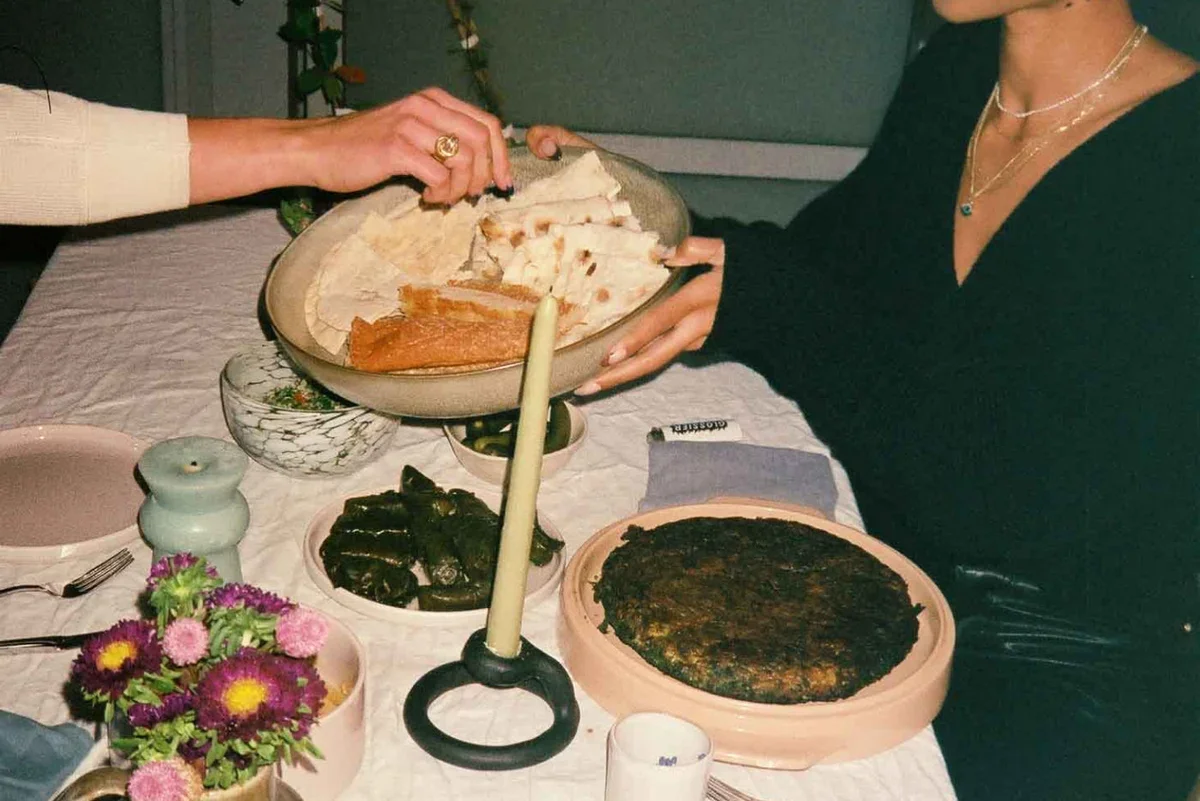
Kuku sabzi is a Persian herb-packed frittata, with parsley, coriander and spring onions held together by egg and warmly spiced with cumin and turmeric. It makes a vivid meal to share, served in wedges with dips or wrapped in flatbread.
Ingredients
- 2 bunchesparsley
- 2 bunchescoriander
- 1 bunchspring onions
- 3eggs
- 1 tspgarlic salt
- 1 tspturmeric
- 1 tspcumin
- 1 tbspbutter
Instructions
- 1
Chop the herbs
Finely chop the parsley, coriander and spring onions together.
- 2
Mix the filling
Put the chopped herbs and spring onions in a mixing bowl. Add the eggs, garlic salt, turmeric and cumin, then mix until evenly combined.
- 3
Cook the first side
Melt the butter in a pan over medium-low heat. Add the herb and egg mixture, cover with a lid and cook until the underside is lightly browned.
- 4
Flip the kuku
Cover the pan with a large plate, holding it firmly in place. Carefully turn the pan upside down so the kuku sabzi lands on the plate, then slide it back into the pan to brown the other side.
- 5
Finish cooking
When the kuku sabzi is fully cooked, transfer it from the pan to a plate.
- 6
Slice and serve
Cut into triangles and serve with ikra and hummus, or wrap in toasted lavash or sangak with more fresh herbs.
What is kuku sabzi?
Kuku sabzi is a Persian herb frittata in which chopped greens take centre stage, with egg binding them into a sliceable dish. It is often served as part of a spread or cut into wedges for a simple meal.
This version uses parsley, coriander and spring onions, with cumin and turmeric for warmth. A generous quantity of herbs gives it its characteristic green colour and fresh, savoury flavour.
Nutrition and macros by portion
The nutrition label shows one serving as written: 78 calories, 6g protein, 7g carbs, 5g fat.
| Portion | Adjustment | kcal | Protein | Carbs | Fat |
|---|---|---|---|---|---|
| Lighter | Use less butter | 55 kcal | 4g | 5g | 3g |
| This serving | As written | 78 kcal | 6g | 7g | 5g |
| Hungry | Serve with toasted lavash | 117 kcal | 8g | 11g | 7g |
The herbs and spring onions contribute most of the carbohydrates and fibre, while the eggs provide protein and the butter adds fat. Garlic salt is the main source of sodium; serve a wedge with vegetables or salad and bread to make a balanced plate.
The herb mixture
Parsley and coriander: chop them finely so the egg mixture holds together evenly and the finished kuku is easy to slice.
Spring onions: chop these along with the herbs; they bring a gentle onion flavour through the frittata.
Seasoning and eggs
Spices: cumin and turmeric season the mixture without obscuring the herbs. Garlic salt provides both garlic flavour and saltiness, so mix it through evenly.
Eggs: combine them thoroughly with the chopped greens so each portion has enough egg to hold its shape.
Cooking it evenly
Gentle heat: medium-low cooking gives the bottom time to brown while the centre sets. Keep the pan covered as directed, and look for a lightly browned underside before turning.
The flip: use a plate large enough to cover the pan and hold it securely against the rim. Turn with care, then slide the kuku back into the pan to cook the second side.
Doneness and texture
The kuku is ready when it is fully cooked through and holds together when moved to a plate. The method gives a browned exterior and a tender, herb-rich centre.
Let it settle briefly on the serving plate before cutting if it feels delicate; this helps the wedges keep their shape.
Serving ideas
Serve the wedges with ikra and hummus for dipping, as suggested in the recipe. Toasted lavash or sangak makes a handy wrap, especially with extra fresh herbs.
For a fuller spread, set out the kuku with the dips and bread so everyone can serve themselves.
Recipe notes & tips
- Chop the herbs finely for a more cohesive frittata.
- Mix the eggs and seasonings thoroughly through the greens before cooking.
- Keep the heat at medium-low so the bottom browns without rushing the centre.
- Choose a plate wider than the pan to make flipping more secure.
- Hold the plate firmly against the pan when turning it over.
- Allow the kuku to settle on the plate before slicing if it seems fragile.
Variations
- Add dill: Chop it finely with the parsley and coriander for another fresh herbal note.
- Use fresh garlic: Replace some of the garlic salt with finely chopped garlic and adjust the salt to taste.
- Add walnuts: Fold chopped walnuts into the herb and egg mixture for a nutty variation.
- Serve with yoghurt: Offer a spoonful alongside the wedges for a cool, creamy accompaniment.
- Make wraps: Tuck wedges into toasted lavash or sangak with extra fresh herbs.
Common mistakes to avoid
- Coarse chopping: Large pieces can make the kuku harder to bind; chop the herbs and spring onions finely.
- High heat: The base may brown before the centre cooks; keep the pan at medium-low.
- Uneven mixing: Patches may be over-seasoned or short of egg; combine everything thoroughly.
- A loose flip: The kuku can break apart; cover the pan securely with a large plate before turning.
- Cutting too soon: A delicate kuku may crumble; let it settle on the plate before slicing.
How to store
Cool leftovers, cover or place in an airtight container, and refrigerate for up to 3 days. Reheat gently in a covered pan over low heat or in the microwave until hot throughout.
Frequently asked questions
Can I make kuku sabzi ahead?
Yes. Cook it, cool it and refrigerate it covered for up to 3 days. Reheat gently before serving.
How do I know when it is ready to flip?
The recipe calls for a lightly browned underside. The kuku should also be set enough to turn as one piece.
What can I use instead of a flipping platter?
Use a large, flat plate that fully covers the pan. Hold it firmly in place as you carefully turn the pan over.
What should I serve with kuku sabzi?
Serve it with ikra and hummus, or wrap it in toasted lavash or sangak with extra fresh herbs.
Can I use dried herbs instead of fresh?
Fresh herbs are central to this recipe’s character and make up most of the mixture. Dried herbs would produce a quite different texture and flavour.
Cook it from the original
This recipe comes from fromourplace.ca. Their page has the author’s own photos, notes and tips — the best place to cook it from.
Open the recipe on fromourplace.ca