
Norren Wasti’s Sheer Khurma
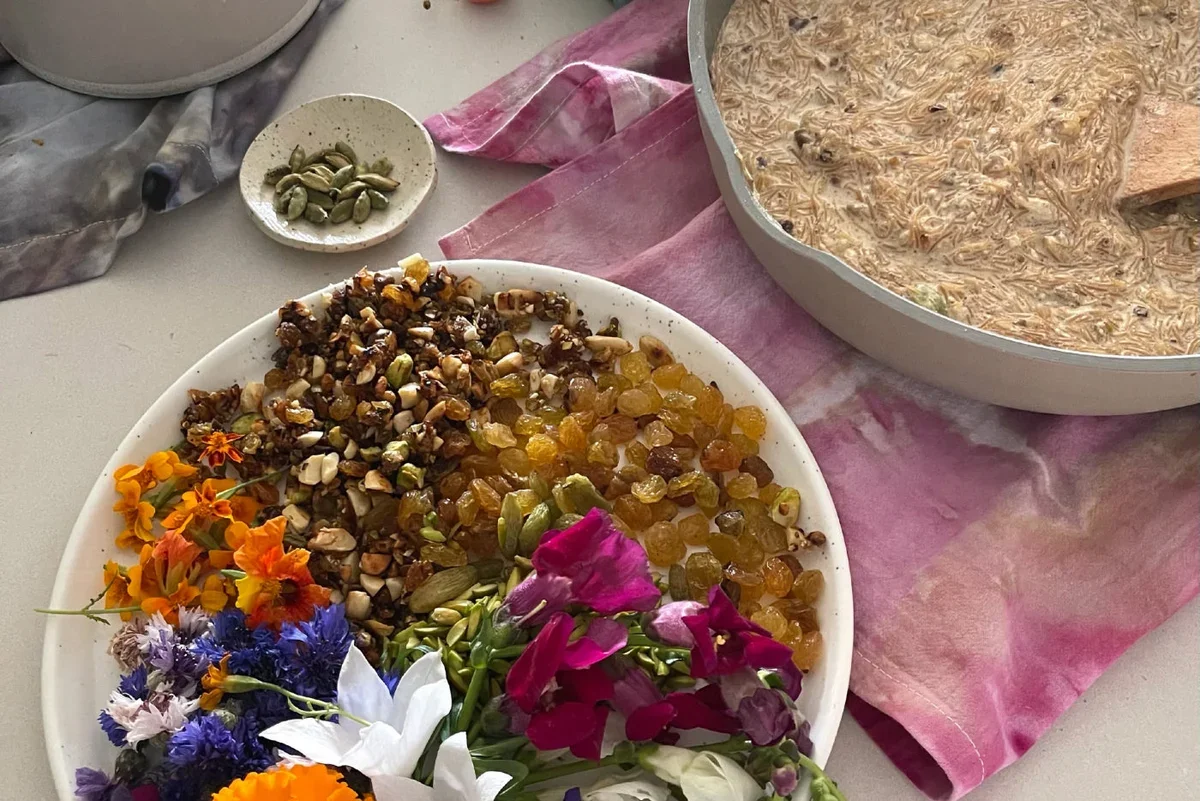
Sheer khurma is a creamy South Asian vermicelli pudding enriched with milk, dates, nuts and cardamom. Toasting the noodles and toppings in ghee first gives this version a fragrant, gently nutty flavour.
Ingredients
- 30 g (¼ cup)cashews, chopped
- 30 g (¼ cup)pistachios, chopped
- 30 g (¼ cup)almonds, chopped
- 40 g (¼ cup)golden raisins, roughly chopped
- 4Medjool dates, pitted and roughly chopped
- 42 g (3 tbsp), dividedghee
- 100 g (1 cup)crushed dry vermicelli noodles (seviyan)
- 950 ml (4 cups)whole milk
- 4cardamom pods, lightly crushed
- 67 g (⅓ cup)sugar
Instructions
- 1
Toast the toppings
Warm a pan over medium heat with 2 tablespoons of ghee. Add the cashews, pistachios, almonds, raisins and dates; stir often and toast until fragrant, about 3–4 minutes. Take them out of the pan and set aside.
- 2
Toast the vermicelli
Keep the pan over medium heat and add the remaining 1 tablespoon of ghee and the vermicelli. Toss often as it toasts for about 3–4 minutes, until golden. Remove it from the pan and set aside.
- 3
Simmer the milk
Return the pan to the hob over medium heat. Add the milk, cardamom pods and sugar, and bring to the boil. Lower the heat to a simmer, then stir in the toasted nuts and dried fruit, reserving ¼ cup for garnish, along with the vermicelli.
- 4
Thicken the pudding
Cook for about 15 minutes, stirring often, until the sheer khurma has thickened slightly and looks rich. Add more milk if needed.
- 5
Serve with garnish
Take the pan off the heat and serve immediately, topped with the reserved nuts and dried fruit and any other adornments you like.
What is sheer khurma?
Sheer khurma is a South Asian milk-and-vermicelli pudding traditionally associated with Eid celebrations. Its name refers to milk and dates, two defining ingredients in many versions.
This recipe builds flavour by toasting the vermicelli and dried fruit in ghee before simmering them in sweetened, cardamom-scented milk.
Nutrition and macros by portion
The nutrition label shows one serving as written: 530 calories, 12g protein, 64g carbs, 27g fat.
| Portion | Adjustment | kcal | Protein | Carbs | Fat |
|---|---|---|---|---|---|
| Lighter | Use less ghee and sugar | 371 kcal | 8g | 45g | 19g |
| This serving | As written | 530 kcal | 12g | 64g | 27g |
| Hungry | Serve a larger bowl | 795 kcal | 18g | 96g | 41g |
The vermicelli and sugar provide much of the carbohydrate, while whole milk, ghee and nuts contribute most of the fat; milk and nuts also provide protein. Balance a serving with fresh fruit, or serve smaller bowls after a meal that includes vegetables and a protein-rich main.
Why toast the ingredients?
Nuts and fruit: A short toast in ghee brings out their aroma and gives the finished pudding little pockets of richness. Stir frequently so the smaller pieces do not catch.
Vermicelli: Toasting the noodles until golden adds a nutty note and helps them keep their identity in the milk. Keep tossing so they colour evenly.
Getting the texture right
Milk: Bring it just to the boil, then lower the heat promptly to a simmer. A gentler cook gives the noodles time to soften without the milk boiling over.
Thickness: The pudding should be slightly thickened and rich after about 15 minutes, rather than set like a firm custard. It will continue to thicken as it stands, so add milk if it becomes too dense.
Dates and sweetness
Dates: Medjool dates add soft, caramel-like sweetness and a chewy contrast to the nuts. Chop them roughly so they distribute through the pudding.
Sugar: The recipe includes sugar as well as sweet dried fruit. If you prefer a less-sweet result, adjust the sugar to taste while keeping in mind that this changes the recipe.
Serving it warm
This version is served immediately, while the milk is warm and the vermicelli is tender. Keep some toasted nuts and fruit aside so the garnish stays distinct.
Serve it as a dessert after a South Asian meal, or alongside tea or coffee. A small bowl is satisfying after a substantial main course.
Timing and preparation
The recipe takes 35 minutes in total, with the noodle and topping toasts taking about 3–4 minutes each and the simmer about 15 minutes.
Chop the nuts and fruit before heating the pan, and keep the reserved garnish separate. Once the milk is simmering, stir often and watch for thickening.
Recipe notes & tips
- Chop the nuts and dates before starting so the toasting steps move smoothly.
- Keep the heat at medium and stir the toppings frequently to prevent scorching.
- Watch the vermicelli closely; it can turn from golden to too dark quickly.
- Reserve the garnish before stirring the rest into the milk.
- Stir regularly while the pudding simmers to help prevent sticking.
- Add extra milk if the pudding thickens more than you like.
Variations
- Extra cardamom: Add another lightly crushed pod for a more pronounced aroma.
- Saffron: Steep a few saffron strands in a little warm milk, then stir them into the pudding.
- Rose water: Add a small splash at the end for a floral note.
- Different nuts: Swap one nut for another chopped nut you have to hand.
- Less sweet: Reduce the sugar to suit your taste.
Common mistakes to avoid
- Burning the nuts: Stir often and remove them as soon as they smell fragrant.
- Dark vermicelli: Toss it frequently and take it off the heat once golden.
- Boiling over: Lower the heat as soon as the milk reaches a boil.
- Sticking milk: Stir often during the simmer and scrape across the base of the pan.
- Over-thickening: Check the texture as it cooks and add more milk if required.
How to store
Cool leftovers promptly and refrigerate in a covered container for up to 3 days. Reheat gently in a pan, stirring in a splash of milk to loosen the pudding; the vermicelli will soften further as it sits.
Frequently asked questions
Can I make sheer khurma ahead?
It is best served immediately, but you can prepare the chopped toppings in advance. If you make the pudding ahead, refrigerate it and loosen it with milk when reheating.
Why toast the vermicelli first?
Toasting adds a gently nutty flavour and colours the noodles. Toss them often so they turn golden rather than burning.
Can I use a different kind of vermicelli?
Use dry vermicelli suitable for cooking in milk, ideally broken into short pieces. Cooking time may vary with the noodle's thickness.
How thick should the pudding be?
It should be slightly thickened and creamy, with tender noodles, rather than firm. Stir in more milk if it becomes too thick.
Can I serve it cold?
This recipe serves it immediately, while warm. It can be chilled, though it will thicken as it cools; stir in milk before serving if needed.
Can I leave out the dates?
You can omit them, though they provide sweetness and a chewy texture. Taste the milk mixture and adjust the sugar to your preference.
Cook it from the original
This recipe comes from fromourplace.ca. Their page has the author’s own photos, notes and tips — the best place to cook it from.
Open the recipe on fromourplace.ca