
Spaghetti alla Puttanesca
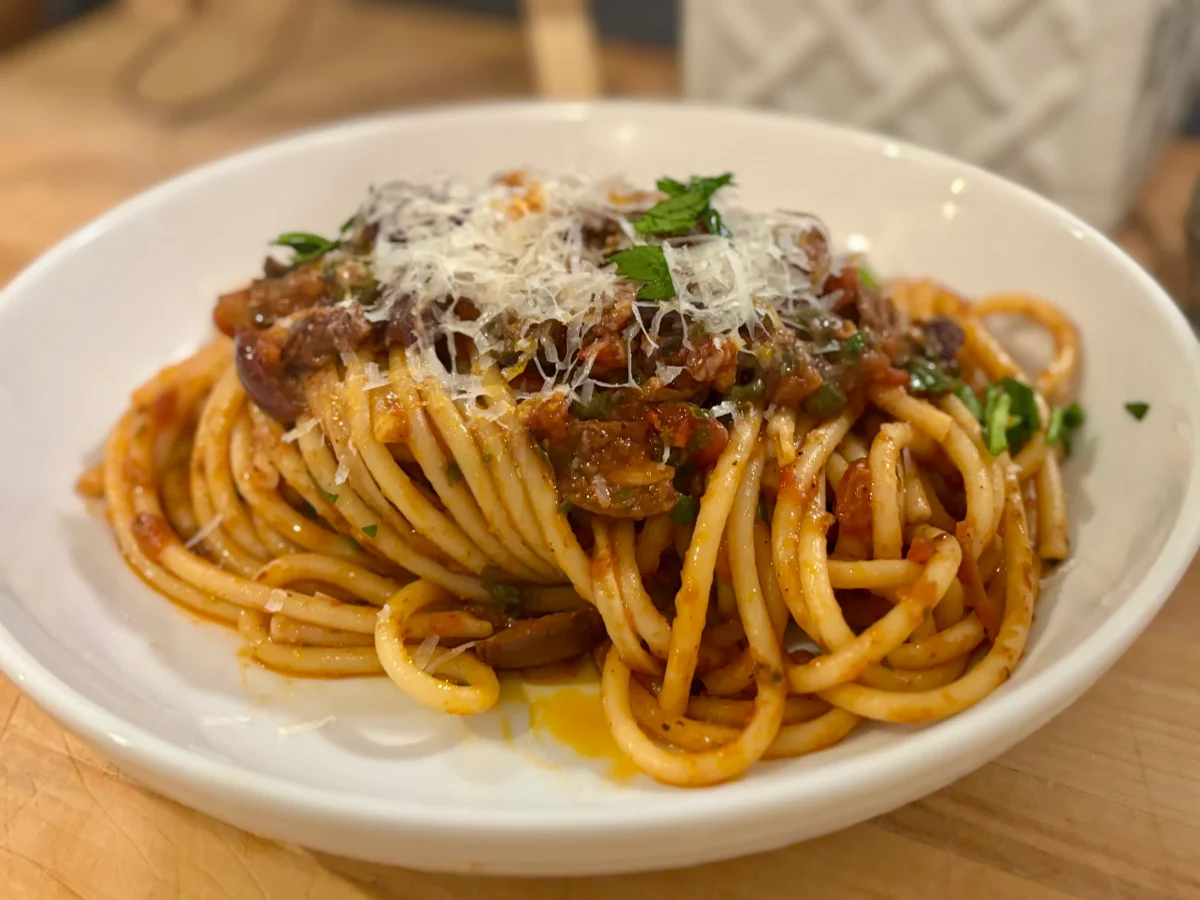
Spaghetti alla puttanesca is a punchy Italian pasta dish with tomatoes, olives, capers, anchovies and garlic. It comes together quickly, and its salty, savoury sauce needs little more than pasta water to cling to every strand.
Ingredients
- 90 ml (6 tbsp), dividedextra-virgin olive oil
- 4 medium clovesgarlic, thinly sliced
- 4–6 filletsanchovies, finely chopped
- 1 large pinchred pepper flakes
- 60 ml (1/4 cup)capers, drained
- 60 ml (1/4 cup)pitted black olives, halved
- 240 ml (1 cup)whole peeled tomatoes, preferably San Marzano, roughly broken up by hand
- 1 splashwhite wine
- 1/2 boxdried spaghetti or bucatini
- 1 small handfulfresh parsley leaves, minced
- to tastePecorino Romano cheese, grated
Instructions
- 1
Cook the aromatics
Put 60 ml (4 tbsp) of the olive oil in a medium frying pan with the garlic, anchovies and red pepper flakes. Cook over a medium heat until the garlic is lightly golden, about 5 minutes.
- 2
Add olives
Stir in the drained capers and halved olives until combined.
- 3
Simmer the sauce
Stir in a splash of white wine and let it simmer for a few minutes. Add the tomatoes and continue cooking at a low simmer.
- 4
Cook the pasta
Cook the pasta according to the packet instructions, then add it to the sauce.
- 5
Coat the pasta
Toss the pasta with the sauce over a low heat, adding a little pasta water if needed to keep the sauce loose.
- 6
Season to taste
Add salt and pepper to taste.
- 7
Finish the sauce
Take the pan off the heat. Add the remaining olive oil, parsley and a handful of grated cheese, then stir well.
- 8
Serve the pasta
Serve in pasta bowls with extra grated cheese and parsley.
What is spaghetti alla puttanesca?
Puttanesca is an Italian pasta dish known for its bold combination of tomatoes, olives, capers, anchovies and garlic. Its precise origin is debated, but the style is associated with southern Italy, especially Naples.
This version builds flavour quickly in olive oil, then finishes the sauce with pasta water, parsley and Pecorino. Spaghetti or bucatini both work well with the chunky, savoury sauce.
Nutrition and macros by portion
The nutrition label shows one serving as written: 950 calories, 25g protein, 83g carbs, 48g fat.
| Portion | Adjustment | kcal | Protein | Carbs | Fat |
|---|---|---|---|---|---|
| Lighter | Use less olive oil | 665 kcal | 18g | 58g | 34g |
| This serving | As written | 950 kcal | 25g | 83g | 48g |
| Hungry | Add more pasta | 1425 kcal | 38g | 125g | 72g |
Most of the carbohydrates come from the dried pasta, while olive oil contributes much of the fat. The pasta, anchovies and Pecorino provide protein, with the cheese, olives and capers also contributing fat and salt. Serve with a generous green salad or vegetables to balance the plate.
Build flavour in the oil
Garlic and anchovies: Cook them gently with the chilli flakes so the garlic turns lightly golden and the anchovies begin to dissolve into the oil. Keep the heat moderate; browned garlic can taste bitter.
Capers and olives: Stir these in before the tomatoes so their briny flavours spread through the oil. Drain the capers first to avoid adding excess brine.
Keep the sauce lively
White wine: Let it simmer for a few minutes before adding the tomatoes. This gives the wine time to mellow while leaving the pan ready for the sauce.
Tomatoes: A low simmer lets the tomato flavour settle in with the salty ingredients. Break up any larger pieces as you stir if you prefer a less chunky sauce.
Use pasta water for texture
Reserve a little pasta water before draining, even if you think the sauce looks loose enough. Its starch helps the oil and tomato cling to the pasta rather than pooling in the bowl.
Add the water gradually while tossing over a low heat. Stop when the sauce coats the strands but still looks glossy and supple.
Finish off the heat
Olive oil, parsley and Pecorino go in after the pan comes off the heat. Stirring them through at the end keeps the herbs fresh and gives the sauce a rounded finish.
The olives, capers, anchovies and cheese all bring salt, so taste before adding much extra. A final scattering of cheese and parsley adds a fresh, savoury contrast.
What to serve alongside
A crisp green salad or simply dressed leaves make an easy side for this rich, savoury pasta. You could also serve it with steamed or roasted vegetables.
The recipe already has a strong mix of flavours, so keep any side lightly seasoned and avoid heavily salted dressings.
Recipe notes & tips
- Slice the garlic evenly so it cooks at the same rate.
- Keep the garlic over a medium heat and take care not to let it turn dark brown.
- Save a mug of pasta water before draining.
- Taste the sauce before adding salt, as the anchovies, capers, olives and cheese are already salty.
- Add the finishing cheese gradually so you can adjust the flavour to your liking.
Variations
- Use bucatini: Its hollow centre holds some of the chunky sauce.
- Adjust the heat: Add more or fewer red pepper flakes to suit your preference.
- Try green olives: Swap them for the black olives for a sharper flavour.
- Add extra herbs: Stir in a little more parsley just before serving.
- Skip the cheese: Leave out the Pecorino for a dairy-free version.
Common mistakes to avoid
- Burning the garlic: Keep the heat at medium and remove the pan from the heat if it colours too quickly.
- Adding salt too soon: Taste after the sauce and cheese are combined, then season as needed.
- Draining all the pasta water: Reserve some before draining so you can loosen the sauce.
- Making the sauce too thick: Toss in pasta water a little at a time until it coats the pasta.
- Overcooking the pasta: Follow the packet timing and check for the texture you prefer before draining.
How to store
Store leftovers in an airtight container in the fridge for up to 3 days. Reheat gently in a pan with a splash of water, stirring until hot; the pasta may soften as it sits.
Frequently asked questions
Can I use bucatini instead of spaghetti?
Yes. The recipe works with either dried spaghetti or bucatini; cook whichever you choose according to its packet instructions.
Do I need to rinse the capers?
Drain them well before adding. If they taste very salty, you can rinse them briefly, then drain again.
Can I leave out the anchovies?
Yes, though the sauce will lose some of its savoury depth. Taste carefully before adding salt, as the remaining olives, capers and cheese still add plenty of seasoning.
How do I stop the sauce from drying out?
Keep some pasta water and add it gradually while tossing the pasta over a low heat. This helps the sauce stay loose and coat the strands.
Can I make the sauce ahead?
You can prepare the tomato sauce ahead and refrigerate it, then cook the pasta and combine them when ready to serve. Add the parsley, finishing oil and cheese at the end.
Cook it from the original
This recipe comes from appetitomagazine.com. Their page has the author’s own photos, notes and tips — the best place to cook it from.
Open the recipe on appetitomagazine.com