
Orecchiette with asparagus, speck and mascarpone
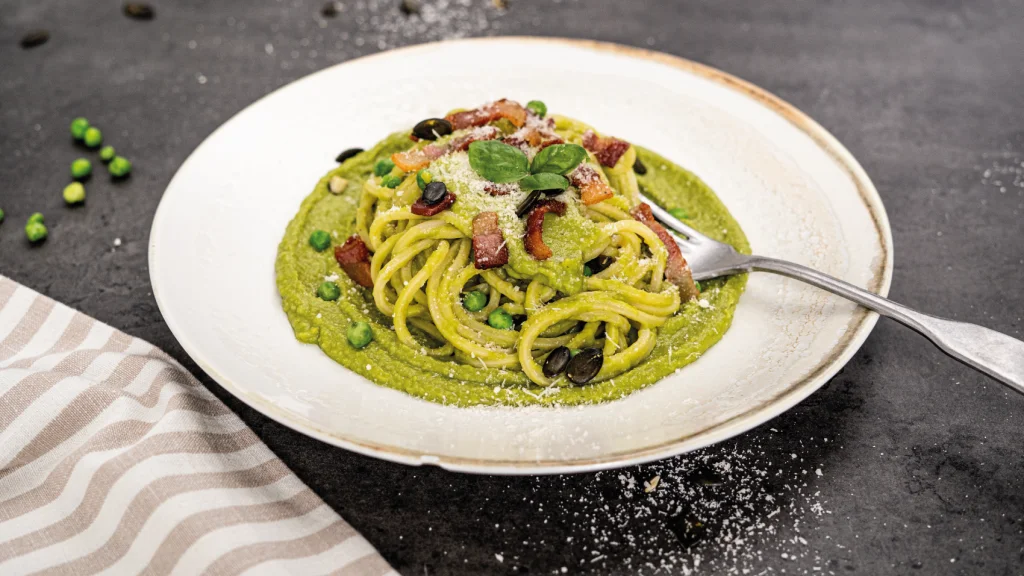
Orecchiette are tossed with asparagus, crisp speck and a creamy mascarpone sauce, finished with lemon zest and Parmesan. It makes a rich, satisfying pasta supper, with the asparagus bringing freshness to the smoky, savoury ingredients.
Ingredients
- 400 gorecchiette
- 1 tablespoonolive oil
- 200 gspeck, diced
- 1 clovegarlic
- 400 gasparagus tips
- 100 ml (about ½ glass)white wine
- 200 gmascarpone
- Zest of ½ lemonlemon, finely grated
- 50 gParmesan, grated
- To tastesalt
- To tasteblack pepper
Instructions
- 1
Prepare asparagus
Wash the asparagus and trim away the woody ends. Separate the tips and set them aside, then slice the stalks into rounds.
- 2
Brown the speck
Warm the olive oil in a non-stick frying pan with the garlic clove. Add the diced speck and cook until crisp.
- 3
Cook asparagus
Add the asparagus stalks and tips to the pan. Pour in the white wine and cook for 10–15 minutes, until the asparagus is tender.
- 4
Cook the pasta
Meanwhile, cook the orecchiette in plenty of salted water. When al dente, drain them, reserving a ladleful of the cooking water.
- 5
Make the sauce
Stir the mascarpone into the pan until it has melted. Mix in the lemon zest, Parmesan and a pinch of pepper. If the sauce is too thick, loosen it with a little reserved pasta water.
- 6
Toss and season
Add the orecchiette to the pan and toss until coated in the sauce. Taste and adjust the salt and pepper if needed.
What are orecchiette with asparagus?
Orecchiette are small, ear-shaped pasta associated with Puglia in southern Italy. This version pairs them with asparagus, speck and mascarpone for a combination of green, smoky and creamy flavours.
The pasta’s little cup-like shape catches the sauce, while lemon zest brings a bright finish. The method builds flavour by browning the speck before cooking the asparagus in the same pan.
Nutrition and macros by portion
The nutrition label shows one serving as written: 815 calories, 32g protein, 90g carbs, 36g fat.
| Portion | Adjustment | kcal | Protein | Carbs | Fat |
|---|---|---|---|---|---|
| Lighter | Less mascarpone, more asparagus | 571 kcal | 22g | 63g | 25g |
| This serving | As written | 815 kcal | 32g | 90g | 36g |
| Hungry | Larger pasta portion | 1223 kcal | 48g | 135g | 54g |
Most of the carbohydrates come from the orecchiette, while mascarpone, olive oil and speck contribute much of the fat. The pasta, speck and cheeses also provide protein; serve a moderate portion with a large green salad or extra vegetables to balance the meal.
Choosing the asparagus
Fresh asparagus: The method describes trimming the woody ends, separating the tips and slicing the stalks. Add both parts to the pan so the stalks and tips cook together.
Asparagus tips: The ingredient list specifies 400 g of asparagus tips. If using tips alone, skip the stalk-slicing step and check them as they cook so they stay tender rather than collapsing.
Brown the speck well
Speck: Let the diced pieces take on colour in the oil before adding the asparagus. Browning gives the sauce a savoury, smoky base.
Garlic: It flavours the oil as the speck cooks. Keep an eye on it and remove it if it starts to brown too much.
Get the asparagus tender
Wine: Add it after the asparagus goes into the pan, then let the vegetables cook for 10–15 minutes. The recipe’s cue is tender asparagus; check it near the end of that time.
Timing: The asparagus and pasta cook at the same time in separate pans. Start the pasta so it is ready to drain as the sauce comes together.
Make a smooth mascarpone sauce
Mascarpone: Stir it into the asparagus mixture until fully melted. Keep the heat gentle once it is added to help the sauce stay creamy.
Pasta water: Reserve a ladleful before draining the orecchiette. Add a little at a time if the mascarpone sauce feels too thick to coat the pasta.
Serve it at its best
Lemon and Parmesan: Stir in the finely grated zest and Parmesan with a pinch of pepper. Taste before adding salt, as the speck and cheese already bring savouriness.
On the plate: Serve as soon as the pasta is coated, while the sauce is warm and supple. A crisp green salad makes a fresh contrast to the creamy pasta.
Recipe notes & tips
- Reserve the pasta water before draining so you can loosen the sauce if needed.
- Cut the asparagus stalks into similar-sized rounds so they cook evenly.
- Let the speck crisp in the pan before adding the vegetables.
- Add pasta water gradually; a small amount can make the sauce easier to toss.
- Taste the finished sauce before seasoning with salt.
Variations
- Use pancetta: Replace the speck with diced pancetta and brown it in the same way.
- Add peas: Stir in peas with the asparagus for another green element.
- Try another pasta: Use a short pasta shape with ridges or hollows to catch the sauce.
- Make it brighter: Add a little more lemon zest at the end, tasting as you go.
- Finish with herbs: Scatter chopped parsley over the pasta just before serving.
Common mistakes to avoid
- Adding mascarpone over high heat: Lower the heat first so the sauce melts smoothly.
- Skipping the pasta water: Reserve some before draining to thin a sauce that is too thick.
- Overcooking the asparagus: Check it towards the end of the 10–15 minute cooking time and stop when tender.
- Burning the garlic: Keep it in the pan only while it gently flavours the oil and speck.
- Salting without tasting: The speck and Parmesan are savoury, so check the sauce before adding more.
How to store
Refrigerate leftovers in an airtight container for up to 2 days. Reheat gently in a pan with a splash of water, stirring until warmed through; the sauce may be thicker after chilling.
Frequently asked questions
Can I use frozen asparagus tips?
Yes. The ingredient list specifies asparagus tips, and they can be used in place of fresh tips. Add them to the pan and check for tenderness as they cook.
Can I make this without the wine?
You can omit it, though the flavour will be different. Add a splash of water instead if the pan needs moisture while the asparagus cooks.
How do I stop the sauce getting too thick?
Use the reserved pasta water, adding it a little at a time while stirring. The recipe specifically recommends this to loosen the mascarpone sauce.
What does al dente mean?
It means the pasta is cooked through but still has a slight firmness at the centre. Check the orecchiette as they approach the cooking time on their packet.
Can I prepare the sauce ahead?
It is best made just before serving, so the asparagus stays tender and the mascarpone remains easy to toss with the pasta. You can prepare and slice the asparagus ahead of time.
Cook it from the original
This recipe comes from frosta.it. Their page has the author’s own photos, notes and tips — the best place to cook it from.
Open the recipe on frosta.it